
- September / 20 / 2026
World-Class Whiskey Collection: 2026 Connoisseur’s Guide
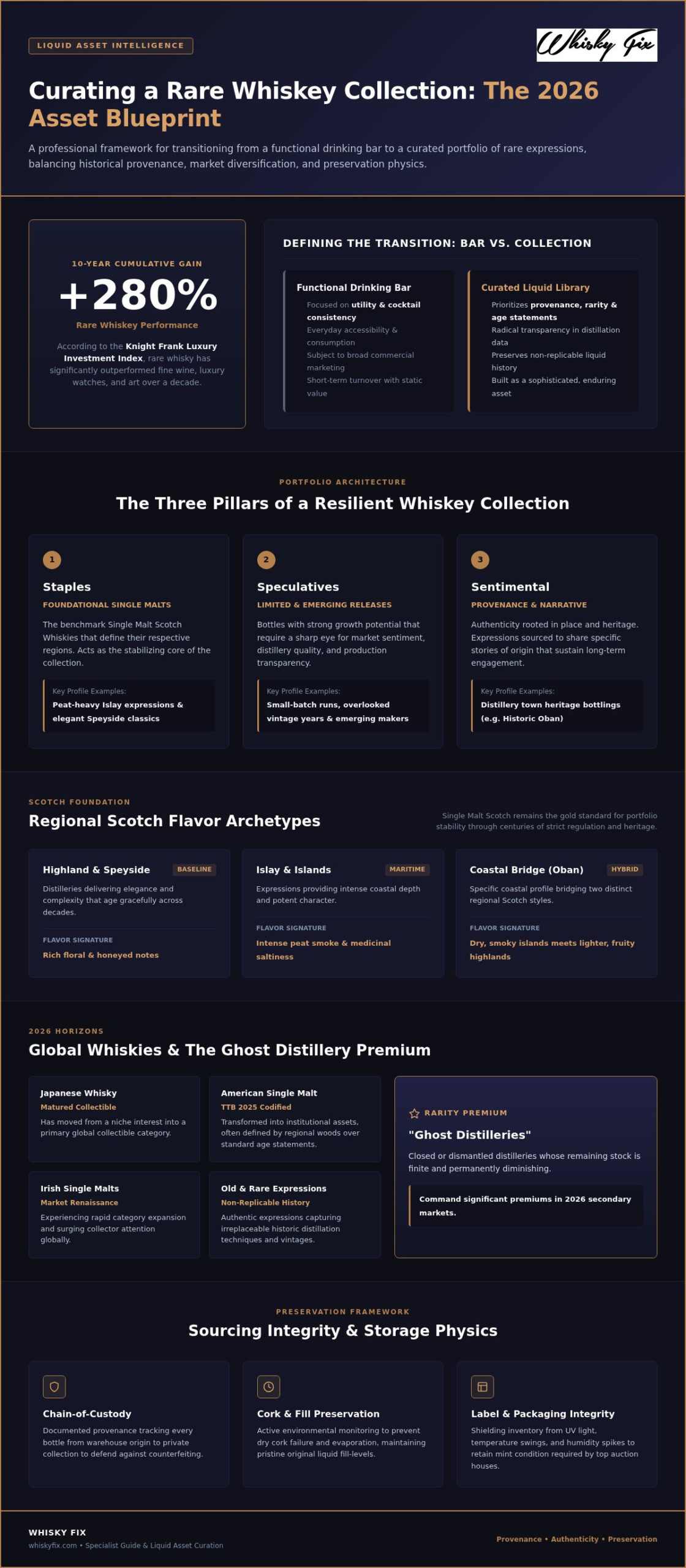
Rare whiskey has delivered a 10-year cumulative gain of approximately 280%, outperforming fine wine, luxury watches, and even art; read more about how original pop art pieces are also becoming a staple in modern portfolios. This data confirms that a carefully curated whiskey collection is no longer just a hobby; it’s a sophisticated pursuit of liquid assets. You’ve likely felt the frustration of watching a “must-have” bottle plummet in value after a speculative bubble pops. It’s common to feel overwhelmed by technical jargon like NAS or chill-filtration while worrying that a single dry cork could ruin a prized investment.
We understand that true connoisseurs value provenance and authenticity above short-term trends. This guide provides the professional framework you need to source “Old & Rare” expressions and protect your bottles from environmental degradation. You’ll learn how to identify bottles with genuine staying power and master the storage physics required to keep your labels pristine. We’ll explore the current 2026 market, from the rise of American Single Malt to the essential anti-counterfeiting measures used by the world’s leading auction houses.
Key Takeaways
- Learn to distinguish between a functional drinking bar and a curated whiskey collection by focusing on historical provenance and rarity.
- Discover how to build a balanced portfolio by integrating foundational Scotch regions with high-potential “Whiskies of the World” from Japan and the New World.
- Understand the unique prestige of “Old & Rare” expressions, including why “Ghost Distilleries” command significant premiums in the 2026 market.
- Gain a professional framework for navigating global shipping logistics and maintaining the precise environmental conditions necessary to protect your liquid assets.
What Defines a True Whiskey Collection in 2026?
A whiskey collection is far more than a shelf of expensive bottles. It’s a curated liquid library that chronicles the evolution of distilling. While a standard drinking bar focuses on utility and consistent flavors for cocktails, a connoisseur’s collection prioritizes historical provenance and rarity. By 2026, the market has shifted away from vague marketing stories toward radical transparency. Collectors now demand precise data on whiskey classifications and production methods, valuing age statements and specific distillery origins above all else. Owning an “Old & Rare” expression allows you to hold a piece of liquid history. It represents a moment in time that can never be replicated.
The Three Pillars of a Balanced Collection
Building a resilient collection requires a methodical approach. You don’t want a lopsided inventory of purely speculative bottles that may lose favor. A balanced bar rests on three distinct categories:
- Staples: These are the foundational Single Malt Scotch Whiskies that define their respective regions. Think of the peat-heavy Islay expressions or the elegant, floral profiles of the Speyside classics.
- Speculatives: This category includes limited editions and releases from emerging distilleries. These bottles carry growth potential but require a keen eye for quality and market sentiment.
- Sentimental: Authenticity often stems from place. Sourcing a unique bottle from a historic distilling town like Oban adds a layer of personal narrative to your bar. These are the bottles you share with fellow enthusiasts to tell a specific story of origin.
Investment vs. Enjoyment: Finding Your Why
The most successful collectors balance financial potential with the sheer joy of the spirit. It’s a common misconception that “rare” always equates to a high price tag. Rarity is often found in small-batch releases or overlooked vintage years that haven’t yet caught the spotlight of the secondary market. However, the emotional value of owning a piece of distilling history is what sustains a collection through market fluctuations.
Provenance remains the most critical factor in maintaining future value. As a specialist guide based in the historic town of Oban, we’ve seen how documented chain-of-custody and authentic sourcing protect your assets. Whether you’re looking for “Whiskies of the World” or a specific “Old & Rare” Scotch, knowing the bottle’s journey from the warehouse to your home is essential. This focus on authenticity ensures your whiskey collection remains a source of pride rather than a source of worry.
Diversifying Your Portfolio: The Backbone of Scotch and Beyond
A truly resilient whiskey collection is built upon a foundation of diversity. While personal preference often dictates the starting point, a professional curator looks toward the long-term stability of established regions. Single malt Scotch remains the definitive gold standard for collectors due to its strict regulations and centuries of heritage. According to the Knight Frank Luxury Investment Index, rare whisky has consistently shown strength as a luxury asset, driven largely by the prestige of Scottish distilleries. This enduring value makes Scotch the logical backbone for any serious portfolio.
The Essential Scotch Regions for Curators
Highland and Speyside distilleries offer the elegance and complexity that many consider the baseline for a serious bar. These regions produce spirits with rich floral and honeyed notes that age gracefully over decades. In contrast, the Islay and Island expressions provide a distinctive maritime character, often defined by intense peat smoke and medicinal saltiness. For those seeking a specific coastal profile, the town of Oban serves as a perfect case study. Its distillery produces a malt that bridges the gap between the dry, smoky islands and the lighter, fruity highlands. Integrating rare scotch from these specific locales ensures your portfolio has both regional breadth and historical depth.
Expanding Horizons with International Spirits
Modern collectors are looking beyond Scotland to find value in spirits from other nations. Japanese whisky has moved from a niche interest to a primary collectible, while Irish single malts are experiencing a significant renaissance. In the United States, the TTB’s 2025 codification of “American Single Malt” has transformed craft spirits into institutional assets. Distilleries in markets like the USA often rely on specialized regional woods rather than traditional age statements, requiring collectors to focus on distillation quality and cask provenance. A forward-thinking whiskey collection might even include premium Scottish gin or aged rum to capture the full spectrum of modern craftsmanship. Identifying quality in these emerging markets requires a focus on transparency and production standards rather than just brand recognition. If you’re ready to expand your reach, you can consult a specialist to find Old & Rare expressions that fit your specific goals.
Rare Expressions vs. Contemporary Classics
A whiskey collection thrives on the tension between accessible staples and the prestige of rare expressions. While core range bottles provide the foundational flavor profile of a distillery, “Old & Rare” bottles offer a tangible link to the past. Connoisseurs often distinguish between these categories by analyzing the intent of the release. Some bottles are designed for immediate consumption, while others are crafted as monuments to a distillery’s heritage. Understanding this distinction is the first step in moving from a casual buyer to a serious curator.
Ghost distilleries, or “silent stills,” represent the pinnacle of rarity. Distilleries like Port Ellen, Brora, and Rosebank command high premiums because their supply is finite. With 155 operating distilleries in Scotland as of 2026, the contrast between active production and extinct stock has never been sharper. Once a bottle from a ghost distillery is opened, the remaining global stock decreases permanently. This scarcity drives the “liquid history” appeal that defines the upper tiers of the market. For serious tracking, you must prioritize batch numbers and “bottled in” dates. These details often distinguish a standard release from a contemporary classic that may become a sought-after rarity in the future.
Identifying the ‘Old & Rare’ Value
True rarity isn’t just about age; it’s a calculation of production volume versus global demand. Independent bottlers play a crucial role here, often releasing single cask expressions that the original distillery might never bottle. When evaluating older stock, always check the fill level, known as ullage. A low fill level can indicate a compromised seal, leading to oxidation. Ensure the capsule integrity is intact, as any signs of tampering or excessive corrosion can drastically reduce the bottle’s future value. Collectors should also look for NFC-embedded tamper-evident seals which have become a 2026 industry standard for ultra-rare vintage bottles.
Building the Foundation with Single Malts
Every serious bar requires a single malt scotch whisky anchor to establish credibility. Distilleries like The Macallan, Bowmore, and Springbank consistently deliver collector-grade quality that holds value over time. It’s wise to balance your portfolio with a mix of high-proof cask strength bottles and standard expressions. Cask strength offerings provide the spirit in its most raw, unadulterated form, which is highly prized by enthusiasts for its intensity and complexity. By focusing on distilleries with transparent provenance and a history of excellence, you ensure the long-term integrity of your whiskey collection.
Sourcing and Storage: Protecting Your Liquid Assets
Sourcing a world-class whiskey collection requires a sophisticated understanding of global logistics and environmental physics. For collectors based in North America, the process of importing scotch whisky to USA involves adhering to specific TTB standards and customs duties that can be daunting without expert guidance. Once a rare expression is secured, the priority shifts to protecting that investment from the elements. Unlike wine, which requires horizontal storage to keep the cork moist, whiskey must always be stored strictly upright. The high alcohol content in spirits will eventually degrade a natural cork if it remains in constant contact, potentially ruining the liquid and the bottle’s seal.
Environmental stability is the hallmark of professional preservation. You should maintain a consistent temperature between 15°C and 20°C to prevent the air in the headspace from expanding and contracting, which can break the hermetic seal. Humidity control is equally vital; levels below 50% can cause corks to shrink and crumble, while levels above 75% risk catastrophic mold damage to decorative labels. Digital inventory management has also become a standard practice for the modern collector, providing a clear audit trail for insurance providers and ensuring that “Old & Rare” assets are accurately valued against current market trends.
The Essentials of Professional Whiskey Storage
Ultraviolet radiation is a silent predator that can bleach natural spirit coloring and oxidize delicate aromatic compounds over time. It’s best to keep your most valuable bottles in their original presentation cases or within UV-filtering vitrines. While you must store bottles vertically, a brief “wetting the cork” ritual once or twice a year can help maintain the seal’s integrity without causing degradation. Ullage is the term used to describe the air gap between the liquid and the cork, and a significant increase in this gap through evaporation often signals a compromised seal and a corresponding drop in the bottle’s market value.
Sourcing from Specialist Retailers
Acquiring rare bottles from an independent specialist based in the historic distilling town of Oban offers a level of provenance that mass-market retailers simply cannot provide. These specialists act as trusted curators, verifying the authenticity and condition of every “Old & Rare” expression before it enters their inventory. By utilizing proven worldwide shipping services, you can secure regional Scottish exclusives with the confidence that they will arrive safely at your door. If you are ready to enhance your bar with vetted, high-value spirits, you can browse our curated selection of single malts today.
Curating the Experience: Beyond the Bottle
The journey of building a world-class whiskey collection extends far beyond the physical acquisition of bottles. It’s a pursuit that celebrates the sensory and social dimensions of the spirit, turning a private inventory into a shared narrative of craftsmanship. While the financial and historical aspects are vital, the true value of a collection is often realized through the experiences it facilitates. Engaging with the community and refining your personal palate ensures that your bar remains a living reflection of your evolving taste rather than a static display of glass and labels. Elevating that setting with bespoke bar furnishings and luxury crystalware from Benjamin & Maxwell further enriches the ritual of entertaining and savoring rare pours.
A specialist spirits retailer serves as a vital guide in this long-term journey. Establishing a relationship with a dedicated curator in a historic distilling town like Oban provides you with more than just access to “Old & Rare” expressions. These experts offer the nuanced perspective required to navigate a crowded market, helping you identify which releases align with your specific goals. They act as a bridge between the distillery and the collector, ensuring that every addition to your whiskey collection is backed by authentic provenance and professional insight.
Refining your palate is a prerequisite for high-level curation. Before committing to full bottles of rare or experimental expressions, it’s prudent to utilize tasting sets. These curated samples allow you to explore the nuances of various cask finishes and regional styles without an immediate significant investment. By developing a discerning palate, you gain the confidence to distinguish between overhyped releases and genuine masterpieces, ensuring that your collection only grows in quality and character.
Tasting Events and Community
Participating in structured tasting events is essential for any serious connoisseur. These gatherings provide a platform to master the technical vocabulary required to describe complex flavor profiles, from the medicinal peat of Islay to the delicate esters of the Highlands. Connecting with other collectors allows for the sharing of rare drams and insights that you won’t find in standard marketing materials. This community aspect enriches your understanding of the industry and helps refine the future direction of your collection through shared knowledge and peer review.
The Perfect Gift for the Connoisseur
Accessories play a significant role in elevating the home bar experience. Curating a selection of “Whisky Inspired Gifts” such as specialized glassware, authoritative books, and precision decanters complements the prestige of your bottles. Selecting the right glassware is particularly important; a traditional Glencairn glass or a tapered nosing glass can significantly alter the perception of a single malt’s aroma and texture. These tools are the final touch in a professional curation, ensuring that every pour is enjoyed in its optimal state. To further enhance your journey, you can explore our curated collection of rare spirits and gifts at Whisky Fix.
Securing the Future of Your Liquid Library
Building a world-class spirit portfolio is an ongoing commitment to quality, authenticity, and preservation. Success lies in balancing foundational Scotch regions with emerging global spirits while maintaining the strict environmental controls necessary to protect your assets. By focusing on provenance and the distinction between speculative trends and “Old & Rare” expressions, you ensure your bar remains a resilient and meaningful investment.
As an independent retailer with deep industry heritage based in the historic distilling town of Oban, we provide the expertise required to navigate the complexities of the 2026 market. We offer secure worldwide shipping on all rare expressions, ensuring that every bottle arrives in pristine condition. Whether you’re a seasoned connoisseur or just beginning to curate your home bar, we’re here to serve as your trusted guide. Start your whiskey collection journey with our ‘Old & Rare’ selection and own a piece of liquid history today. We look forward to helping you discover the next masterpiece for your shelf.
Frequently Asked Questions
How do I know if a whiskey collection bottle is a good investment?
A bottle’s potential depends on its rarity, distillery reputation, and historical provenance. Look for “Old & Rare” expressions with limited production runs or those from shuttered distilleries. Verify the bottle’s condition and chain of custody to ensure its future market value. While no return is guaranteed, bottles from iconic distilleries like The Macallan or Springbank historically maintain strong demand within a professional whiskey collection.
What is the best way to store whiskey long-term?
Professional storage requires an upright orientation to prevent high-proof spirit from degrading the natural cork. Keep your bottles in a dark environment with a stable temperature between 15°C and 20°C. Fluctuations cause air expansion that can compromise the seal. Maintain relative humidity between 50% and 70% to protect the labels from mold while preventing the cork from drying out and crumbling over decades.
Can I ship a whiskey collection internationally from Scotland?
You can ship your bottles globally from our base in Oban. We specialize in worldwide shipping for delicate and rare spirits, navigating complex customs regulations for collectors in the USA and beyond. As of 2026, we ensure all documentation complies with current international spirit trade laws. This allows you to secure regional exclusives from Scotland and have them delivered directly to your home bar with professional tracking.
Should I keep the original box for my rare whiskey?
You should always retain the original packaging and presentation cases. For serious collectors, the absence of an original box can reduce a bottle’s resale value by 15% to 20% at auction. These cases also provide a critical layer of protection against ultraviolet light and physical damage. A complete set, including the outer carton and any included certificates, represents the most desirable state for any high-value asset.
What is the difference between a single malt and a blended whiskey for collectors?
Single malt Scotch is distilled from 100% malted barley at a single distillery, offering a specific regional character that collectors prize for its purity. Blended whiskey combines multiple malts and grain whiskies, focusing on a consistent house style. While some premium blends are collectible, single malts remain the industry gold standard due to their transparency, age statements, and the distinct heritage of individual Scottish distilleries.
How often should I ‘turn’ my whiskey bottles to keep the cork moist?
You should never “turn” or store your bottles horizontally like wine. The high alcohol content will eat through the cork over time, leading to leaks and permanent flavor spoilage. While some collectors briefly tip their bottles once a year to dampen the cork, this is a debated practice. The safest method is to keep your whiskey collection strictly upright to maintain the long-term integrity of the seal.
Is it safe to buy rare whiskey online in 2026?
Buying rare bottles online is safe if you source them from an independent specialist retailer with a physical presence in a historic distilling town. In 2026, reputable sellers use advanced anti-counterfeiting measures, such as NFC-embedded seals and spectral verification, to guarantee authenticity. Always check for a proven track record in global shipping and avoid third-party marketplaces where provenance cannot be strictly verified by industry experts.
What are ‘Ghost Distilleries’ and why are they so popular?
Ghost distilleries are “silent stills” that have permanently ceased production, such as Port Ellen or Brora. They are exceptionally popular because their supply is finite; every bottle opened makes the remaining stock more valuable. These expressions offer a taste of a defunct production style that can never be recreated. For many curators, owning a bottle from a ghost distillery is the ultimate way to capture a piece of liquid history.