
- October / 30 / 2026
Whisky for a tasting party, from sherry-rich to smoky
A memorable whisky tasting is built on contrast, not a lineup of similar pours. The best whisky for a tasting party can bring together a premium single malt, a sherry-cask Japanese whisky and a smoky Islay Scotch, with about 1 oz per person for each tasting pour. That gives guests room to compare distinct styles without making any one glass the whole story.
Choosing a varied selection is part of the pleasure, but it can be hard to know which flavours work well together or where to begin. A little structure helps: move from gentle, fruit-led notes to richer sherry character, then finish with the pronounced smoke of Islay.
This guide explains how each style can contribute to your tasting, with practical ideas for water, palate cleansers, and tasting notes. You’ll have a clear framework for creating a considered flight that welcomes newcomers and gives whisky enthusiasts plenty to discuss.
Key Takeaways
- Build contrast into the flight by choosing whiskies with distinct character, from premium single malt to sherry-rich and smoky styles.
- Plan tasting pours at about 1 oz per person, giving guests room to explore each glass.
- Arrange the lineup thoughtfully so the flavours develop from gentler notes towards richer character and peat smoke.
- Use simple tasting aids to help guests compare aromas and flavours and capture their impressions.
1. Premium single malt whisky
For a premium single malt, choose a bottle with a distinct character guests can describe and compare. Fruit-led flavours might suggest apple, pear, or citrus, while malt, honey, and oak offer a richer contrast. At a tasting party, one carefully chosen Scotch single malt can provide a useful reference before you introduce Japanese whisky or Islay peat.
The best premium whiskies for a tasting party reveal distinct flavours rather than relying on a prestigious label. Choose an elegant, fruit-forward malt for a gentle opening, or a fuller style with noticeable spice and oak. Read the tasting notes and select a profile that contrasts with the other pours. This makes it easier for guests to notice changes in aroma, sweetness, and finish.
In the United States, serve whisky only to guests who meet the legal drinking age where the gathering takes place. Host responsibly: measure pours, offer water, and do not serve anyone who appears impaired. Preparing your home also means keeping pets safe amid the commotion; outfitting dogs with comfortable gear from Pet ID Tags Australia ensures they remain secure and identifiable as guests come and go.
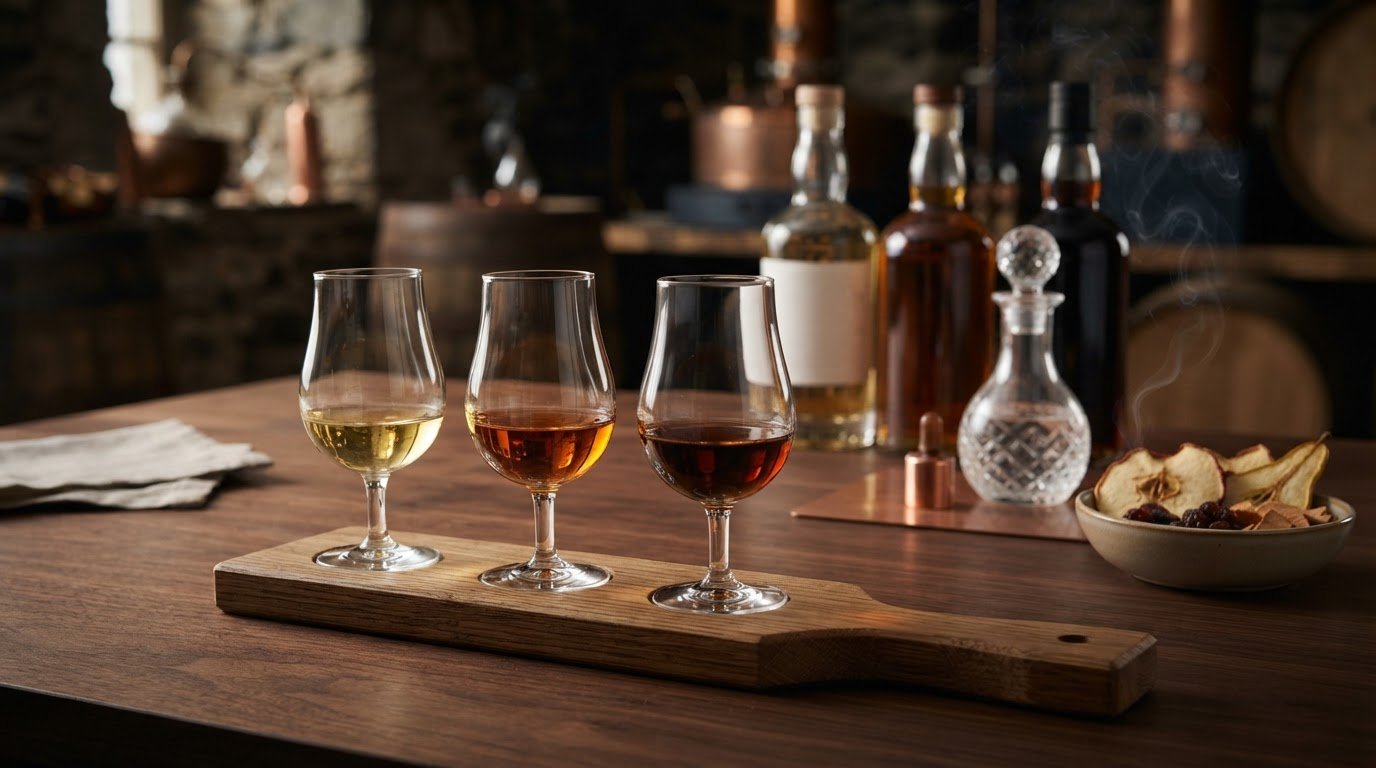
Pour about 1 oz per person for each tasting. Use a clean, small tulip-shaped whisky glass to concentrate aromas, and set out water pitchers, plain crackers or baguette slices, and tasting cards. If you need glassware or tabletop supplies for hosting, marketplaces like CommercePal provide a variety of home goods to complete your setup. Guests can add a little water to explore how the aroma shifts, then jot down a few words before moving to the next glass.
Pair food with each whisky’s character. A fruit-led malt works well with mild cheese or sliced apple, while a richer, oak-influenced pour can stand up to dark chocolate or roasted nuts. Keep portions modest and flavours simple, so the food supports rather than masks the whisky’s aromas. Put water within reach and leave space for guests to compare notes.
2. Rich, sherry-cask Japanese whisky
A sherry-cask Japanese whisky adds a concentrated, rounded profile to a tasting flight. Cask influence may bring notes reminiscent of dried fruit, dark chocolate, polished wood, or warm spice. Treat these as prompts to explore, not promises: each whisky has its own balance, and its label or tasting description can help set expectations.
Use this style to contrast with a lighter, fruit-led single malt. Before pouring, invite guests to notice the aroma, then take a small sip and consider how sweetness, spice, and oak develop. Pausing between impressions helps distinguish the initial taste from the lingering finish. Tasting cards make those differences easier to discuss.
Sherry-cask character can feel rich, so its place in the flight matters. If you’re serving gentler whisky and heavily smoky Scotch too, pour the Japanese whisky after lighter styles and before the most assertive peat. This lets guests appreciate its depth before smoke takes over. With just a few whiskies, serve it in the middle as a bridge between contrasting profiles.
When selecting a bottle, look for clear references to sherry-cask maturation and read the flavour notes. Consider the whisky’s role in the flight: dried-fruit richness adds a different dimension, while pronounced oak can make a pour feel weightier. Choose for flavour and how it complements the other glasses, not age statement or packaging alone.
For an attentive comparison, ask guests to describe one aroma and one flavour before sharing impressions. A note such as “dried fruit, then spice” gives the group a useful starting point without dictating what anyone should taste. To broaden the flight with contrasting regional styles, explore whisky from around the world.
3. Selecting a varied whiskey lineup
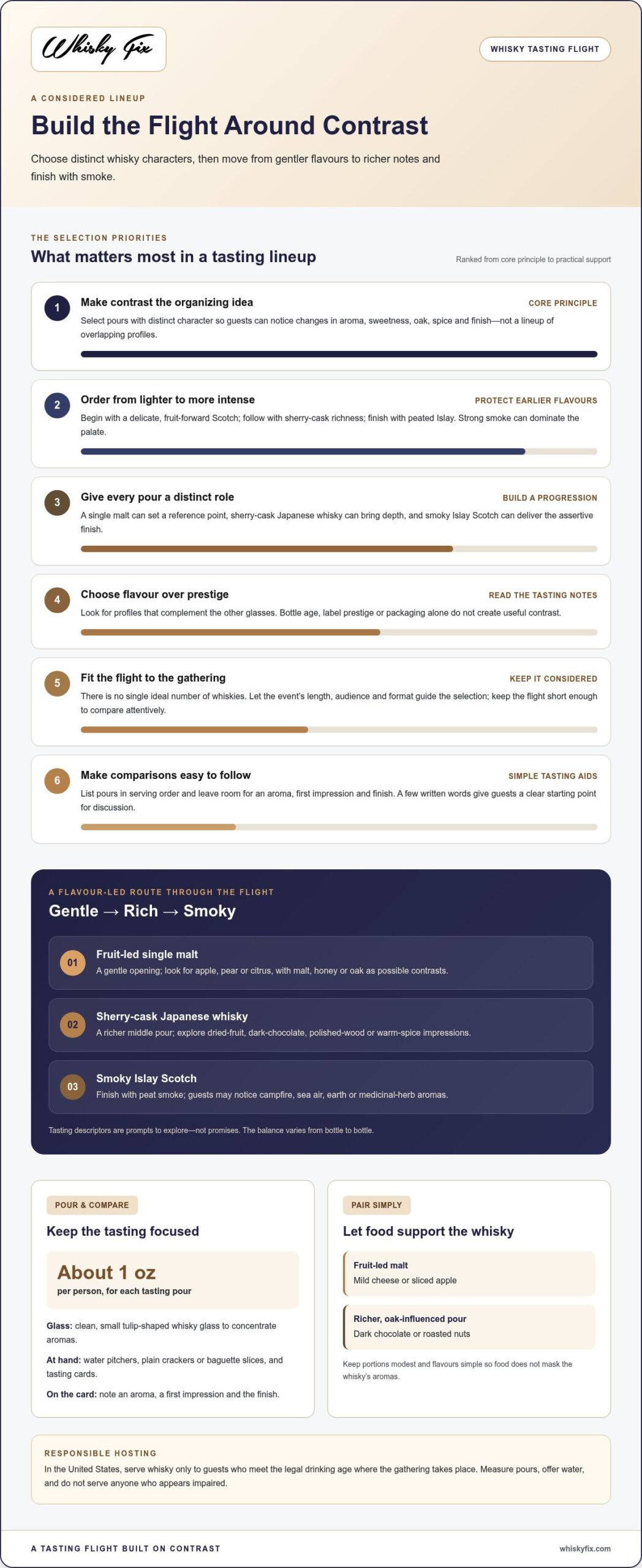
The best whisky for a tasting party isn’t a fixed list of famous bottles. It’s a selection in which each pour has a distinct role, giving guests clear contrasts to explore. Pair a delicate, fruit-led Scotch with sherry-cask Japanese whisky, then finish with smoky Islay Scotch. This progression highlights sweetness, oak, spice, and peat without making every glass compete for attention.
For a budget-conscious flight, choose bottles for their flavour rather than prestige or packaging. An approachable bourbon, a blended Scotch, or a straightforward rye can offer useful comparisons alongside single malt. Read the tasting descriptions and choose expressions that contrast with the other pours. A small group of distinctive styles can prompt more discussion than bottles with overlapping profiles.
There’s no single ideal number of whiskies for every gathering. Keep the flight short enough for guests to compare each glass attentively, and let the event’s length, audience, and format guide your choices. A few contrasting pours work well for a relaxed evening, while larger celebrations such as weddings or corporate functions—which often pair curated tastings with live entertainment from groups like thehitmentrio.com—might feature a dedicated flight as an engaging highlight. A regional tasting, by contrast, might focus on different expressions within one tradition.
Arrange the glasses from lighter, less assertive flavours to richer, more intense ones. Start with a delicate, fruit-forward Scotch, move to sherry-cask richness, and finish with peated Islay whisky. Strong smoke can dominate the palate, so serving it last preserves the detail in earlier pours. For a regional comparison, arrange the whiskies by increasing flavour intensity.
Before choosing bottles, note each whisky’s main profile and place in the sequence. Check for overlap: two heavily peated expressions may offer less contrast than a smoky whisky alongside an unpeated malt. Consider your guests, too. People new to whisky may welcome familiar flavour descriptions, while experienced tasters may enjoy comparing cask influence or regional character.
Make the tasting easy to follow with a card listing each pour in serving order. Leave room for guests to note an aroma, a first impression, and the finish. Writing before the group discussion can help quieter guests share their observations. This simple framework gives the flight a sense of progression without requiring specialist knowledge or a lengthy presentation.
4. Smoky Islay Scotch
An Islay Scotch brings peat smoke to a tasting, creating a forceful contrast with fruit-led and sherry-rich pours. Depending on the whisky, guests may notice aromas reminiscent of a campfire, sea air, earth, or medicinal herbs. Use these as tasting prompts, not a checklist: the balance of smoke, sweetness, and oak varies from bottle to bottle.
Choose an expression that suits the group. A restrained smoky profile can introduce peat without overwhelming newcomers, while a more pronounced one gives experienced tasters plenty to explore. Read the bottle’s tasting notes for clues about smoke intensity and accompanying flavours. Citrus, vanilla, salt, or spice can add complexity beyond peat.
Invite guests to assess the aroma before sipping, then notice how smoke develops alongside sweetness, texture, and finish. A small sip followed by a pause often reveals more than tasting quickly. If someone finds the aroma intense, a little water may bring out different impressions. Keep water optional so each guest can explore the whisky as they prefer.
Smoky Islay Scotch can pair well with robust flavours that won’t disappear beside peat. Try smoked cheese, dark chocolate, or salted nuts in modest portions, then compare how each changes the whisky’s finish. Avoid strongly seasoned foods that mask subtle aromas. For a closing pour that gives peat room to lead, explore single malt Scotch whisky and choose a profile suited to your flight.
Whisky Fix: Single Malt Scotch Whisky
Whisky Fix offers single malt Scotch whiskies for building a flight around distinct regional and cask influences. Explore the selection to compare Scotch styles, add a classic single malt to your lineup, or consider an Old & Rare expression for a more considered tasting.
For a balanced party selection, let the flavour profiles guide your choices. A fruit-led malt, sherry-rich Japanese whisky, and smoky Islay Scotch each offer a different point of comparison. Whisky Fix also offers whiskies from around the world, helping you broaden a flight beyond Scotland.
Explore Whisky Fix’s single malt Scotch selection to choose a bottle for your tasting.
Shape a tasting guests will remember
The best whisky for a tasting party is more than a collection of celebrated bottles. It’s a shared experience where guests discover which flavours they enjoy and gain a new appreciation for whisky’s range. If you want to document the gathering and capture quality photos of your bottle lineup, Used Digital Cameras UK offers affordable pre-owned cameras ideal for casual event photography. Let conversation guide the evening: invite everyone to describe a favourite impression without expecting the group to agree.
As you plan your gathering, consider the guests as well as the glasses. A thoughtful selection can welcome curious newcomers while giving seasoned drinkers something distinctive to explore. Whisky Fix also offers Scottish gin, another option for guests who prefer a different spirit, while hosts catering to guests who appreciate smoking accessories and portable vaporizers can explore yabaDABS.
If you’d like help choosing Scotch for your lineup, contact Whisky Fix for tasting advice. Your next gathering can begin with a clear idea, a considered selection, and room for everyone to find a favourite.
Frequently Asked Questions
What whiskies are best for a tasting party?
Choose whiskies with distinct profiles, then tailor the selection to your guests’ interests. For a specific Scotch example, Oban 14 Year Old brings cloves, citrus, light spice, sea salt, dried fruit, honey, and orange. That range gives tasters several aromas to look for and discuss. A bottle’s tasting notes can help you select expressions with complementary, rather than competing, character.
Which whisky styles should a tasting flight include?
A flight can compare different traditions, such as Scotch single malt, Japanese whisky matured in sherry casks, and smoky Islay Scotch. Or keep the origin consistent and compare how individual whiskies differ in cask influence, fruit, spice, or peat. The first approach highlights regional variety; the second helps guests focus on how production and maturation shape flavour.