
- November / 2 / 2026
What a Sherry Bomb Whisky Tastes Like and How Lustau Casks Shape It
Understanding what a sherry bomb whisky is starts with its traditional definition: a whisky aged 100 percent in sherry barrels. The phrase also describes a whisky where sherry-cask character takes the lead, bringing a rich, fruit-forward impression with notes that may suggest dried fruit, sweetness and spice.
That intensity is part of the appeal, but a cask’s influence depends on how the whisky is matured. A sherry-cask finish can shape the spirit differently from full-term maturation, so look beyond the “sherry bomb” label when considering flavour.
Redbreast Lustau Edition offers a distinctive way to explore that relationship. This guide explains the term, outlines how sherry casks affect whisky, and looks at the character Lustau casks bring to this triple-distilled Irish whiskey, bottled at 46% alcohol by volume.
Key Takeaways
- Learn why “sherry bomb” describes an assertive cask influence, not just a whisky’s colour or sweetness.
- Compare full-term sherry-cask maturation with a finishing period to understand how each can shape flavour.
- See how Oloroso and Pedro Ximénez casks offer different routes to a sherried profile.
- Explore Redbreast Lustau Edition alongside notable Scotch examples to find the style of sherry influence that suits your palate.
1. Meaning and character of sherry-bomb whisky
So, what is a sherry bomb whisky? The phrase can describe whisky with a pronounced sherry-cask influence, whether from full maturation or finishing. “Bomb” signals intensity, not a formal production category or a fixed flavour profile.
Expect flavours that may suggest raisins, dates, dried fruit, nuts, baking spice, or dark sweetness. The spirit and cask still matter: sherry influence won’t erase every feature of the underlying whisky. Two bottles with a sherry-led character can differ in balance, texture, and finish. To answer “what is a sherry bomb whisky?” consider both the cask influence and the flavours in the glass.
How does it compare with peated or bourbon-cask whisky? Peated whisky is associated with smoky, earthy notes, while bourbon-cask whisky often leans towards vanilla and caramel. Sherry-bomb whisky foregrounds richer, fruitier cask character, though a bottle can combine sherry influence with smoke.
How much do popular sherry bombs cost in the United States? Prices vary by bottle, release, and retailer, so the term doesn’t indicate a fixed price tier. Compare the expression and its maturation details rather than treating “sherry bomb” as a price category.
What alcohol strength and age statements are common? Examples span different ages and strengths: Edradour 10 Year Old is bottled at 46% ABV, while Bunnahabhain 12 Year Old is bottled at 46.3% ABV. GlenDronach 15 Year Old is aged for 15 years and bottled at 46% alcohol by volume. These examples show that the style doesn’t dictate a single age or strength.
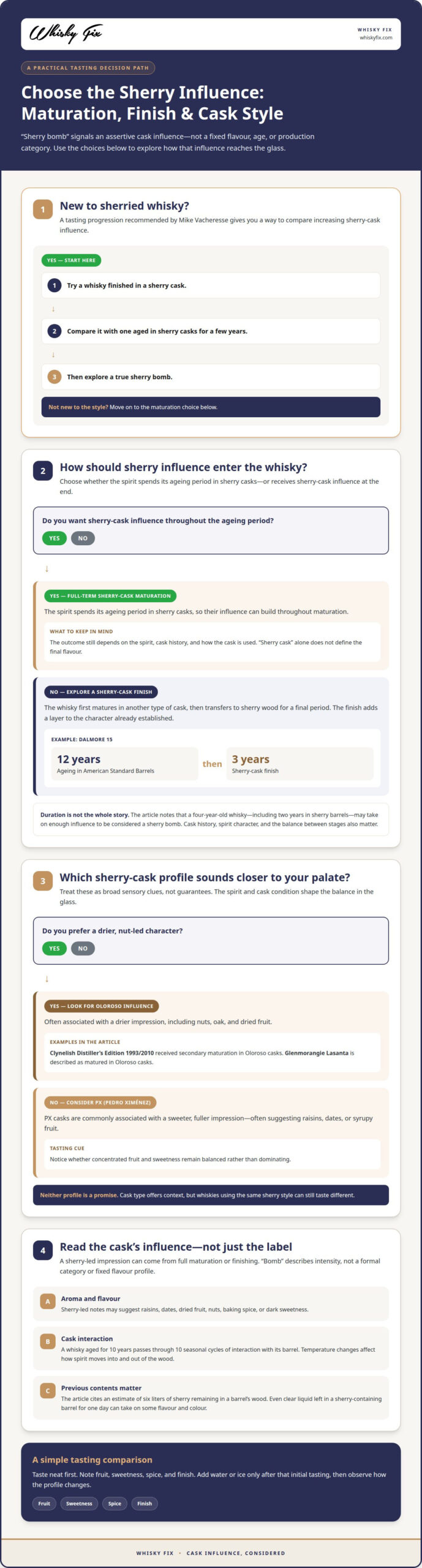
How can you choose and taste one? Start with a sherry-finished whisky, then compare it with one matured in sherry casks. Taste it neat first, noting fruit, sweetness, spice, and finish. Add water or ice only after that initial tasting, and observe how the profile changes.
3. How does sherry cask maturation or finishing create a sherry bomb whisky?
Sherry-cask character develops as spirit rests in wood, drawing out compounds that influence aroma, flavour, and colour. A whisky aged for 10 years passes through 10 seasonal cycles of interaction with its barrel. Changes in temperature affect how spirit moves into and out of the wood, shaping the character over time.
A cask can also carry sherry’s influence into the spirit. One estimate puts the sherry remaining in a barrel’s wood at six liters. Even clear liquid left in a sherry-containing barrel for one day can take on some flavour and colour. This helps explain why a cask’s previous contents matter, along with the length and style of maturation.
Full maturation and finishing create different balances. With full-term maturation, the spirit spends its ageing period in sherry casks, allowing their influence to build throughout. For a finish, whisky is first matured in another type of cask, then transferred to sherry wood for a final period. The result depends on both stages, not simply the label on the finishing cask.
Dalmore 15 illustrates the finishing approach: it spends a dozen years ageing in American Standard Barrels before a three-year sherry-cask finish. The initial maturation establishes the whisky’s base character; the finishing period adds another layer. A younger whisky can also become strongly sherried: a four-year-old whisky, including two years in sherry barrels, may take on enough influence to be considered a sherry bomb. These examples show why duration alone doesn’t define intensity. Cask history, spirit character, and the balance between maturation stages all shape the final profile.
To explore how maturation choices affect Scotch, browse sherry-cask single malts and compare each expression’s cask details with its tasting character.
Mike Vacheresse recommends newcomers try a whiskey finished in a sherry cask before one aged in a sherry cask for a few years, and then try a true sherry bomb.
4. Which types of sherry casks are used for whisky, such as Oloroso and Pedro Ximénez?
Oloroso and Pedro Ximénez, often shortened to PX, are two sherry styles associated with whisky maturation. Their casks can contribute distinct impressions, but the resulting whisky also reflects the spirit and how the cask is used. A cask name is a useful clue, not a complete tasting note.
Oloroso-influenced whisky is often associated with a drier profile, with impressions of nuts, oak, and dried fruit. Clynelish Distiller’s Edition 1993/2010 received secondary maturation in Oloroso casks, making it an example of that cask type in a finishing role. Glenmorangie Lasanta is another bottling described as matured in Oloroso casks. These examples show that Oloroso can appear across different whisky expressions and maturation approaches.
PX casks are commonly associated with a sweeter, fuller impression, often evoking raisins, dates, or syrupy fruit. This contrast can help guide your tasting: consider whether you prefer a drier, nut-led character or a richer, fruit-led one. These are broad sensory associations, not guarantees. The distillery’s spirit character and the cask’s condition also shape the balance in the glass.
Use the cask description as a starting point, then compare the whisky’s aroma and finish. For an Oloroso example, note whether Clynelish Distiller’s Edition’s secondary maturation brings out fruit, oak, or spice alongside its underlying spirit. With PX influence, look for sweetness and concentrated fruit, and notice whether they remain balanced rather than dominating. A tasting note naming a sherry type provides context, but whiskies matured in the same type of cask won’t necessarily taste alike.
When comparing labels, distinguish the sherry style from the maturation method. A whisky may be matured in a sherry cask or receive a later finish, and those choices affect how the cask influence comes through. Comparing Oloroso and PX examples side by side can help you discover which profile suits your palate.
4. What are some well-known sherry bomb Scotch whisky bottles?
Several Scotch whiskies offer useful reference points for exploring sherry-led character. Glenfarclas 105, GlenDronach 21-year-old Parliament, and Glengoyne 21 each provide a different starting place. Their age statements, bottling strengths, and cask descriptions help frame a tasting, but the sherry influence remains the central point of comparison.
Glenfarclas 105 stands out for its bottling strength and history. It became the first cask-strength single malt released by a distillery in 1968, and it is bottled at 60% ABV. That makes it a robust example to approach slowly: note the aroma first, then take a small sip and consider how the sherry character sits alongside the whisky’s intensity.
GlenDronach 21-year-old Parliament offers a different reference. A tasting description calls its nose strongly sherried and port-like, making it a useful example for drinkers drawn to concentrated fruit notes. GlenDronach 12 Original and BenRiach 12yr Sherry Wood offer further age-stated comparisons. Tasting these expressions side by side can reveal how distinct whiskies express sherry influence.
For another route, consider Glencadam’s sherry-finished 14-year-old whisky. Its finish provides a contrast with examples described as sherry-cask single malts. Glengoyne 21 is also noted as a sherry-cask whisky, while Aberlour A’Bunadh appears among recommended sherry bombs. These names make a varied tasting flight, rather than a ranking: compare the cask description, age statement, and your own impressions.
Try each whisky neat before adding water or ice. Start with aroma, then assess fruit, sweetness, spice, and the length of the finish. Glenfarclas 105’s 60% ABV gives a clear reason to take measured sips, while the contrasting profiles of Glendronach Parliament and Glencadam can sharpen your sense of cask influence.
To explore more examples, browse single malt Scotch whisky and compare each expression’s cask details with its character in the glass.
Whisky Fix: Single Malt Scotch Whisky
Whisky Fix offers a considered next step when you’re ready to explore single malt Scotch whisky beyond tasting notes. Use the cask details and flavour preferences discussed above to guide your choice, whether you’re drawn to a pronounced sherry influence or want to compare different whisky styles. The Old & Rare selection may also interest collectors exploring distinctive expressions. Focus on the spirit’s character, maturation details, and how those elements suit your palate rather than choosing by a label alone. Visit whiskyfix.com to explore the selection or contact Whisky Fix with your enquiry.
Build Your Next Tasting Around What You Enjoy
Knowing what a sherry bomb whisky is gives you a useful starting point, but let your own palate guide the next pour. Notice which aromas you return to, whether you prefer a richer or more restrained profile, and how the finish develops. These observations can help you choose with greater confidence and make each tasting more rewarding.
Whisky Fix brings together Single Malt Scotch Whisky and Old & Rare selections for enthusiasts exploring different expressions, alongside Scottish Gin for a change of direction. If you’d like help finding a whisky to suit your interests, contact Whisky Fix with your whisky questions. Your next memorable dram can begin with a thoughtful choice.
Frequently Asked Questions
What does “sherry bomb” mean when describing whisky?
“Sherry bomb” is a tasting description for whisky with a pronounced sherry-cask character. Treat it as a flavour guide, not a precise recipe: the phrase alone doesn’t tell you whether the spirit matured entirely in sherry casks or received a finish. For a clearer picture, compare the producer’s cask description with your own tasting notes.
What flavors and aromas are typical of sherry bomb whisky?
Look for aromas and flavours associated with concentrated fruit, sweetness, nuts, and spice. They may appear differently at each stage: the nose can suggest dried fruit, while the palate reveals sweetness or spice and the finish leaves a lingering impression. Note which sensation appears first and which lasts; that distinction helps you describe a particular dram more accurately.
Can sherry bomb whisky taste overly sweet, tannic, or sulfurous?
Yes. A whisky can seem very sweet, drying or tannic, or carry sulfur-like notes, depending on its character and your perception. These sensations differ: sweetness feels rich, tannin can create a drying grip, and sulfur notes may seem savoury or like struck matches. Taste slowly and record each impression separately before deciding whether the balance suits you.
Does “sherry bomb” have an official whisky definition or labeling rule?
No standardized whisky category is defined by the phrase “sherry bomb”; it functions as an informal flavour description. For production details, rely on the bottle’s specific wording about maturation or finishing rather than inferring a method from the nickname. Anyone purchasing whisky must be of legal drinking age in their country of residence.