
- October / 12 / 2026
The Connoisseur’s Guide to Premium Rum in 2026
What if your next great sipping spirit isn’t another whisky, but a rum? For drinkers accustomed to single malt, premium rum offers a compelling next step: layered distillation character, cask influence and a remarkable range of regional styles. Choosing a bottle can feel less straightforward, though. Labels don’t follow one global standard, and terms such as “dark” or “aged” may not tell the whole story.
If you’re moving beyond mixing rums, you may want to know what’s in the glass, how the spirit was made and whether its sweetness comes from the spirit itself or added ingredients. Start with production, provenance and transparency rather than relying on a prestige label alone.
This guide explores rum’s history and the traditions that shape its major styles, from fermentation and distillation to maturation in cask. You’ll learn how regional rules and labeling practices differ, what details to look for, and how to match a rum to your palate as you move from cocktails to sipping. Drawing on a perspective shaped by Scotland’s single-malt heritage and a specialist interest in rare and old spirits, we’ll help you approach premium rum with the confidence of a connoisseur.
Key Takeaways
- See how sugarcane ingredients and production choices shape a spirit’s character, from fermentation through distillation.
- Use your appreciation of Scotch and oak maturation to explore rum aged in different cask types.
- Compare regional profiles, from Barbados’s balance to Jamaica’s distinctive intensity, to find styles that suit your palate.
- Look beyond colour for clear details about a rum’s origin, maturation and production.
- Explore rum alongside Whisky Fix’s specialist selection of spirits and discover expressions that match your interests.
What is Rum? Defining the Spirit of the Tropics
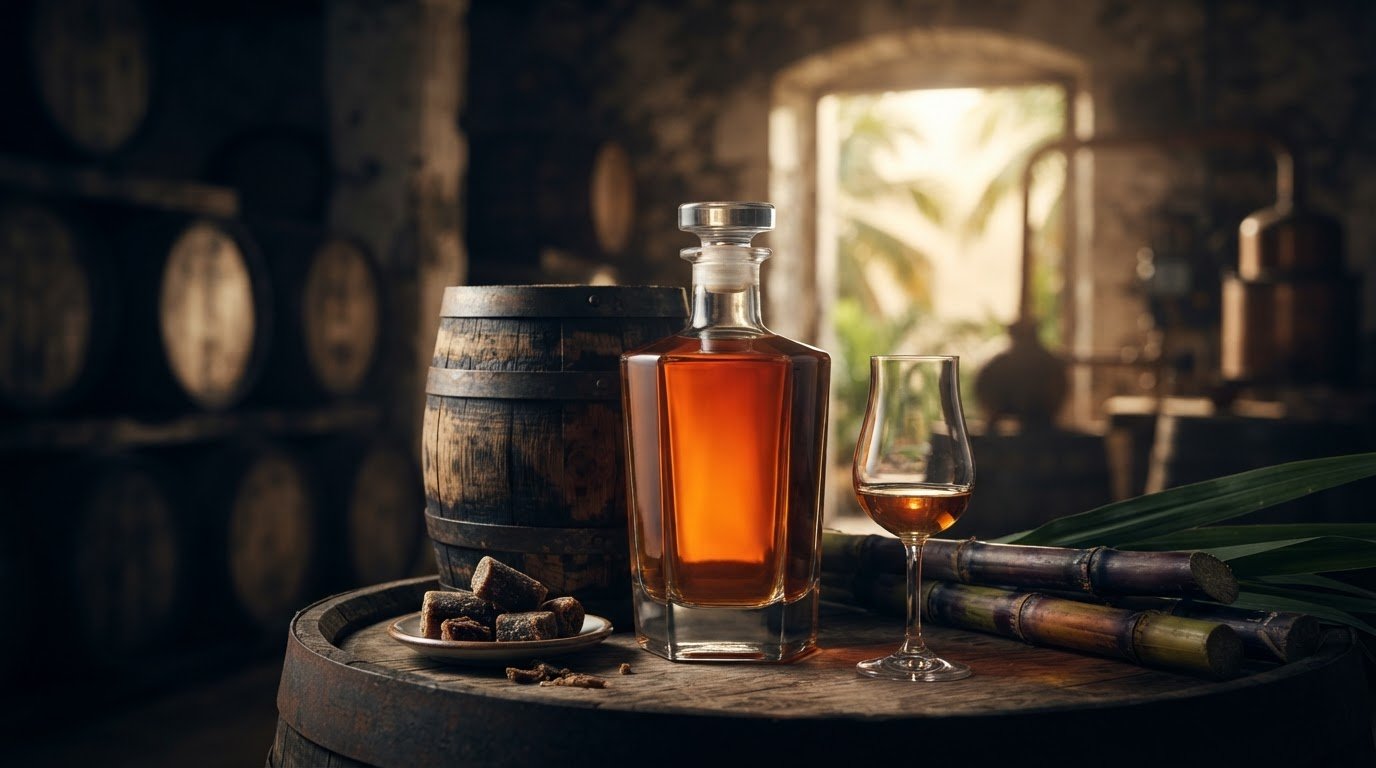
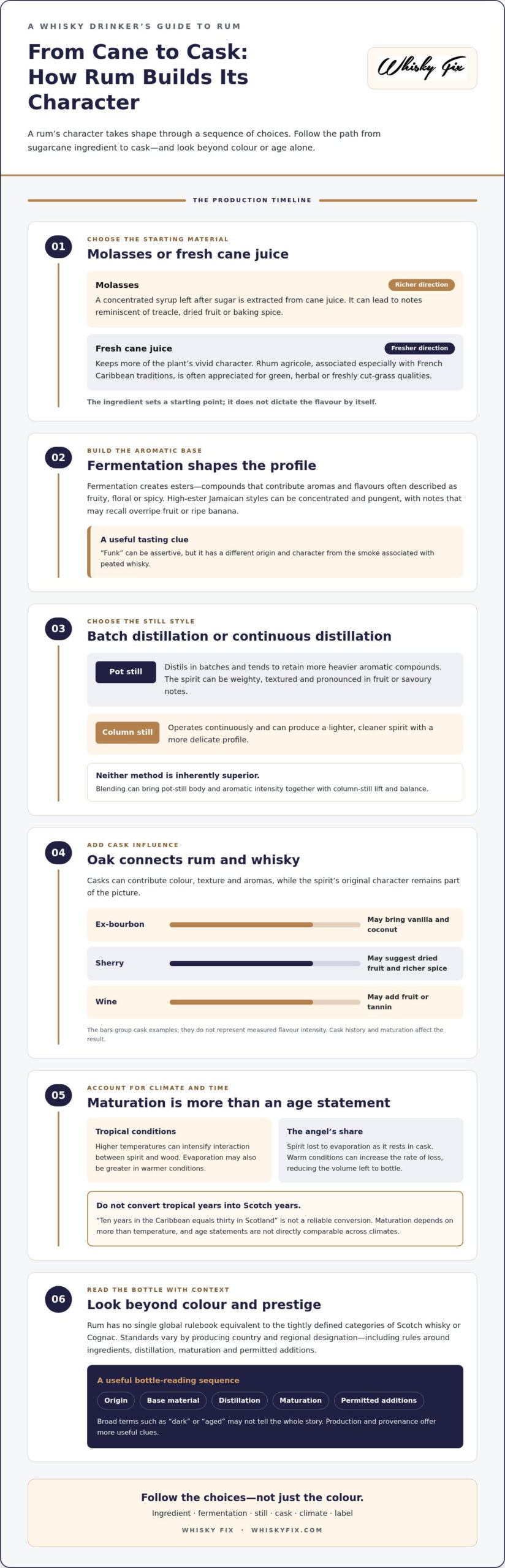
Rum is a distilled spirit made from fermented sugarcane products, chiefly molasses or fresh cane juice. That definition leaves room for striking differences. The raw material, fermentation, still design and maturation all influence the final character, from lively, grassy notes to dense fruit, spice and oak.
Rum’s history is closely tied to the Caribbean, where sugar production created molasses, a byproduct that could be fermented and distilled. The spirit developed within colonial plantation economies, a history inseparable from the exploitation of enslaved people. Over time, production spread beyond the Caribbean, and distillers around the world developed local styles from sugarcane. Today, carefully made and aged expressions sit comfortably alongside single malt as spirits to savour and study. The Rum Wikipedia article offers a broad overview of rum’s history, production and cultural significance.
There is no single global rulebook equivalent to the tightly defined categories of Scotch whisky or Cognac. Standards vary by producing country and regional designation, including rules around ingredients, distillation, maturation and permitted additions. Origin and production details are therefore useful clues. Broad label terms alone may tell you little about how a spirit was made.
The Raw Materials: Molasses vs. Sugarcane Juice
Molasses is a concentrated syrup left after sugar has been extracted from cane juice. Fermenting it can produce a substantial base with notes that may recall treacle, dried fruit or baking spice. Fresh cane juice, by contrast, retains more of the plant’s vivid character. Rhum agricole, associated especially with French Caribbean traditions, is made from cane juice and is often appreciated for its green, herbal or freshly cut-grass qualities.
The ingredient doesn’t dictate flavour alone, but it sets the starting point. Fermentation and distillation can amplify, soften or redirect those raw-material traits. When comparing bottles, look for the base material in the product description. Then consider whether the flavour profile sounds fresh and vegetal or richer and more rounded.
Distillation Methods: Pot Stills vs. Column Stills
Pot stills distil in batches and tend to retain more of the heavier aromatic compounds created during fermentation. The result can be weighty, ester-rich and textured, with pronounced fruit or savoury notes. Column stills operate continuously and can produce a lighter, cleaner spirit, often with a more delicate profile. Neither method is inherently superior; each offers different possibilities.
Blending makes those contrasts especially useful. A producer may combine pot-still spirit for body and aromatic intensity with column-still spirit for lift and balance. Consider how the components work together rather than treating one still type as a mark of quality. Depending on the spirit’s origins and maturation, aromas can range from fresh cane and citrus to ripe fruit, toasted wood and spice.
The Cask Connection: Why Whisky Lovers are Turning to Rum
Oak is a familiar bridge between Scotch and rum. In both spirits, a cask can contribute colour, texture and aromas, while the spirit’s original character remains part of the picture. Ex-bourbon barrels may bring vanilla and coconut notes; sherry casks can suggest dried fruit and richer spice, while wine casks may add another layer of fruit or tannin. These are possible influences, not guarantees. Previous cask use, climate and maturation all affect the result.
Rum’s history is bound up with sugar production and colonial trade. The Smithsonian Institution’s account of rum history provides context for that past. Today, cask selection offers producers another way to express place and craft. That makes maturation an engaging point of comparison for whisky drinkers accustomed to tracing a spirit’s character through its casks.
Climate changes the pace of maturation. In tropical warehouses, higher temperatures can intensify interaction between spirit and wood, while evaporation may be greater than in cooler conditions. But the claim that ten years in the Caribbean equals thirty in Scotland is not a reliable conversion. Maturation depends on more than temperature, and age statements aren’t directly comparable across climates. A younger tropical expression may show pronounced cask influence, but that doesn’t make it equivalent to an older Scotch.
The angel’s share, the spirit lost to evaporation as it rests in cask, also matters. Warm conditions can increase the rate of loss, reducing the volume left to bottle and potentially contributing to the scarcity of older stocks. It’s one reason age alone doesn’t tell the whole story. Consider what the cask and climate have done to the spirit, not simply how long it has rested.
Ester Levels and “Funk”
Esters are compounds formed during fermentation that contribute aromas and flavours often described as fruity, floral or spicy. High-ester Jamaican styles can deliver concentrated, sometimes pungent notes that may recall overripe fruit or ripe banana. The experience can challenge a palate used to restrained malt. Whisky drinkers might find a useful comparison in Islay peat: both can be assertive signatures, though esters and smoke are distinct in origin and character.
Cask Finishing and Cask Strength
Some producers give a spirit secondary maturation, or finishing, in a different cask to add another dimension after its initial ageing. Wine casks are one example; the effect depends on the cask’s history and how long the spirit spends in it. Cask strength means the spirit is bottled at, or close to, its strength in the cask rather than being substantially diluted to a standard bottling strength, so the ABV can vary. This concentrated presentation may appeal to enthusiasts exploring single malt Scotch whisky, though a few drops of water can help reveal different aromas.
To explore rum alongside rare and old spirits, browse the curated rum selection at Whisky Fix.
Regional Variations: A Guide to the World’s Rum Map
Regional character offers a useful way into premium spirits: geography, production traditions and local rules can shape what reaches the glass. The West Indies Rum & Spirits Producers’ Association represents producers across the Caribbean, a region whose styles reflect more than a single island identity. Compare origin alongside still type, ingredients and maturation rather than relying on broad colour descriptions.
The Barbados Tradition: Foursquare and Beyond
Barbados is often a natural starting point for whisky drinkers. Its balanced, composed expressions can combine aromatic depth with a measured influence from oak, making them approachable without being simple. The island’s reputation is also associated with a preference among some producers for presenting the spirit without added sugar. That is not a universal guarantee: production and bottling choices vary, so look for transparent information about the individual expression.
Foursquare is a Barbadian distillery whose releases attract attention from enthusiasts seeking structure and cask character. Rather than assuming every expression follows one recipe, look at the specific bottling’s origin and production details. The sections in this guide on provenance and production offer a useful framework for exploring distinctive rums.
Jamaica and Guyana: Intensity and Heritage
Jamaican styles are renowned for pot-still character and what enthusiasts call hogo, a vivid, high-aroma profile that can suggest ripe fruit, spice or savoury notes. Its intensity makes Jamaican bottlings an engaging choice for drinkers who enjoy pronounced flavours, though “Jamaican” alone doesn’t specify how a spirit was distilled or blended. Production details help explain the character of an individual bottle.
Guyana’s Demerara tradition offers another distinctive point of comparison. Its heritage includes wooden stills, an unusual feature in modern distilling that can contribute to a spirit’s individual weight and aromatic character. Demerara is not a single flavour profile: still type and blending can produce markedly different expressions. For a useful tasting exercise, compare a lighter style with a fuller one and note how the texture and aroma shift.
The Scottish Rum Revolution
Scotland brings a different climate and a deep culture of spirit-making to an emerging craft scene. Producers can draw on skills familiar from whisky production, including careful fermentation, distillation and cask selection. Some may explore local yeasts or maturation in Scotland’s cooler conditions, but these are choices rather than defining features of every Scottish-made expression. Read the producer’s account to understand what shaped the bottle.
For collectors, Scottish craft releases may offer a compelling way to follow a developing category through provenance and production choices, rather than assuming that age or rarity alone signals quality. Whisky Fix is based in Oban, Scotland, and offers a specialist perspective on spirits alongside its selection of rum, whisky and other drinks.
How to Choose and Taste Premium Rum
A confident choice starts with the label, but the label is only the beginning. Look for the distillery or producer, country of origin, maturation details and a clear account of how the spirit was made. An age statement can help, but compare it with the production notes: ageing rules differ between regions, and a number alone won’t explain the flavour. Transparency about sweetening and other additions is valuable, especially if you prefer to taste the spirit’s natural character.
Colour is not a reliable age guide. A deep amber or mahogany hue may come from time in wood, but caramel colouring can also deepen a spirit’s appearance. Treat colour as an observation, not proof of maturation. Bottling strength matters too. Many drinkers find 43 to 46% ABV a comfortable range for sipping, with enough intensity to carry aroma and flavour without overwhelming the palate. It’s a useful guide, not a universal rule.
Sipping vs. Mixing: A Buyer’s Framework
For sipping, look for specific production details, a clear account of maturation and a flavour profile that interests you. For cocktails, a clear, distinctive base may matter more than age. Overproof bottlings can bring extra intensity to character-driven drinks, but their higher strength can dominate, so measure carefully and adjust the recipe. Assess value by asking what the producer explains about provenance, distillation and cask influence, rather than assuming a higher price or older age guarantees quality.
The Professional Tasting Process
Use a tulip-shaped glass, such as a Glencairn, to concentrate aromas. A tumbler is comfortable, but its wider opening lets aromas disperse more quickly. Pour a modest measure and give it a moment before nosing. Keep your first impression simple: note whether you detect molasses, vanilla, tropical fruit, spice or oak. If the alcohol feels sharp, let the spirit rest briefly and return to it.
Take a small sip and let it move across your palate. Consider how sweetness, spice, fruit and wood interact. Is the texture light or full? Does oak support the other flavours or take over? Then focus on the finish: notice which flavours remain and whether they change as they fade. A long, evolving finish can suggest complexity and balance, though it isn’t proof of quality on its own. For a curated range of premium rum online, look for expressions with production and provenance details that suit your palate.
Put your observations to work. Explore Whisky Fix’s curated selection of rum to find a bottle for considered sipping or your next cocktail.
Sourcing Rare and Limited Edition Rum at Whisky Fix
Finding a distinctive bottle is about more than seeking an age statement or a limited release. Provenance, producer, distillation style and cask history help explain what makes an expression noteworthy. Whisky Fix is an Oban-based specialist retailer of spirits, including rum, with a particular focus on rare and old expressions. That specialist perspective offers a useful way to approach a category where close attention to detail matters.
Collectors familiar with single malt often look beyond familiar distillery bottlings for expressions that tell a more particular story. Aged spirits share an appeal in their interplay of origin, maturation and bottling choices. Readers exploring rare Scotch will recognize the value of recording a bottle’s producer, vintage, cask details and bottling strength. The same careful approach helps make sense of rare rum without assuming that scarcity alone signals quality.
Navigating Independent Bottlings
Independent bottlers select and release spirits made by distilleries, sometimes presenting a single cask or a particular vintage. Some bottlings may come from distilleries that have since closed, but independence alone doesn’t guarantee rarity or quality. Read the label for the distillery, vintage or distillation year, bottling year, cask details and any marque named. A marque can help identify a particular style or distillate within a producer’s range.
A single-cask release represents spirit drawn from one cask rather than a blend of several, so its character can be distinctive. Compare the bottling information with your own preferences: cask type, strength and maturation can all shape the experience. In 2026, treat “limited” as a description to investigate, not a quality score. Clear provenance and a well-explained bottling give collectors a stronger basis for choosing.
The Whisky Fix Experience: From Oban to the World
Based in Oban, Whisky Fix offers a specialist selection that includes rum, Scotch whisky and spirits from around the world. Its focus on rare and old expressions provides context for looking closely at what distinguishes a bottle, rather than treating rarity as a selling point in itself. Whisky Fix offers worldwide shipping, with destination-specific delivery requirements to bear in mind.
Before choosing an elusive expression, consider what you want to learn from it. A vintage bottling may offer a snapshot of a distillery’s character at a particular time; a single cask can reveal how one cask shaped a spirit; a blend may show how a bottler brings different components into balance. Note the details and tasting impressions, then compare them with future discoveries. This turns collecting into an informed exploration of provenance and flavour, not simply the pursuit of a rare label.
Explore Whisky Fix’s curated collection of premium rum to find an expression that suits your interest in character and provenance.
Make Your Next Tasting a Discovery
Let curiosity guide your next pour. Choose an expression that offers something unfamiliar, perhaps a different origin, still style or cask influence, and approach it without expecting it to resemble a familiar whisky. Take time to notice what stands out, then record a few impressions. Those notes will help you understand your preferences and make future choices more personal.
There’s no need to begin with the rarest bottle or the most elaborate tasting vocabulary. A thoughtful first step is to choose a spirit with clear provenance and a character that interests you. Each glass can sharpen your sense of what you value, whether that’s bright fruit, savoury intensity or measured oak. The pleasure lies in paying attention, not in finding a single correct answer.
Ready to choose a bottle for your next exploration? Discover our curated selection of Rare and Premium Rums, and take the next step in your appreciation of rum with confidence.
Frequently Asked Questions
What is the difference between white, gold, and dark rum?
These colour terms don’t reliably tell you how a spirit was made or how long it matured. White bottlings may be unaged or filtered after ageing, while gold and dark spirits can gain colour from cask maturation or permitted colouring. Since the terms aren’t globally standardized, compare the producer’s notes and ingredient information. A dark appearance alone, for example, doesn’t establish that a bottle spent more time in oak.
Does rum expire or go bad once the bottle is opened?
An opened bottle generally doesn’t spoil like fresh food, but its flavour can gradually change as oxygen enters and some alcohol evaporates. The change is more noticeable if little liquid remains or the closure is loose. Keep the bottle tightly sealed, upright and away from heat and sunlight. If the aroma or taste seems markedly different from when opened, use your judgement rather than relying on a fixed shelf-life estimate.
Why is some rum so much more expensive than others?
Differences in price can reflect production scale, age, cask selection, bottling strength and the amount of spirit available. Long maturation ties up stock, while evaporation reduces what remains to bottle; a small single-cask release may also be less plentiful than a large batch. Price doesn’t prove quality. Compare the stated origin, production details and maturation, then decide whether those features justify the premium for your preferences.
Is rum gluten-free?
Plain, unflavoured rum is generally considered gluten-free because it’s distilled from sugarcane rather than gluten-containing grains. Flavoured or spiced bottlings can include ingredients added after distillation, so don’t assume every product has the same composition. If you have coeliac disease or need to avoid gluten strictly, read the label and consult the producer about ingredients and possible cross-contact. A cocktail’s other ingredients may also affect suitability.
What is “Spiced Rum” and is it considered a premium spirit?
Spiced rum is a sugarcane-based spirit flavoured with spices or other ingredients, which may include vanilla, cinnamon or citrus. Recipes differ, and the word “spiced” doesn’t itself indicate age, production quality or sweetness level. It can be premium if the producer uses well-made spirit and provides clear information about ingredients and process. Taste it on its own first to see whether the added flavours feel balanced or dominate the base.
Can I buy rare rum online for international delivery?
Whisky Fix offers worldwide shipping, so international customers can order spirits online. Alcohol delivery is subject to destination-specific requirements, which can affect delivery arrangements. Review the delivery information for your destination and account for any applicable import charges. Shipping arrangements and requirements may differ between countries.
What does “Rhum Agricole” mean on a label?
“Rhum agricole” identifies a style made from freshly pressed sugarcane juice rather than molasses. The term is strongly associated with French Caribbean traditions, including Martinique, where a geographical designation sets production standards. On other labels, usage and rules can differ, so check the stated origin and producer information. The style often highlights fresh cane, herbal or vegetal notes, making it a useful contrast to richer molasses-based bottlings.
How should I store my premium rum bottles?
Store bottles upright in a cool, dry place away from direct sunlight and large temperature changes. Unlike wine, spirits shouldn’t be stored on their sides, since prolonged contact with high-strength alcohol may affect a natural cork. Make sure the closure is secure after pouring. For a bottle you plan to keep for years, avoid displaying it in a sunny window; a closed cabinet helps protect both liquid and label.