

- September / 9 / 2026
Single Cask vs. Small Batch Whisky: The Connoisseur’s Guide to Rarity and Craft
The most expensive bottle on the shelf isn’t always the one that will define your evening. You’ve likely faced the dilemma of choosing between a singular, unrepeatable expression and a masterfully blended selection. It’s a common point of friction for collectors who fear spending significant sums on a bottle that might not suit their specific tastes. Understanding the nuances of single cask vs small batch whisky is essential for anyone looking to build a collection with purpose. While the global whiskey market is projected to reach 99.73 billion dollars in 2026, the terminology used to describe these premium spirits remains a source of confusion for many.
We understand that the distinction between these categories often feels obscured by marketing jargon and a lack of strict legal definitions. This guide clarifies the technical differences and the sensory outcomes of these two distinct approaches to maturation. You’ll gain a clear framework for deciding which bottle type suits your next milestone occasion. We’ll examine why a single cask offers a raw snapshot of a distillery’s character, while a small batch represents the pinnacle of a blender’s craft. By the end, you’ll have the confidence to curate a collection that reflects both rarity and personal preference.
Key Takeaways
- Identify the core technical differences between unblended single barrels and the artful marrying of limited casks.
- Navigate the single cask vs small batch whisky choice by evaluating your tolerance for flavor volatility versus the desire for consistent complexity.
- Master the sensory impact of wood chemistry to understand why no two single cask releases will ever taste exactly the same.
- Learn how to use distillery reputation and expert curation to mitigate the risk of purchasing expensive, rare expressions.
- Establish a clear framework for selecting the right bottle type based on the specific occasion or the long-term goals of your collection.
The Fundamentals of Single Cask and Small Batch Whisky
Distinguishing between single cask vs small batch whisky is the first step toward building a sophisticated collection. At its most basic, a single cask expression is the purest form of a distillery’s output. It’s bottled from one individual maturing barrel with no blending or vatting involved. This means the flavor profile is entirely dependent on that specific vessel’s interaction with the spirit. Conversely, a small batch whisky is created by marrying a limited number of selected casks together. This process allows a Master Blender to curate a specific flavor profile that a single barrel might not achieve on its own.
The Master Blender’s role is critical in both pathways. For a single cask release, they act as a judge, identifying a “honey cask” that possesses enough character and balance to stand alone. For small batch releases, they are architects, layering the honeyed notes of one cask with the spicy tannins of another. In 2026, these terms have become essential hallmarks for the premium market. They signal a shift away from the high-volume consistency of core ranges toward the artisanal rarity that collectors crave.
The Technical Journey from Still to Bottle
The character of these whiskies begins long before they reach the glass. The distillation proof and the subsequent entry proof, which is the strength at which the spirit enters the wood, dictate how much flavor is extracted from the cask staves. High entry proofs can result in more aggressive wood spice, while lower proofs often favor fruitier notes. The environment of a traditional dunnage warehouse, with its earth floors and stone walls, plays a vital role. These cool, damp conditions allow for a slow, steady maturation that is particularly prized in “Old & Rare” expressions. To preserve this hard-won character, most premium releases are bottled with natural color and without chill filtration, ensuring the natural oils and esters remain intact.
Understanding Labeling and Terminology
Reading a label correctly is a vital skill for any enthusiast. You’ll often see “Cask Strength,” which refers to whisky bottled exactly as it came out of the barrel, typically between 50% and 65% ABV. “High Proof” releases might have a touch of water added but still sit well above the standard 40% or 46%. Nomenclature also changes based on origin. While American producers use “Single Barrel,” Scottish distilleries prefer “Single Cask.” Look for specific cask and bottle numbers on the label; these are the DNA of your purchase. They provide a transparent record of the bottle’s provenance and its place within a finite, limited run that can never be replicated once the last drop is poured.
Single Cask Whisky: A Singular Expression of Time and Wood
The allure of a single cask release lies in its absolute finality. No two barrels are ever identical, even if they were filled from the same spirit run and stored in the same corner of a warehouse. Wood chemistry is a volatile science; a single stave with a slightly different grain or char level can redirect the flavor profile of an entire barrel. This makes every bottle a snapshot of a distillery’s character at one specific moment in time. Once the bottle is emptied, that exact sensory experience is gone forever.
Pricing for these expressions reflects their inherent scarcity. The evaporation of spirit through the oak staves, known as the “Angels’ Share,” can claim up to 2% of the volume each year. For older whiskies, this results in a significantly reduced yield from a single vessel. The labor involved in monitoring these individual casks and the risk of a barrel not reaching its potential also contribute to the premium. When you evaluate single cask vs small batch whisky, you’re weighing the raw, unedited story of a single barrel against the curated narrative of a blend.
The Unique Profile of the Individual Barrel
The history of the wood dictates the success of a single cask. First-fill casks, which have previously held bourbon or sherry only once, provide a vibrant, wood-forward profile rich in vanillins or tannins. Refill casks are more subtle, allowing the distillery’s own spirit character to take center stage. Many enthusiasts prefer the “Cask Strength” experience because it offers the spirit in its most powerful, undiluted form. Identifying dominant wood notes, such as toasted oak, leather, or dried fruit, becomes a rewarding exercise for the seasoned palate. You can explore our curated selection of Old & Rare expressions to find these unique profiles.
The Collector’s Perspective: Rarity and Provenance
Single casks are often considered the “holy grail” for collectors because of their limited bottle counts, which rarely exceed a few hundred. Independent bottlers play a pivotal role in this market, often sourcing exceptional barrels that don’t fit a distillery’s standard flavor profile. These bottlings provide a different perspective on familiar names, emphasizing provenance and authenticity. For those diving deeper into this niche, our guide on Rare Scotch: The Definitive Reference for Collectors provides essential context for navigating these high-value acquisitions. Understanding the reputation of the bottler is just as important as the name on the distillery label.
The Art of the Small Batch: Crafting Consistency Through Curation
Small batch whisky represents the pinnacle of the blender’s art. Unlike the raw, unedited output of a single barrel, these expressions are the result of meticulous vatting and marrying. This process involves combining a limited number of casks to achieve a specific flavor profile that reflects the distillery’s historical house style. It is an intentional act of curation. When evaluating single cask vs small batch whisky, the latter often provides a more symphonic experience. By layering the smoky peaks of one cask with the dried fruit base of another, the Master Blender creates a depth and complexity that a single vessel rarely achieves on its own. They act as architects, balancing peat, fruit, and oak to protect the distillery’s reputation for excellence.
Defining “Small” in the Scotch Industry
Confusion often arises regarding the lack of a legal volume limit for the term “Small Batch” in Scotch production. While “Single Cask” is functionally self-explanatory, a small batch can range from a five-cask micro-batch to a release involving 100 barrels. The distinction is significant for collectors. In 2026, transparency has become a defining industry trend. Leading specialists and distilleries now frequently state the exact number of casks used on the label. This honesty helps enthusiasts understand whether they are acquiring a truly rare artisanal product or a slightly more accessible limited run. A 10-cask batch offers a vastly different sensory profile and rarity level than a batch of 50, making this data essential for informed purchasing.
The Benefit of Consistency and Balance
Choosing a small batch release is often a wise decision for those seeking reliable luxury. The marrying process provides a smoothing effect that eliminates the aggressive tannins or unusual “off” notes sometimes found in individual barrels. This balance ensures the whisky is refined and approachable. It honors the distillery’s reputation while providing a consistent experience that drinkers can trust. These releases also typically offer a more accessible price point. You enjoy the benefits of expert curation and limited production without the steep costs associated with the high evaporation losses of older single casks. They represent a middle ground where craft meets consistency, allowing for a sophisticated tasting experience that remains balanced from the first pour to the last.
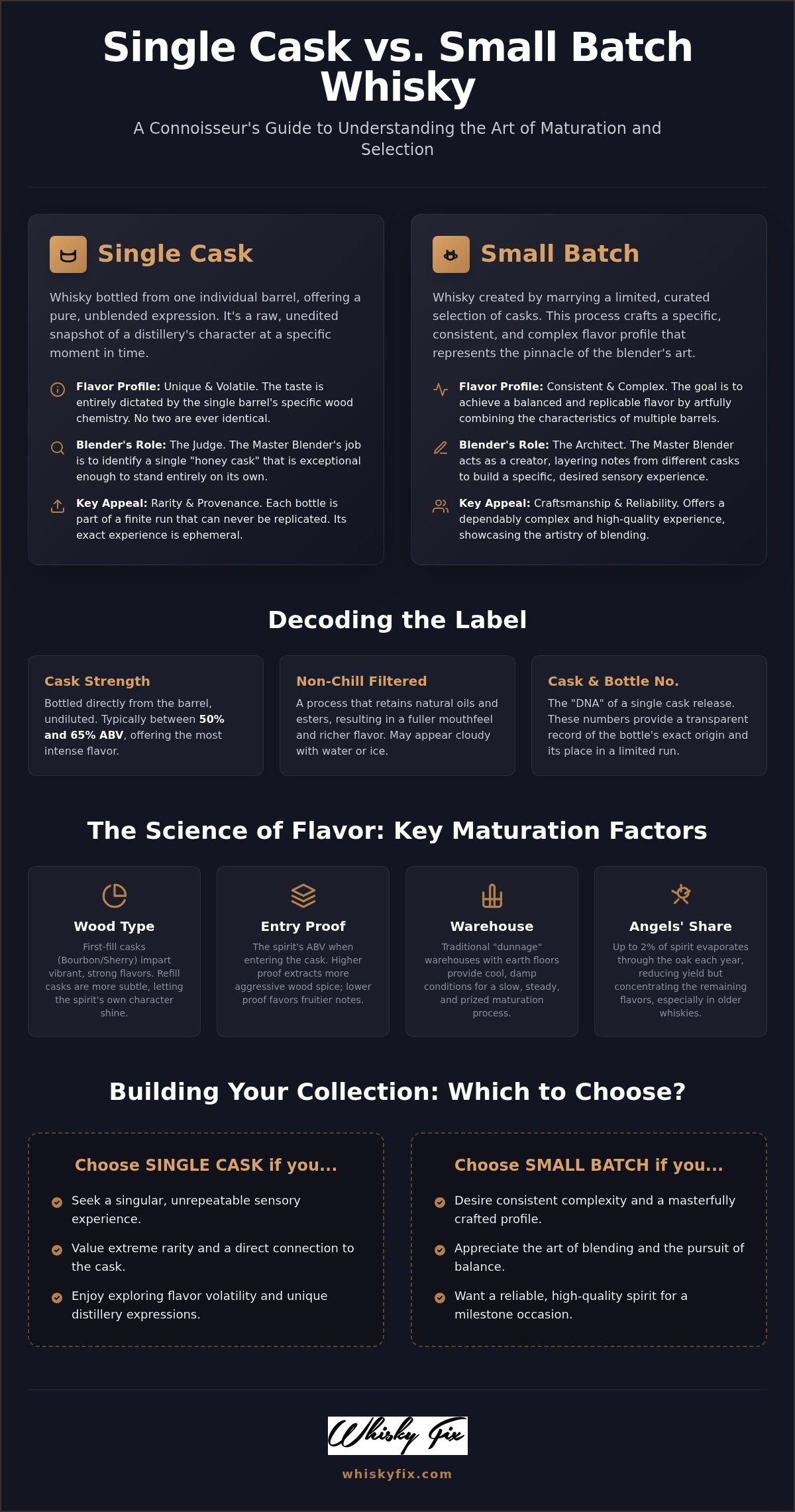
Single Cask vs. Small Batch: Navigating the Connoisseur’s Dilemma
The choice between single cask vs small batch whisky often represents a strategic fork in the road for the serious collector. It’s a balance between the thrill of the unique and the satisfaction of the refined. While a single cask offers an unfiltered, raw look at a distillery’s output, it carries the inherent risk of being too idiosyncratic for some palates. Conversely, small batches offer a curated experience that guarantees a high level of balance and structural integrity. For those purchasing a gift for a discerning friend, the small batch is almost always the safer bet. It ensures the recipient enjoys a polished, world-class spirit without the gamble of a single barrel’s potential volatility. In the 2026 market, where prices have stabilized following a period of high demand, the price-to-quality ratio of high-end small batches has never been more attractive.
Sensory Comparison: Intensity vs. Complexity
Single cask releases are defined by their high intensity and specific, often singular focus. They don’t try to please every drinker; they present the raw characteristics of the wood and spirit in a concentrated, undiluted form that can challenge even experienced palates. Small batch whiskies aim for a symphonic complexity, where layers of flavor are intentionally built to provide a broad, layered appeal. The marrying period, typically lasting several months in a large neutral vat, is the secret to the seamless integration found in small batch success. This time allows the disparate elements of the various casks to meld into a cohesive, balanced whole that feels complete from the first sip to the finish.
Market Value and Investment Potential
From a financial perspective, single casks typically hold their value better on the secondary auction market due to their finite nature. A bottle from a run of 200 is naturally more sought after by collectors than one from a larger release. However, “Distillery Exclusive” small batches can still become rare collectibles if the batch size remains significantly limited and the quality is exceptional. For a deeper understanding of these market dynamics and how to identify high-potential bottles, consult The Connoisseur’s Guide to Single Malt Scotch Whisky. Authenticity and provenance remain the primary drivers of long-term value in any collection. If you’re ready to add a defining bottle to your bar, browse our collection of Old & Rare expressions to find your next acquisition.
Building Your Collection: When to Choose Single Cask or Small Batch
Deciding between single cask vs small batch whisky requires an honest assessment of your palate risk tolerance. If you prefer a refined, reliable experience that stays true to a distillery’s established profile, small batch expressions are the logical choice. These releases rely heavily on distillery reputation and the blender’s ability to maintain a consistent house style through expert curation. However, if you are drawn to the “Old & Rare” category, you’ll find that single cask formats are often the gold standard. These bottles are prized for their singular character, offering a raw and unrepeatable glimpse into a maturation process that occurred over decades. At Whisky Fix, we curate our selection to ensure that every bottle, whether a balanced batch or a volatile single barrel, meets the exacting standards of a true specialist.
Strategic Sourcing for the Modern Collector
Strategic sourcing is essential for the modern collector who values provenance and authenticity. Specialist retailers like Whisky Fix are vital for accessing highly allocated single casks that rarely reach general retail shelves. These bottles are often reserved for those with deep industry connections and a focus on rare expressions. We recommend participating in tasting events to experience the sensory differences firsthand before committing to a high-value purchase. This practical approach helps you discover whether you prefer the intense focus of a single barrel or the layered complexity of a blend. Additionally, our expertise in worldwide shipping allows collectors to secure regional small batch releases that might otherwise be unavailable in their local market, ensuring a diverse and global collection.
Curating a Balanced Home Bar
A well-curated home bar should feature a strategic mix of both styles to suit different tasting occasions. Foundation bottles are your 2-3 reliable small batch single malts that provide a consistent, high-quality experience for everyday luxury. These are the dependable expressions that represent the core identity of your favorite distilleries. Conversation bottles, usually 1-2 rare single casks, serve as the highlight of any tasting session with fellow enthusiasts. They provide the unique stories and specific wood-driven profiles that spark deep discussion and comparison. By balancing these categories, you create a bar that is both functional for regular enjoyment and extraordinary for special milestones. Explore our curated selection of Single Malt and Rare Whiskies at Whisky Fix to find the next defining addition to your collection.
Elevating Your Collection with Purpose
Choosing between the singular intensity of a lone barrel and the harmonious complexity of a curated batch is a defining step for any serious enthusiast. You now have the framework to evaluate single cask vs small batch whisky based on your specific palate risk tolerance and the long term goals of your collection. While the single cask provides an unrepeatable snapshot of a distillery’s character, the small batch offers a symphonic experience that represents the pinnacle of the blender’s craft. Both styles serve essential roles in a well rounded bar; one acts as a singular conversation piece while the other provides a reliable foundation of quality.
As a specialist retailer based in the historic heart of Oban, Scotland, Whisky Fix is dedicated to sourcing the finest expressions for our global community. Our expertly curated “Old & Rare” inventory ensures you have access to bottles that meet the highest standards of provenance and authenticity. With secure worldwide shipping, your next discovery is never out of reach. Browse our latest Rare and Single Cask Scotch releases at Whisky Fix and continue your journey into the extraordinary world of premium spirits.
Common Questions About Single Cask and Small Batch Whiskies
Is single cask whisky always better than small batch?
No, “better” is a matter of personal preference and the specific occasion. While a single cask offers an unrepeatable snapshot of a distillery’s character, small batch releases benefit from the master blender’s art. Blending multiple casks allows for a more balanced and symphonic flavor profile. You might choose a single cask for its unique rarity but prefer a small batch for its refined complexity and reliable house style.
What does “Small Batch” actually mean in Scotch whisky law?
There is currently no strict legal definition for “Small Batch” in Scotch whisky regulations. Distilleries use the term at their discretion to denote a release created from a limited selection of casks rather than a mass market core range. While some batches may include only five barrels, others could involve dozens. Transparency is an increasing trend; many specialists now state the exact number of casks used on the label to provide clarity.
Why is single cask whisky usually bottled at cask strength?
Bottling at cask strength preserves the spirit’s raw intensity and natural oils that would otherwise be diluted by water. This approach allows the connoisseur to experience the single cask vs small batch whisky profile exactly as it matured in the warehouse. It also offers the flexibility to add water to your own taste. This undiluted format is a hallmark of the “Old & Rare” category, ensuring an authentic tasting experience.
Can a small batch whisky be a single malt?
Yes, a small batch whisky can absolutely be a single malt. The term “single malt” means the whisky was produced at one single distillery using only malted barley. As long as the married casks all originate from that same distillery, the final product remains a single malt. Small batch single malts are highly regarded for their ability to showcase a distillery’s character with more focus and artisanal care than high volume releases.
How many bottles typically come from a single cask of Scotch?
The yield from a single cask varies significantly based on the size of the vessel and its age. A standard American Oak barrel might produce around 200 to 250 bottles, while a larger Sherry Butt could yield up to 600. However, the “Angels’ Share” evaporation reduces this number over time. Older casks, particularly those aged over 30 years, may only yield a few dozen bottles, making them exceptionally rare and sought after.
Are single cask whiskies more expensive to ship internationally?
Shipping costs are generally determined by the weight of the parcel and the destination rather than the specific type of whisky inside. Whether you purchase a single cask or a small batch release, the logistics remain identical. At Whisky Fix, our worldwide shipping expertise ensures that rare and valuable bottles reach global collectors safely and efficiently. We utilize specialized packaging designed to protect these unique assets during their journey from Oban to your door.
What should I look for on a single cask label to ensure quality?
Look for specific details that establish the bottle’s provenance and authenticity. A high quality single cask label should clearly state the cask number, the total bottle count, and the specific bottle number. Additional information such as the cask type, distillation date, and bottling date provides essential context for the spirit’s maturation. The reputation of the independent bottler or the distillery’s own specialist range is also a reliable indicator of quality.
Is small batch whisky a good choice for a beginner collector?
Small batch releases are an excellent entry point for those beginning their collection. They offer a more balanced and approachable profile than the often intense and idiosyncratic nature of single casks. Because these whiskies are expertly blended for consistency, they represent a lower risk for those still discovering their palate preferences. They serve as ideal foundation bottles that showcase a distillery’s house style with a level of artisanal craft.