
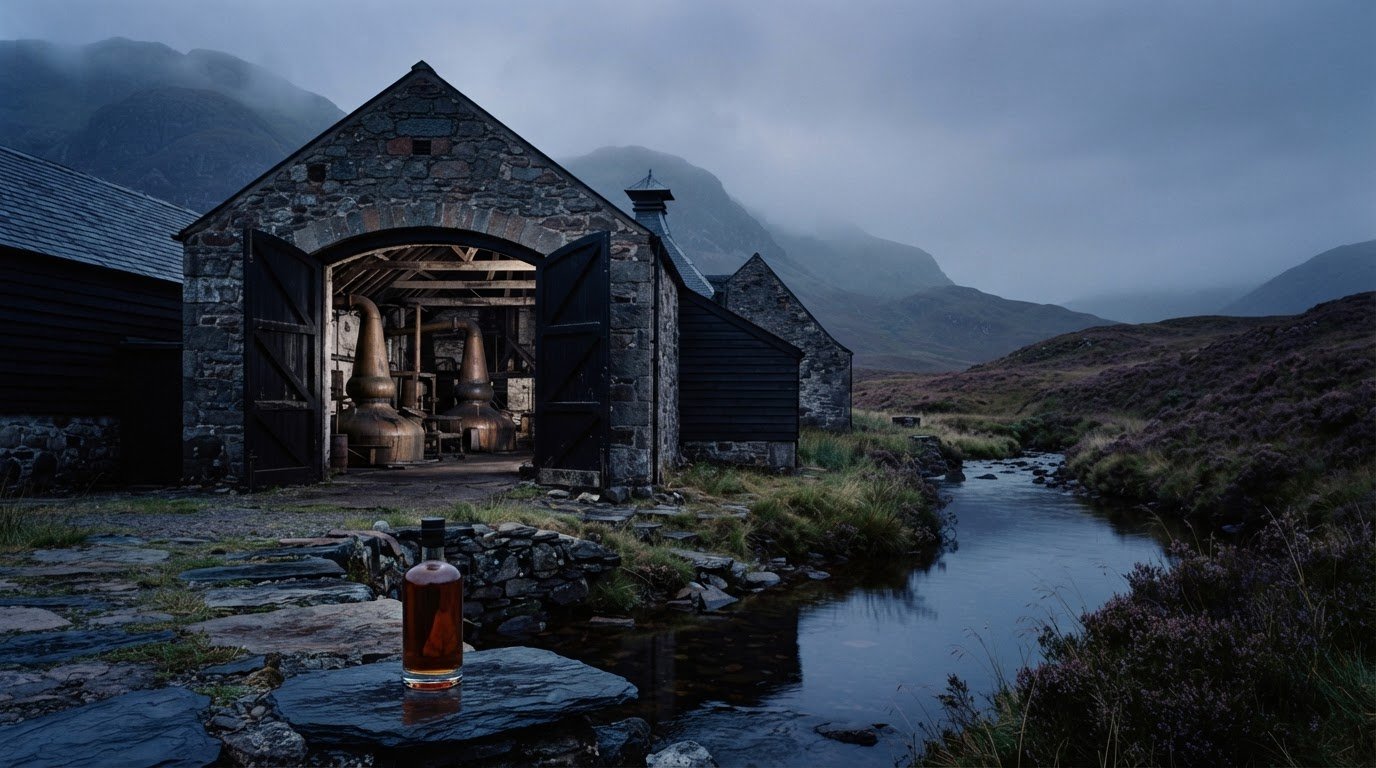
- October / 26 / 2026
Silent Distilleries: Examples of Closed and Quiet Stillhouses
A distillery can fall silent without disappearing from whisky’s story. To understand what a silent distillery is, start with its production status: it is no longer making whisky. The closure may be temporary, as with a mothballed stillhouse, or permanent, with the buildings left standing or demolished.
“Silent,” “ghost” and “mothballed” are often used as though they mean exactly the same thing. They overlap, but can suggest different histories and prospects for a distillery’s return. This guide explains the distinctions and looks at stillhouses where production has ceased. You’ll learn why distilleries fall silent and how to tell a pause in production from a lasting closure. A distillery’s history can continue to shape the whisky associated with it, even when its stills are quiet.
Key Takeaways
- Learn what “silent” means in whisky and why a distillery’s buildings don’t always tell the whole story.
- Distinguish a ghost distillery from one that has been mothballed, and understand what each term suggests about its future.
- Explore how shifts in demand and changing fortunes have left some stillhouses quiet for generations.
- Find out why whisky from a closed distillery may still be available, and what its origins can tell you.
Definition of a silent distillery
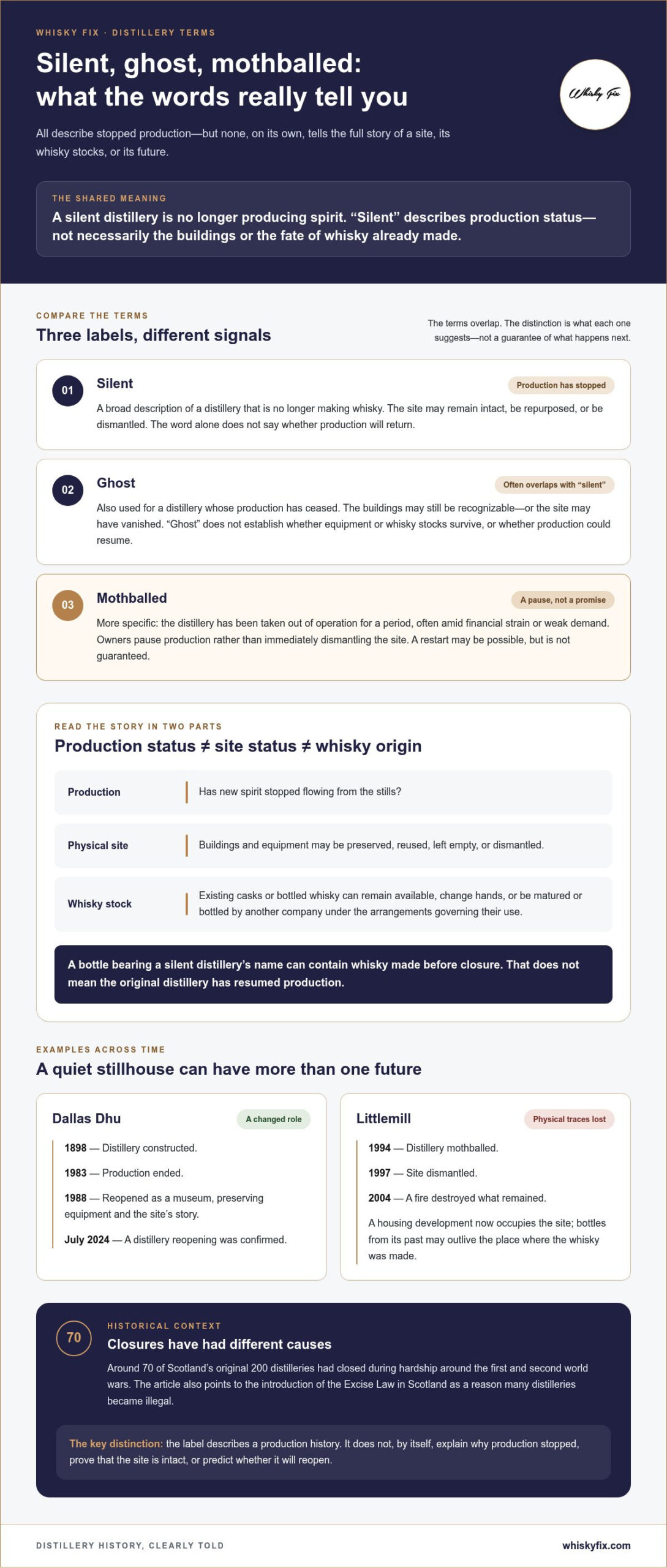
The question “what is a silent distillery?” has a direct answer: it’s a distillery that has stopped producing spirit. The term describes production status, not necessarily the condition of the buildings or the fate of the whisky stocks. Some sites remain intact; others have been dismantled or repurposed.
Silence can be temporary or permanent. A distillery may pause production in response to financial pressure or reduced demand, then return to operation. Another may close for good, leaving only buildings, records or bottles to mark its history. The word alone doesn’t tell you whether a stillhouse will reopen.
Dallas Dhu illustrates how a closed site can take on a different role. Constructed in 1898, the distillery closed in 1983. It reopened as a museum in 1988, preserving equipment and the site’s story for visitors. Its later history also changed: a distillery reopening was confirmed in July 2024. The case shows that “silent” can describe a particular period, rather than a permanent identity.
Littlemill presents a more lasting change. The distillery was mothballed in 1994, then dismantled in 1997. A fire destroyed what remained in 2004, and a housing development now occupies the site. The production ended first; the physical traces disappeared later. Bottles from a distillery’s past may therefore outlive the place where they were made.
Can another company buy or use whisky stock from a silent distillery? Yes. Existing casks or bottled whisky can change hands, and another company may mature or bottle acquired stock under the arrangements governing its use. That doesn’t mean the original distillery has resumed production.
For readers, the useful distinction is between a spirit’s origin and a site’s current activity. A bottle bearing a silent distillery’s name can contain whisky made before closure, while the stillhouse remains inactive. Dallas Dhu and Littlemill show why production history, surviving stock and the condition of a site are separate parts of the story.
Meaning of silent, ghost, and mothballed distilleries
“Silent” and “ghost” often describe the same central fact: whisky production has stopped. A ghost distillery may still have recognizable buildings, or its site may have vanished. Neither term alone tells you whether equipment remains, whisky stocks survive or production could resume. On a bottle, the name usually identifies where the spirit originated, not whether the site is still operating.
“Mothballed” is more specific. It describes a distillery taken out of operation for a period, often because of financial strain or weak demand. Owners pause production rather than immediately dismantling the site. The term suggests a possible restart, but doesn’t promise one. A long pause can become permanent if circumstances or ownership change.
Scotland’s history shows how closures can arise for different reasons. Around 70 of its original 200 distilleries had closed during hardship around the first and second world wars. The introduction of the Excise Law in Scotland also made many distilleries illegal. Such histories help explain why “ghost” can refer to both vanished operations and places with complicated pasts.
Buildings and equipment may be preserved, reused, left empty, or dismantled after closure. Stromness Distillery, founded in 1817, operated for more than a century before closing in 1928. Its closure ended production, while the surviving site’s condition became a separate part of its story.
A distillery can fall silent when demand declines, finances tighten or its owner decides to stop production. It can reopen if ownership, investment and operating conditions support a restart, particularly when the buildings and equipment remain usable.
To explore how a distillery’s origin shapes the character and history associated with a bottle, compare whiskies from different origins.
Taken together, the terms describe a distillery’s operational status: a silent distillery, also called a ghost or mothballed distillery, is no longer producing whisky. The wording does not, by itself, explain why production ended or establish anything about the whisky associated with the name. Nor is it a forecast. Whether the site remains recognizable or could return to operation is a separate question that the label alone cannot answer. Distinguishing status from origin helps avoid treating a bottle’s distillery name as proof that production continues there.
Why are some distilleries called silent distilleries?
“Silent” reflects the absence of new spirit flowing from a distillery’s stills. In Scotland, whisky sales rose after 1945 and continued climbing until 1980. Demand encouraged owners to expand production, but a market boom couldn’t last indefinitely. When sales later weakened, some stillhouses became quiet rather than continuing to produce spirit without sufficient demand.
Many Scottish distilleries opened during the 1960s and 1970s to meet rising demand. The sharp downturn in the 1980s changed the commercial picture, and owners mothballed distilleries to reduce production. A mothballed site could retain its stills and buildings, but its stills stopped making new whisky. Other closures ended production permanently.
Kinclaith shows how a distillery can disappear from active production and then from its physical site. Kinclaith eventually ceased production. Its site was dismantled in 1977, leaving no operating stillhouse to restart there. Whisky made before closure can preserve the distillery’s name in bottles, even after the place itself is gone.
Some silences last for decades. A distillery may remain inactive because demand, ownership or the condition of its site prevents a return. In other cases, the site is demolished or repurposed, making production there impossible without substantial rebuilding. “Silent” can therefore describe both a pause and the lasting result of a closure.
Scotland’s distilling history includes up to 200 distilleries, while around 150 were active when these figures were reported. The contrast points to repeated cycles of expansion and closure, rather than one single cause. Some Scottish distilleries have been silent for more than 100 years. Their histories show why the term can describe a long absence of production, even when whisky and records still carry their names forward.
Can a silent distillery still produce or sell whiskey?
A silent distillery isn’t producing new spirit while its stills are inactive. That doesn’t mean whisky made there has disappeared from the market. Casks filled before closure may continue maturing, and existing bottled stock can still be sold by its owner. The distillery’s production status and the commercial life of its whisky are separate matters.
Ownership shapes what happens to remaining stock. A company that acquires casks may mature, blend or bottle the whisky, subject to the arrangements governing the casks and the name used. A distillery’s closure doesn’t automatically transfer ownership or give another producer the right to claim its identity. The label and bottle history should distinguish the spirit’s origin from the company responsible for bottling or selling it.
The Midleton Very Rare Silent Distillery Collection illustrates how stock from a closed distillery can reach consumers. Old Midleton Distillery operated from 1825 to 1975, yet its remaining whiskey inspired a series of six releases from 2020-2025. The collection’s name refers to the silent distillery and its history, not to ongoing production at the old site. Existing spirit can therefore have a later commercial life, even when distillation has ended.
For a bottle from a silent site, separate three details: where the spirit was distilled, who matured or bottled it, and who sells it now. Those roles may belong to different businesses. The distillery name indicates provenance, while the bottler identifies a later stage in the whisky’s journey. This distinction explains why old distillery names remain on bottles long after their stills have stopped.
Explore single malt Scotch whisky to discover bottles shaped by their distillery origins and production histories.
The Scottish whisky industry experienced a major sales downturn in the 80s, leading to the mothballing of many distilleries.
Listings also show the prices of whisky from silent distilleries. These examples distinguish current listings from a recorded sale.
Whisky Fix: Single Malt Scotch Whisky
Whisky Fix helps readers move from learning about silent distilleries to exploring Scotch whisky by origin and style. Its Single Malt Scotch Whisky selection lets enthusiasts discover distillery character, while the Old & Rare range may appeal to readers drawn to whisky with a longer history.
As you compare bottles, consider the distillery’s production history alongside the whisky’s age, maturation and bottling details. A silent distillery’s name can carry a compelling story, but provenance and bottle details help you understand what you’re choosing. Whisky Fix also offers Scottish Gin and worldwide shipping.
Visit Whisky Fix to explore its whisky selection or get in touch.
Let a distillery’s story shape your next dram
A whisky’s appeal can reach beyond its tasting notes. The story behind its name may invite you to explore how place, craftsmanship and time shape the character in your glass. Understanding what a silent distillery represents can make choosing a bottle more considered: look beyond the label, trace the spirit’s origins and notice how its story informs your interest in whisky.
For guidance with your whisky interests, contact Whisky Fix about finding a bottle. A conversation can help you turn a story that caught your attention into a rewarding next discovery.
Frequently Asked Questions
What is a silent distillery?
A silent distillery is a whisky-making site where production has stopped. The term describes activity at the stillhouse, not whether whisky from that site remains available. When assessing a bottle, read the distillery name alongside any stated distillation and bottling details. These can help you understand when the spirit was made and who handled its later maturation or bottling.
What is the difference between a silent distillery and a closed distillery?
A silent distillery has stopped producing spirit, but the pause may be temporary or permanent. “Closed” describes the cessation of production, while “silent” does not, by itself, establish whether the distillery will reopen or what happened to its buildings.