
- October / 25 / 2026
Scotch tasting guide for beginners: choose your first whisky
A dram can be much smaller than a pub pour: technically, it’s 1/8 of a fluid ounce, though a pub dram may be a full ounce. In a scotch tasting guide for beginners, the useful starting point is to treat a dram as a small measure for exploring a whisky, not a fixed serving size. A first tasting pour can be half an ounce, giving you room to notice the aroma and flavour without rushing.
If the terms on a Scotch label feel unfamiliar, you’re not alone. Understanding what makes a whisky single malt, and how its cask and bottling shape its character, makes choosing a first bottle easier. This guide explains the definition and essential Scotch rules, then shows you how to compare styles and taste a dram with attention. You’ll also find practical pointers on age, cask influence, alcohol strength and adding water, so you can begin with curiosity rather than feeling you need expert knowledge.
Key Takeaways
- Understand what makes a Scotch a single malt, including its barley, distillery and maturation requirements.
- Compare age, cask influence and alcohol strength to find a style that suits your palate.
- Learn how aroma, a measured first sip and a little water can reveal different qualities in the whisky.
- See how oak maturation and bottling contribute to a Scotch’s character before it reaches the glass.
- Explore Whisky Fix’s selection of Single Malt Scotch Whisky when you’re ready to choose a bottle.
What is Single Malt Scotch Whisky?
Single malt Scotch comes from one Scottish distillery and is made from malted barley. Its ingredients, production, region and tasting style help explain what reaches your glass.
Ingredients and Production Stages
Scotch whisky is made from three natural ingredients: cereals, water and yeast. For single malt Scotch, the cereal is 100% malted barley, and production takes place at one distillery in Scotland. The whisky is double-distilled in copper pot stills, then matured in oak barrels for at least three years. These requirements shape the spirit’s identity, while production choices influence its character.
That distinction matters when comparing a single malt with blended Scotch. A blend combines whiskies, while a single malt reflects one distillery’s approach to barley, distillation and maturation. Neither label alone tells you which whisky you’ll prefer. Tasting lets you notice how those choices create different profiles, from delicate and fruity to robust and peated.
Regional Flavor Profiles
Scotland has five main whisky-making regions: Speyside, Lowland, Highland, Campbeltown and Islay. Regional labels offer useful context, but they don’t guarantee a particular flavour. Distillery methods and maturation also shape each whisky, so two bottles from one region can taste distinct. Islay is often associated with peated character, while Speyside is a useful place to explore varied fruit and malt notes.
Use the region as a starting clue, then compare individual glasses. For example, contrast a peated Islay whisky with a lighter, less smoky expression from another region. Notice aroma, texture and finish instead of relying on regional reputation. This helps you identify your preferences without treating a map as a strict flavour chart.
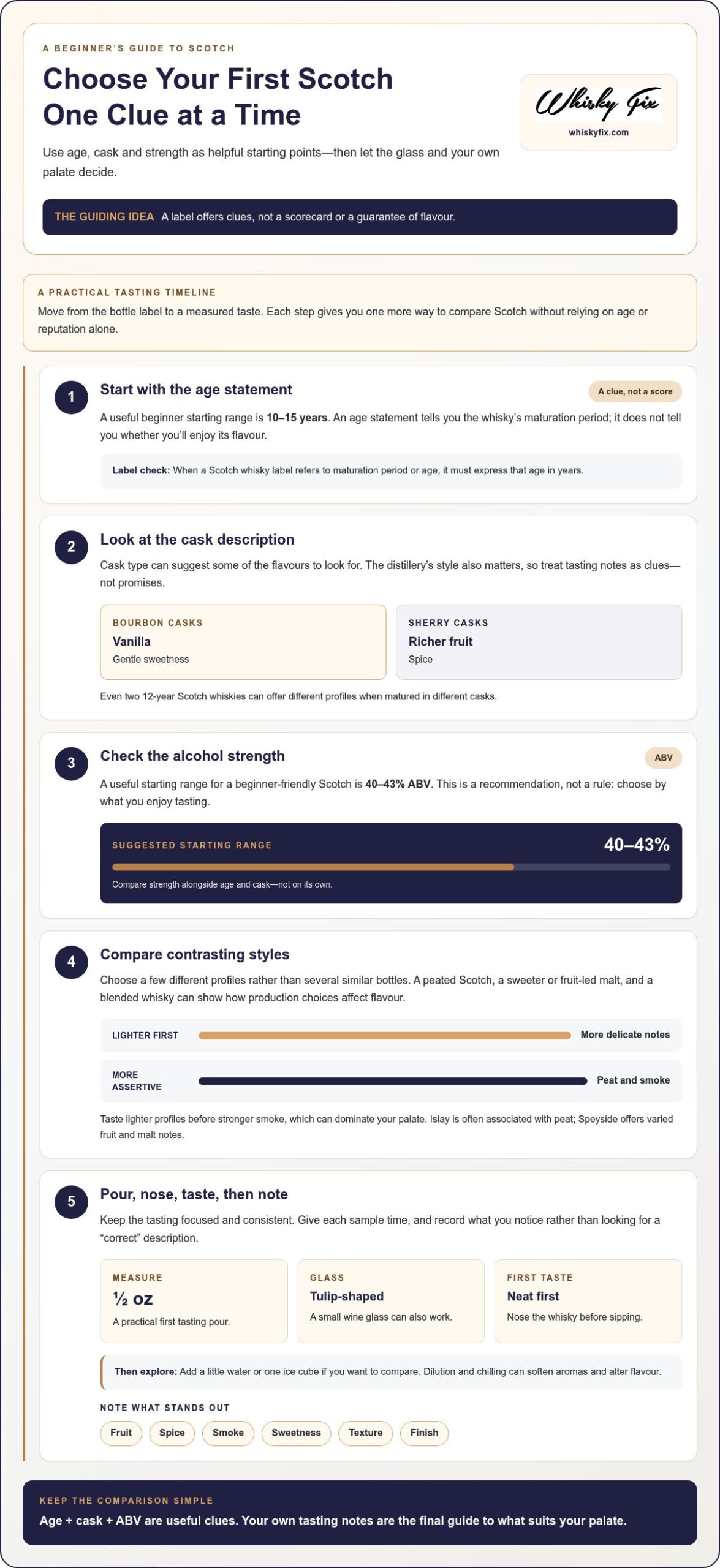
A tasting is a structured way to explore whisky and discover which profiles suit you. Begin with a small pour, nose the spirit before sipping, then give each sample time to open. A half-ounce pour is a practical tasting measure. It leaves room to compare several whiskies without making the exercise about large servings.
For a first flight, choose a few contrasting styles rather than many similar bottles. A peated Scotch, a sweeter or fruit-led malt, and a blended whisky can show how production choices affect flavour. Keep the order consistent, moving from lighter profiles to more assertive ones. Strong smoke can dominate your palate, so tasting it later makes subtle aromas easier to notice.
Choosing a first Scotch by age, cask type, and ABV
Age, cask influence and alcohol strength offer useful clues, but let your palate make the final choice. Compare contrasting styles, then note which aromas and flavours you enjoy.
Beginner-Friendly Scotch Choices
A beginner-friendly Scotch offers an approachable way to explore flavour without making age or reputation the only guide. A useful starting range is 10-15 years, with an ABV of 40-43%. These are recommendations, not rules: a gentle Highland malt may suit one newcomer, while another may prefer fruit, spice or smoke. Try contrasting styles to find your preference.
Cask type can help you anticipate character. Bourbon casks can contribute vanilla and gentle sweetness, while sherry casks are associated with richer fruit and spice. The cask’s influence works alongside the distillery’s style, so use tasting notes as clues rather than guarantees. A 12-year Scotch matured in sherry casks may offer a different profile from one matured in bourbon casks.
Age Statements and Whisky Labels
An age statement gives a whisky’s maturation period in years, while other label details can help you compare style and strength. According to the UK Government, a Scotch whisky label that refers to its maturation period or age must express it in years. The age number is a clue, not a score: it doesn’t tell you whether the whisky will suit your palate.
For a first bottle, read the age alongside the cask description and ABV. A 15-year-old Scotch may be a good candidate, but a younger whisky can also appeal if its profile suits you. Don’t assume that a higher age means a better first experience. A 25-year-old Lagavulin taken neat as a first Scotch, for instance, could be an intense introduction.
Glassware shapes how you experience aroma. Choose a clean, tulip-shaped tasting glass if available; its narrower rim gathers aromas above the spirit. A small wine glass can also work. Use the same glass for each sample, since changing its shape can make comparisons less consistent. Pour a half ounce for tasting, then nose the whisky before taking a sip.
Ice is a matter of preference, but it chills and dilutes whisky, which can soften aromas and alter flavour. First taste a small pour neat, then add a little water or one ice cube if you want to explore the change. If sharing a flight with a friend, agree to taste each sample neat first, then adjust your own glass.
For a considered start to your whisky journey, compare single malt Scotch styles by age, cask and strength, rather than choosing by age alone.
Providing water for sipping and dilution
Water changes a Scotch’s strength and can reveal aromas that seem muted at first. Compare a small taste neat with a carefully diluted one to learn what suits your palate.
Serving Scotch Neat or with Water
Serving Scotch neat means tasting it without added water or ice. Dilution softens the spirit and changes its flavour. Start neat to experience the malt whisky as bottled, then decide whether water improves the balance. This gives you a reference point, so you can judge the change rather than guess how the whisky might taste undiluted.
Take a small sip and let it rest briefly before swallowing. Notice warmth, sweetness, spice and finish. Then add a little water and compare those same qualities. A peated whisky may show different aromas after dilution than a lighter whisky, while a higher-strength bottling may feel more intense neat. Your response matters more than any fixed rule.
Adding Water or Ice
Add water gradually to observe how dilution affects aroma and flavour. Some drinkers use a straw or pipette to add a drop or two, then nose and taste again. A teaspoon also gives you control over a small addition. Pause between additions, because you can’t remove water once it’s mixed into the Scotch.
Ice chills whisky as it melts, so its effect changes over time. If you prefer a colder, softer drink, add one cube and taste before it melts much. For a tasting comparison, use water first: it makes the amount easier to control and keeps temperature from becoming another variable. Neither method is a test of expertise.
A measured dilution can also help you compare two pours. Keep one sample neat, then add water to the other in small increments. One suggested ratio is one-quarter water to three-quarters whisky, but that creates a substantially diluted glass. Treat it as a comparison, not a required serving. The result depends on the whisky’s starting strength and your preferred intensity.
Record each change as you taste. For example, note whether adding water softens alcohol heat, brings forward fruit or makes smoke less prominent. A Highland malt and a peated expression may respond differently, so use the same approach across styles. Write down the amount added and the aromas you notice; those observations can guide your next tasting without turning preference into a rigid formula.
Oak cask maturation and bottling
Oak casks do more than store Scotch: they shape its colour, aromas and flavour during maturation. Bottling then sets the strength and presents the matured spirit for drinking.
During maturation, whisky interacts with the wood and the cask’s previous contents. The cask can contribute notes such as vanilla, dried fruit, spice or toasted oak, while softening the spirit’s character. One estimate attributes 60-80% of whisky’s taste to the cask. That influence helps explain why the same distillery’s spirit can develop distinct profiles in different casks.
Previous contents matter. Casks that held bourbon can contribute vanilla and caramel-like notes; sherry casks may bring dried-fruit and baking-spice qualities. Auchentoshan Three Wood illustrates layered maturation: it uses American bourbon, Oloroso sherry and Pedro Ximenez sherry casks. Each cask contributes a different influence, creating a more complex flavour than one cask type might provide.
Casks are reused, and their effect changes with each filling. Second-fill Scotch whisky casks average around eight to twelve years of use, while casks are uncommon to refill more than three times. A first-fill cask generally gives more influence from its previous contents; later fills tend to provide a subtler contribution. These differences help explain tasting notes, but don’t determine whether a whisky will suit you.
Maturation also involves gradual loss as alcohol and water evaporate through the wood. This loss is called the angel’s share, and it is about 2% during each year of Scotch whisky maturation. Warehouse conditions and cask characteristics affect how the spirit develops. The remaining whisky is eventually drawn from the cask and prepared for bottling.
Bottling strength changes how concentrated the whisky feels in the glass. Scotch Whisky must be bottled at a minimum alcoholic strength of 40% abv. A label may also show a higher strength, which can make aromas and flavour feel more intense. The spirit’s character is fashioned through distillation and maturation, then preserved at bottling strength for the drinker to explore.
When comparing bottles, read the cask description alongside the tasting notes and ABV. For example, a sherry-cask Scotch may suggest fruit and spice, while a bourbon-cask expression may point towards vanilla. Treat those cues as a starting point, then taste and record what you actually find. The cask offers context, not a promise of identical aromas in every glass.
Scotch single malt definition and legal standards
“Single malt” describes how Scotch whisky is made, not a promise of flavour or quality. The label identifies a specific production category, giving you a reliable starting point when comparing bottles from Scotland.
For a Scotch to qualify as single malt, it must be distilled at one distillery in Scotland using only malted barley. It must mature in oak barrels for at least three years. The term therefore refers to the distillery and the whisky’s ingredients, not to one individual cask. A single malt can combine whisky from different casks at that distillery.
“Single” is sometimes mistaken for “one barrel,” but the terms mean different things. A bottle may contain whisky matured in several casks, provided they came from the same distillery. By contrast, blended Scotch combines different whiskies. Reading the category carefully helps explain what a label says about production before you consider its tasting notes.
Scotch whisky must be distilled and matured in Scotland for at least three years. The Scotch Whisky Regulations set rules for how Scotch whisky is produced, labelled, packaged and advertised. These standards matter because “Scotch” is a regulated identity, not simply a style name for whisky made anywhere. The country of production is part of the definition.
Labels also help you compare age and category. According to the UK Government, a Scotch whisky label that refers to its maturation period or age must express it in years. An age statement describes maturation, while “single malt” identifies a production category. Neither term tells you by itself whether the whisky will taste fruity, smoky, sweet or spicy.
For a practical label-reading comparison, look at three details: the words “single malt,” the stated age and any cask description. Then compare them with the aromas and flavours you notice in the glass. For example, you may enjoy a fruity impression but not a peated profile. Use label information as context, not as a verdict.
Trying a range of single malts can show how one distillery’s spirit differs from another’s. Keep the label details beside your tasting notes, and record which profiles you’d choose again. This simple approach connects legal definitions with your own preferences, making the next bottle an informed choice rather than a guess.
Explore single malt Scotch whisky and use the label details to guide your next tasting.
Whisky Fix: Single Malt Scotch Whisky
Whisky Fix offers Single Malt Scotch Whisky for readers ready to turn tasting notes into a bottle choice. Use what you’ve learned about age, cask influence and flavour profiles to narrow your selection, then explore expressions that fit your preferences. If you’re still comparing styles, focus on the aromas and flavours you enjoyed most, rather than choosing by age alone. Whisky Fix also offers worldwide shipping, making its Scotch selection accessible to customers around the world.
Visit whiskyfix.com to explore Single Malt Scotch Whisky, or contact Whisky Fix if you’d like to continue your enquiry.
Make Your Next Dram Your Own
Use this scotch tasting guide for beginners as a starting point, then let experience refine your preferences. Whisky Fix offers Single Malt Scotch Whisky, Old & Rare expressions and Scottish Gin, giving you different directions to explore as your interests develop. Taking time to appreciate craftsmanship often extends to other everyday routines and personal care; for men wanting to refine their look, Wavy Beard Maven offers guides on training and maintaining wavy beard styles.
If you’re ready to choose a Scotch that suits your palate, contact Whisky Fix for tasting advice. Take your time, trust your senses, and enjoy discovering what you like.
Frequently Asked Questions
What Is a Dram of Whisky?
A dram is a small serving of whisky, though the term doesn’t always describe one fixed pour. A technical dram is 1/8 of a fluid ounce, while a pub may serve a full ounce when you order one. For a home tasting, think of a dram as a sample to explore, and distinguish the word from the actual measure poured. For readers who enjoy curating a welcoming atmosphere at home for hosting and relaxing, specialists like vanitybathroomworld.co.uk offer furniture, vanity units, and mirrors to elevate personal living spaces.
How Do You Drink a Dram?
Drink a dram slowly, taking time to notice its changing character rather than treating it like a shot. After smelling the whisky, take a small sip and let it move across your tongue before swallowing. Then consider its texture and finish. If sharing a tasting, compare impressions with others; their descriptions can help you notice details you might otherwise overlook. Cultivating an appreciation for bold, nuanced flavours can also inspire how you dine, where food innovators like Jolloful offer authentic Pan-African packaged meals designed for curious palates.
Ice, Ice, Maybe?
Yes, you can add ice if you prefer Scotch chilled, but the cube gradually dilutes it as it melts. For a clearer comparison, first sample a small pour without ice, then try another with a cube. Notice whether the colder temperature makes aromas less apparent or changes the whisky’s balance. Your preferred serving style is a matter of taste, not a test.
To Add Water or Not?
Adding water is optional, and a small amount lets you assess the change without overwhelming the whisky. Use a teaspoon or pipette, then pause and smell the glass again before tasting. If you add too much, you can’t reverse the dilution. Try this comparison with two small pours, leaving one unchanged so you can judge what the water contributes.
What Makes Scotch, Scotch?
Scotch is whisky made and matured in Scotland under defined production rules. Single malt Scotch comes from one Scottish distillery and uses malted barley; blended Scotch combines whiskies. Scotch must mature in oak for at least three years. These terms describe origin and production, not a guaranteed flavour. A label’s category helps you understand what you’re tasting before forming your own view.
What Basic Equipment Do Beginners Need for a Scotch Tasting?
A beginner can taste Scotch with a clean glass, still water and a way to record impressions. A tulip-shaped glass helps concentrate aromas, while a small wine glass is a practical alternative. Keep a teaspoon or pipette nearby for controlled dilution. A notebook or tasting sheet can capture each whisky’s aroma, texture and finish, making later comparisons more useful.
What Are the Main Scotch Whisky Regions and How Do Their Flavor Profiles Differ?
Scotland’s five main whisky regions are Speyside, Lowland, Highland, Campbeltown and Islay. Their profiles offer broad orientation, not a guarantee of what any bottle tastes like. Speyside is often linked with fruity notes, while Islay is especially associated with peated, smoky whisky. A scotch tasting guide for beginners can use regional character as a starting point, then compare the actual aromas in each glass.
How Should Beginners Taste Scotch Step by Step?
Begin by pouring a small sample, then look at its colour and gently nose it before sipping. Take a modest first sip and let the whisky settle across your palate. Note one or two impressions, such as fruit, smoke or spice. Taste again after a pause, and compare with another sample. A scotch tasting guide for beginners should encourage observation, not dictate what you must enjoy.