
- September / 30 / 2026
Prestigious Whisky Brands for Collectors: What Defines a Lasting Name in 2026?
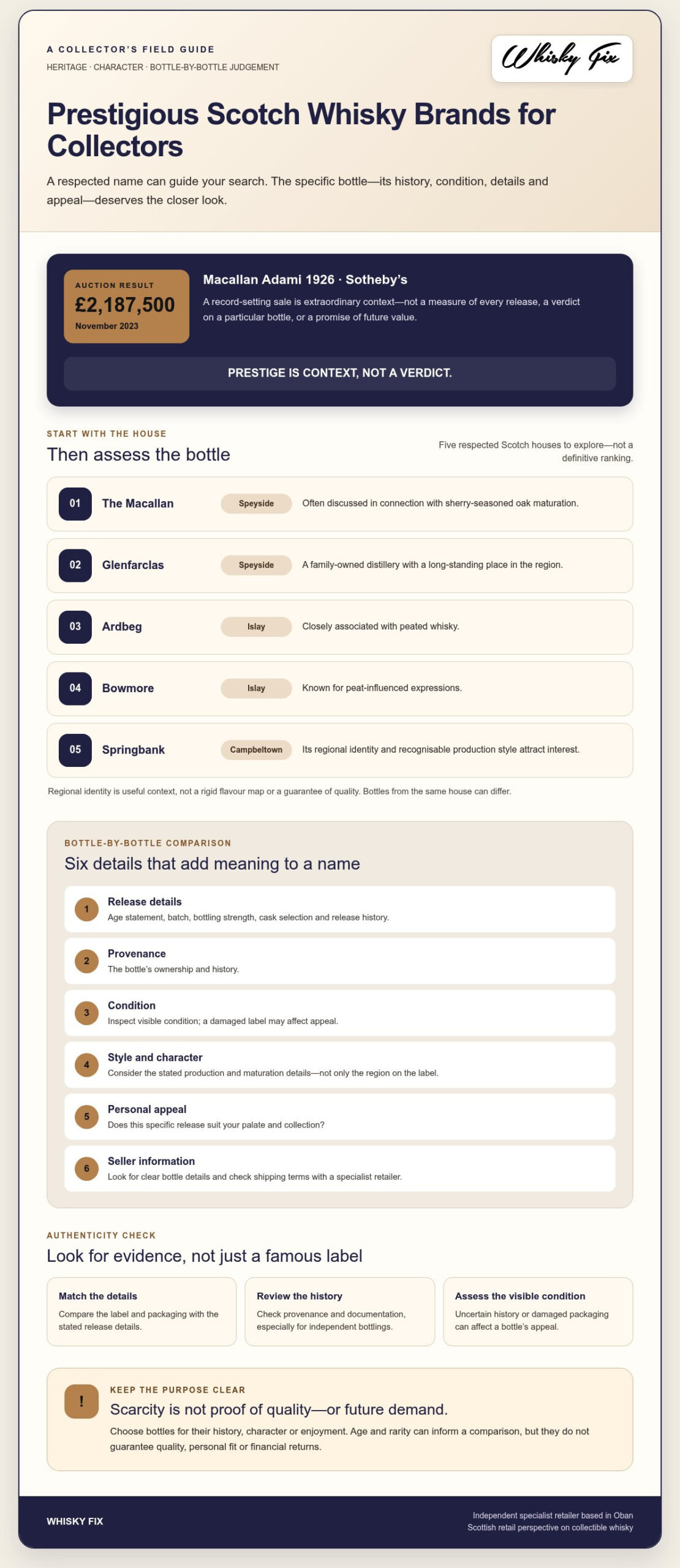
A record-setting auction can make a whisky house seem like an obvious collector’s choice, but a famous name alone can’t tell you whether a particular bottle deserves a place on your shelf. The Macallan Adami 1926 sold for £2,187,500 at Sotheby’s in November 2023; that extraordinary result isn’t a measure of every release or a promise of future value. The best prestigious whisky brands for collectors are those whose heritage and character stand up to bottle-by-bottle scrutiny.
Reputation, age and rarity are useful starting points, but each can distract from details that matter: provenance, condition, bottling history, style and whether the whisky suits your palate. Prestige is context, not a verdict.
This guide explores respected whisky houses across Scotland’s key regions and offers practical ways to compare individual bottles, assess authenticity and source rare releases. It also considers how heritage and personal taste can shape a thoughtful collection, without treating scarcity as proof of quality or a purchase as an investment. Based in Oban, independent specialist retailer Whisky Fix offers a Scottish retail perspective on the categories collectors may wish to explore.
Key Takeaways
- Use prestigious whisky brands for collectors as a starting point, with five respected Scotch houses to consider rather than a definitive ranking.
- Compare each bottle by house character, region, release details and personal appeal to find styles that suit your collection.
- Check provenance, condition, bottling details and seller information before assessing a rare release.
- Choose bottles for their history, character or enjoyment, not on the assumption that age or scarcity will bring financial returns.
- Before exploring collectible categories, look for clear bottle information and check shipping terms with a specialist retailer.
What makes whisky brands prestigious to collectors?
Prestige comes from more than a high price or a familiar name. Collectors may value a whisky house for its heritage, consistent production identity, history and distinctive character. Regional context can help explain a house’s style, but it doesn’t guarantee quality or replace an assessment of the whisky in the bottle. A respected name is most meaningful when the specific release also appeals to the collector.
A prestigious whisky house has earned lasting regard through its heritage, production identity and character; a collectible bottle is a specific release whose provenance, condition and appeal make it worth considering. The distinction matters. Releases from the same distillery can differ in age statement, bottling strength and level of collector interest.
How heritage and distillery identity shape reputation
Continuity of production, a recognisable house style and a documented place in Scotch whisky history can build a distillery’s standing over time. Regional identity offers useful context, not a rigid flavour map: production choices and maturation also shape what’s in the glass. For a foundation on what defines a single malt Scotch, including the category’s production and maturation requirements, see the linked overview. The single malt Scotch whisky guide can help you explore the category further.
Why prestige does not make every release collectible
Releases from one distillery can differ by age statement, batch, bottling strength, cask selection and release history. These details affect a bottle’s character and may shape collector interest, but none alone proves quality or authenticity. A limited release may attract attention because fewer bottles were made, yet scarcity doesn’t establish that the whisky suits your taste or that future buyers will want it.
Independent bottlings add another consideration. The bottler, stated distillery, cask details and documentation help explain what’s being offered, while provenance helps establish a bottle’s ownership and history. Compare the label and packaging with the stated release details, and assess the visible condition rather than relying on the brand name. A damaged label or uncertain history may affect a bottle’s appeal even when the distillery is highly regarded.
Use reputation to guide your search, then judge each bottle on its own evidence: stated details, condition, provenance and personal fit. That makes a shortlist of prestigious whisky brands for collectors a useful starting point, not a ranking of guaranteed returns or a promise that every release is collectible.
Prestigious Scotch whisky brands collectors should know
This shortlist is a starting point, not a definitive ranking or a claim that any particular bottle is available. The houses below represent different regional associations and production identities, giving collectors distinct directions to explore. The Scotch Whisky Association provides broader industry context, but each house’s reputation still needs to be considered alongside the details of an individual bottling.
Compare celebrated Speyside and Highland houses
The Macallan and Glenfarclas are both associated with Speyside, but each has its own history and house identity. The Macallan is often discussed in connection with sherry-seasoned oak maturation, while Glenfarclas is a family-owned distillery with a long-standing place in the region. These associations can guide a comparison, but they don’t tell you exactly how every release will taste. Age, cask selection, bottling strength and release history all matter.
Regional labels are useful context, not a guarantee of character or quality. When comparing bottles, look beyond the area on the label and consider the stated production and maturation details of each release. For a broader overview of distillery locations and identities, explore this Scotch whisky distilleries guide.
Explore characterful Islay and Campbeltown names
On Islay, Ardbeg and Bowmore offer two points of comparison. Ardbeg is closely associated with peated whisky, while Bowmore is also known for peat-influenced expressions. Individual bottlings can differ in emphasis and balance, so use each house’s identity to decide which releases merit a closer look, not as a guarantee of flavour.
Springbank brings Campbeltown into the picture. Its regional identity and recognisable production style attract interest from drinkers seeking a perspective beyond Scotland’s larger whisky-producing areas. As with the Islay houses, the specific bottling remains the best guide to what’s in the glass.
- The Macallan and Glenfarclas: Speyside houses to compare through their distinct histories and release details.
- Ardbeg and Bowmore: Islay names for exploring different expressions of peated whisky.
- Springbank: A Campbeltown house with a distinctive regional identity.
- Whisky Fix: An independent specialist retailer based in Oban, Scotland, offering Scotch and old and rare expressions as categories to explore.
No single brand suits every collector; the right choice is the house and release whose character, history and provenance fit your interests. For another point of comparison, browse Whisky Fix’s Scotch and old and rare whisky selections, and check individual bottle details and current availability.
How to compare prestigious whisky brands for your collection
Start with the bottle, not the fame of the name on its label. Record details you can verify, then consider how each release fits your interests. This helps distinguish a widely recognised distillery from a particular bottling with meaningful history, sound condition and genuine appeal to you.
| What to compare | Questions to ask |
|---|---|
| House character and region | What production identity or regional context interests you, and does this particular whisky reflect it? |
| Release variety | Is it a standard or limited release, and what do the verified bottling details say about age, strength and release history? |
| Provenance and condition | Is there a credible ownership history? Are the packaging, closure, fill level and visible condition consistent with the bottle’s description? |
| Personal appeal | Would you value this bottle for tasting, its place in a distillery-focused collection, or its documented history? |
Match a brand’s character to your collecting interests
Decide what you want your collection to explore. You might seek variety across regions, focus on one distillery, or follow a flavour profile such as peat influence or particular cask styles. Where possible, taste representative expressions or research verified bottling notes and production details before specialising. Preferences are individual: no style is inherently superior, and a prestigious name won’t make a bottle your personal favourite.
Assess release history, condition, and provenance
Read the label carefully and compare its age statement, bottling strength, stated cask information and release details with reliable records. An older age statement or ornate label isn’t, by itself, proof of quality, authenticity or significance. Check the fill level, seal, packaging and available documentation, and ask what is known about storage and ownership history. If details are missing or inconsistent, include that uncertainty in your assessment.
Also distinguish an official bottling, issued under a distillery or owner’s label, from an independent bottling released by a separate bottler. Check who bottled it and what the label actually claims; terminology and available details can vary. For a deeper look at rarity and provenance, consult this rare Scotch collector reference.
Collector suitability depends on the individual bottle and the collector, not brand prestige alone. Among prestigious whisky brands for collectors, the best fit is a release whose verified story, condition and character align with what you want to explore or enjoy.
How to assess a collectible whisky bottle without assuming investment returns
Prestige, age and rarity can attract attention, but none guarantees appreciation or future resale demand. A bottle’s appeal depends on its specific history, condition and market, and these factors can change. Collecting also involves authenticity and storage risks, while a sought-after bottle may not be easy to resell. Assess a whisky for what you value in it, not on the assumption that it will gain value.
Check authenticity and bottle condition before buying
Use this sequence to build a clearer picture before deciding:
- Trace provenance. Review credible ownership history or supporting documentation, and note gaps or inconsistencies.
- Inspect condition. Examine the fill level, closure, seals, label and packaging. These details inform your assessment, but no single visual clue proves a bottle is authentic.
- Verify bottling details. Compare the stated distillery, age, strength and release information with reliable records where available. Confirm that the description matches the bottle being offered.
- Assess the seller. Look for clear bottle descriptions and ask a specialist seller about uncertainties, condition and known history. Consider whether the available information supports the bottle’s claims.
- Clarify your purpose. Decide whether you’re choosing the bottle for enjoyment, historical interest or a place in a collection. This helps separate personal value from uncertain resale prospects.
Treat collectability as a personal decision, not a promise
Storage history can affect a bottle’s condition, and information about storage may be incomplete. Market interest and resale outcomes are uncertain too. A limited release or an older age statement can be part of a bottle’s story, but neither guarantees that demand will continue or that a future buyer will value it as you do. Treat claims about investment performance cautiously and look for substantiation rather than relying on publicity or asking prices.
Choose among prestigious whisky brands for collectors by weighing the evidence and your own reasons for collecting. Whisky Fix sells whisky bottles, including Scotch and old and rare expressions, not cask investment. To explore bottle selections, browse whisky at Whisky Fix, and review the details of any specific bottle before purchase.
Where to source prestigious whisky brands with specialist guidance
A specialist retailer can help you understand a bottle’s details, but it’s still important to ask precise questions. Before choosing among prestigious whisky brands for collectors, check how clearly the seller describes the specific bottle, what is known about its history and condition, and what shipping terms apply to your destination. Broad claims of rarity or prestige are less useful than precise, verifiable information.
Questions to ask a specialist whisky retailer
Use this checklist to guide your conversation and compare listings consistently:
- Provenance: What is known about the bottle’s ownership history, and is supporting documentation available?
- Bottling details: Can the seller confirm the distillery, expression, age statement, bottling strength and release information shown?
- Condition and packaging: What is the state of the label, closure, seal, fill level and any original packaging? Ask what the description is based on.
- Uncertainties: Are any details unknown, unclear or difficult to verify? A transparent answer helps you judge the evidence.
- Shipping: Is delivery available to your destination, and what terms and conditions apply? Confirm eligibility before ordering.
Clear answers help you assess the individual bottle. They’re more useful than general assurances that something is exceptionally rare, prestigious or desirable, particularly when those claims aren’t supported by relevant details.
Build a collection with a clear point of view
Keep a record for each bottle: distillery, expression, bottling details, provenance and acquisition date. Add a note about why you chose it, such as its regional context, production story or personal appeal. Over time, this record makes the collection easier to understand and helps distinguish a deliberate theme from purchases driven only by familiar names.
A collection can balance well-known houses with bottles selected for individual character or documented significance. The goal isn’t to acquire every celebrated label. It’s to build a group of bottles whose stories and styles reflect your interests, while recording what you can verify about each one.
Whisky Fix is an independent specialist retailer based in Oban, Scotland, offering Scotch and old and rare expressions. Check specific bottles and their availability directly, and confirm delivery eligibility and terms for your destination. Once you’ve defined what you’re looking for, explore the Whisky Fix specialist selection as one place to continue your search.
Build a Collection Around What Matters to You
The most meaningful collections are shaped by curiosity and discernment, not by a famous name alone. Heritage and regional identity can help you discover respected whisky houses, while a specific bottle’s provenance, condition and release details help you judge its merits. Age and scarcity may add context, but they don’t guarantee quality, future demand or financial returns.
Use the list of prestigious whisky brands for collectors as a starting point, then choose bottles that reflect your tastes, interests and reasons for collecting. Keep a record of each bottle and check its details before you buy.
Whisky Fix is an independent specialist retailer based in Oban, Scotland, offering single malt Scotch and old and rare expressions. Explore Whisky Fix’s specialist whisky selection once you’ve defined what you’re looking for. Worldwide shipping is offered; confirm eligibility and terms for your destination. A thoughtful collection begins with one well-considered choice.
Frequently Asked Questions
Which whisky brands are most prestigious for collectors?
There’s no universally agreed ranking, but The Macallan, Springbank, Ardbeg, Bowmore and Glenfarclas are respected Scotch whisky houses collectors may wish to explore. They offer different histories, regional associations and house identities. Treat these names as a starting point, not a definitive list: a distillery’s reputation doesn’t establish the quality, condition or appeal of every bottle it releases. Compare individual bottlings and choose those that suit your interests.
What makes a whisky brand prestigious?
Prestige typically reflects a combination of heritage, reputation, distinctive character and respected production history. A house may earn lasting regard through a recognisable identity and a place in whisky history, rather than price or publicity alone. For collectors, brand standing is only context. Assess a particular bottle’s release information, provenance and condition on their own merits.
Are prestigious whisky brands always rare?
No. A respected distillery may release both widely available expressions and bottlings produced in limited quantities. Rarity can contribute to collector interest, but limited availability alone doesn’t prove quality, authenticity or lasting demand. Look for verifiable release details and provenance, and consider whether the bottle’s character or history genuinely interests you. A familiar, less scarce expression may be more satisfying than a rare bottle that doesn’t fit your collecting priorities.
Does an older whisky bottle make a better collectible?
Not necessarily. An age statement describes how long the whisky matured before bottling, but age alone doesn’t establish quality or collector appeal. Consider the specific expression, bottling details, condition and documented history. Storage and packaging also matter when assessing a bottle. An older release may interest you for its provenance or historical significance, but it shouldn’t automatically outrank a younger bottling that better suits your taste or collection.
How can I check whether a collectible whisky bottle is authentic?
Start by comparing the label and bottling details with credible information about the stated release, then review provenance documentation, closure, seals, fill level and packaging. Ask the seller to explain uncertain details and what is known about the bottle’s history. No single visual clue conclusively proves authenticity, and convincing packaging isn’t a substitute for supporting evidence. If key details are unclear or inconsistent, pause and seek more information before buying.
Are prestigious whisky brands a reliable investment?
No brand can guarantee appreciation or resale demand. Even a prestigious name, an old age statement or a rare release doesn’t ensure future buyers will want a bottle or that its value will rise. Market conditions can change, and authenticity, storage and resale liquidity present risks. Collect for enjoyment, provenance or historical interest rather than promised returns. This is practical collecting guidance, not financial advice.
Can I buy rare Scotch whisky online from a specialist retailer?
Yes. Whisky Fix is an independent specialist retailer based in Oban, Scotland, offering single malt Scotch and old and rare expressions online, with worldwide shipping. Specific bottles may not always be available, so check current listings and confirm the bottle’s details, condition and provenance before ordering. Also verify that delivery is available to your destination and review the applicable shipping terms. Availability and shipping eligibility can vary.