
- November / 3 / 2026
Port Cask Scotch Recommendations for Fruit-Forward Flavor
For fruit-forward character, Tomatin 14 Year Port Cask is a compelling place to start among port cask-finished Scotch recommendations: it’s a 14-year-old Scotch bottled at 46% ABV. Port-cask maturation can lend whisky rich fruit notes and a rounded sweetness, making it a distinctive alternative to more familiar cask styles. The best choice depends on whether you want the cask’s influence to lead or to complement the whisky’s own character.
If you’re drawn to ripe-fruit flavours, the cask matters, as does how the whisky was matured before its finish. This guide compares selected port-finished bottles, outlines the flavour differences you might notice, and sets port casks alongside bourbon, sherry, wine, and rum casks.
Along the way, you’ll see why Tomatin belongs in the conversation, whether you’re choosing your first port-finished Scotch or exploring a different expression of fruit and cask influence.
Key Takeaways
- Compare Quinta Ruban’s American oak maturation with its port-cask finish to understand how the two stages contribute to its character.
- Use Balvenie Portwood’s age and cask history to consider how a port finish can complement a mature single malt.
- Choose a cask style by the flavour direction you prefer: port for rich fruit, with bourbon, sherry, wine and rum each bringing a different influence.
- Consider Tomatin as a distinctive comparison when exploring fruit-forward port-finished Scotch and the balance between malt character and cask influence.
1. Glenmorangie Quinta Ruban tasting and maturation
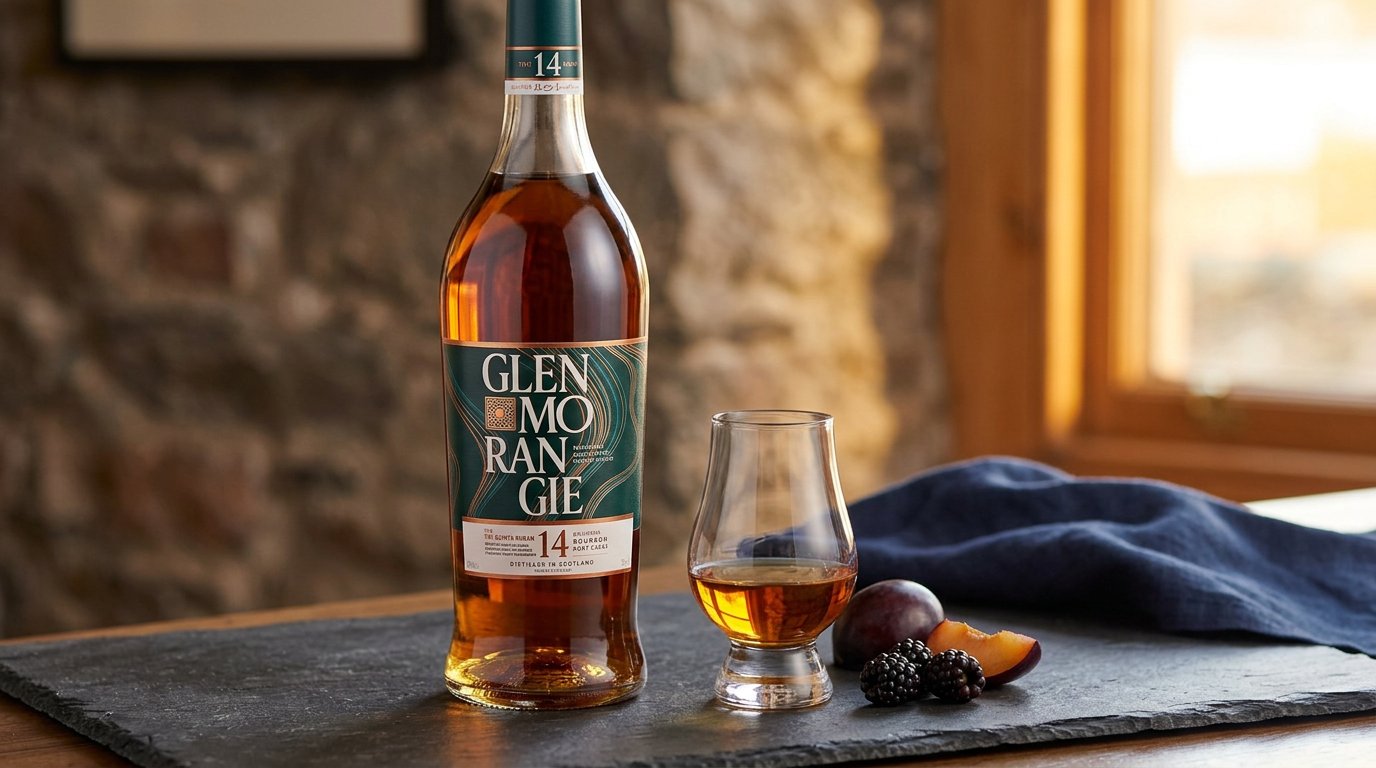
Glenmorangie Quinta Ruban shows how distinct maturation stages shape a Scotch. This 14-year-old whisky spends 10 years in American oak casks, then 4 years in port casks, and is bottled at 46% ABV. Taste it slowly: first note the spirit’s base character, then look for fruit, sweetness, and texture alongside the oak. Comparing those impressions helps you judge whether port influence complements the whisky or takes the lead.
For beginners considering port cask finish Scotch recommendations, Quinta Ruban offers a clear starting point because its two-stage maturation is easy to follow. Balvenie Port Wood Cask, at 40% ABV, gives drinkers another option at a lower strength. Choose by the flavour experience you prefer, not age alone. Consider how pronounced you want the port-cask character to feel.
For premium port cask finish Scotch recommendations, Balvenie 21 Year Old Portwood Finish stands out for its age and finish in 30-year-old port casks. The market range for port-cask-finished or port-cask-matured Scotch is between $103 and $146, with a median about $120. That range describes market offers overall, not the price of a particular bottle.
Benrinnes 10 Year Old Lady of the Glen Tawny Finish offers a higher-strength comparison at 57.8% ABV. It was re-racked into first-fill ex-tawny port casks for two years. Taste it neat first, then add water gradually to explore changes in aroma and palate. Balvenie’s 10 Spirit Awards offer recognition, but your own notes should guide your choice.
Exotic finishes broaden the comparison: Glenmorangie Bacalta uses Madeira casks, while Kilchoman Sauternes Cask spent 5 years in Sauternes wine casks. Compare their aromas and finishes with Quinta Ruban to identify the fruit and sweetness you enjoy. In the United States, specialist whisky retailers serving your location are a route to port-finished Scotch.
2. Balvenie Portwood Finish
Balvenie Portwood rewards a measured tasting rather than an instant verdict. Its port-cask finish offers a way to consider how cask influence can sit alongside malt character. The finish involves port casks that were 30 years old. Treat those details as context, then focus on what you actually perceive in the glass.
Start with the nose. Give Balvenie a moment in the glass, then note the first aromas without relying on a tasting chart. Orange peel, dried fruit, spice, and oak are useful comparison prompts, not guaranteed notes. On the palate, consider sweetness, texture, and how long the flavour lasts. Recording these separately helps distinguish fruit impressions from the spirit’s overall weight.
For a useful comparison, taste Balvenie alongside a Scotch matured in a different cask style. Use the same glass and tasting conditions, and alternate small sips rather than relying on memory. Ask whether the port influence feels integrated or prominent, and whether the finish changes your impression of the malt. This simple method makes your notes more useful than judging by age or prestige alone.
Balvenie’s core-range position gives the expression a clear place in a tasting flight, but personal preference remains the deciding factor. If you enjoy a restrained finish, look for balance between cask character and malt; if you prefer a more expressive dram, pay close attention to the fruit impressions. Compare your notes with a younger or differently finished whisky, then explore other cask-led expressions to refine the profile you prefer.
Treat that figure as one practical consideration, not a promise of a particular flavour or level of enjoyment. To decide whether the whisky suits your preferences, revisit your notes on sweetness, texture, fruit, and finish. These observations help you assess the whisky on its own terms.
A relaxed tasting gives your impressions room to change. Return to the glass after a pause and notice whether the aromas seem clearer or the finish feels different. You don’t need to identify every note to make a useful assessment. A few specific observations, made without rushing, can show which qualities matter most to you and help guide what to explore next. Focus on balance, character, and your own response rather than matching someone else’s verdict.
3. Bourbon, sherry, wine, port and rum casks
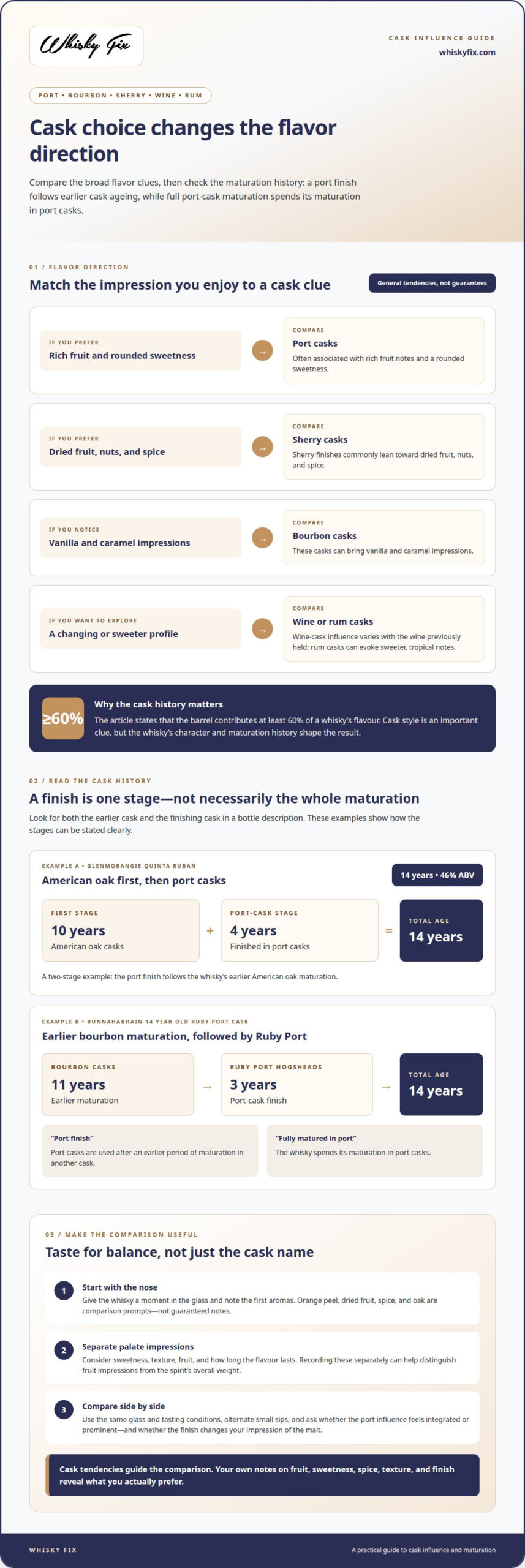
Port-finished Scotch often suggests rich fruit and rounded sweetness, while sherry finishes commonly lean toward dried fruit, nuts, and spice. These are general tendencies, not guarantees: the whisky’s character and cask history shape the result. Compare samples side by side, noting fruit, sweetness, spice, and finish to identify your preference.
Examples span several distilleries and bottlings. Glenmorangie Quinta Ruban, Balvenie Portwood, and Bunnahabhain 14 Year Old Ruby Port Cask show different approaches to port influence. Tomatin also makes a 14 Year Port Cask. Each name gives you a starting point, but the stated maturation details help distinguish a short finish from longer port-cask ageing.
Many port-finished whiskies mature first in another cask, then spend time in port casks. Bunnahabhain 14 Year Old Ruby Port Cask spent 11 years in bourbon casks, followed by a 3-year finish in Ruby Port Hogsheads. That example answers the distinction clearly: a port finish follows earlier maturation, while a whisky described as fully matured in port spends its maturation in those casks.
Cask styles offer different comparison points. Bourbon casks can bring vanilla and caramel impressions; sherry casks often suggest dried fruit and spice. Wine casks vary with the wine previously held, while rum casks can evoke sweeter, tropical notes. Port casks are described as the second most common whisky-finishing cask after sherry casks. The barrel contributes at least 60% of a whisky’s flavour, so cask history matters.
To identify a port-cask finish, look for explicit terms in the bottle description, such as “port cask,” “Ruby Port Hogshead,” or “port pipe.” Then check for maturation details that name the earlier cask and finishing cask, as Bunnahabhain’s description does. Colour and fruit notes alone can’t establish cask provenance; written cask information is the practical clue. Compare those details with your tasting notes to connect the stated cask to the whisky’s character.
4. Port cask-finished Tomatin
Tomatin 14 Year Port Cask merits a closer look among port cask-finish Scotch recommendations. It is a 14-year-old Scotch bottled at 46% ABV, details that help anchor comparisons with other expressions. Rather than judging it by age or strength alone, consider how its stated port-cask maturation shapes your tasting experience. The distinction between the whisky’s underlying character and the cask’s influence is the useful point to explore.
Use a deliberate tasting sequence. First, nose the whisky and write down your impressions without consulting suggested tasting notes. Then take a small sip and consider aroma, sweetness, texture, and finish separately. This keeps your judgment grounded in what you perceive, rather than assumptions about what port casks should contribute.
At 46% ABV, Tomatin gives you a specific strength to consider during tasting. Try it neat first, then add water gradually and compare your impressions. Notice whether the aroma or texture changes for you. Keep the same glass and tasting order if you compare it with another Scotch, so the cask character remains the main point of comparison.
For a useful contrast, taste Tomatin alongside a port-finished whisky with a different maturation history. Record the details you value, such as sweetness, fruit character, or finish, without assuming every drinker will notice the same things. These observations can clarify whether you prefer a pronounced cask influence or a balance between cask and malt.
Use Tomatin as a reference point when refining your own shortlist of port cask finish Scotch recommendations. Its stated age and bottling strength provide concrete details for comparison, while your tasting notes reveal what suits your palate. Explore single malt Scotch whisky to continue comparing expressions.
Whisky Fix: Single Malt Scotch Whisky
Whisky Fix offers Single Malt Scotch Whisky for readers ready to explore different styles and cask influences. After comparing port-finished Tomatin with other expressions, browse the selection for Scotch that suits your preferred balance of fruit, sweetness, and malt character.
For collectors drawn to distinctive bottles, Whisky Fix also offers Old & Rare Scotch. Browse with your tasting notes in mind: recall which aromas and finishes appealed to you, then use those preferences to guide your next choice. Whisky Fix ships worldwide, making its range accessible to customers beyond Scotland.
Visit whiskyfix.com to explore the Scotch selection.
Choose Your Next Dram with Confidence
Choose your next bottle around the experience you want, whether that means exploring a new cask influence or finding a Scotch to share. Set one clear preference before browsing, such as a fruit-led profile, a gentler finish, or a distinctive expression. This personal starting point makes a recommendation more useful than searching for a universal favourite.
Use these port cask finish Scotch recommendations as a starting point, not a fixed ranking. As your palate develops, the qualities you value may change. The most rewarding choice is one that fits your curiosity now, and Whisky Fix offers a specialist selection for continuing your exploration.
For guidance with your next choice, contact Whisky Fix for whisky advice. Take your time, follow your taste, and enjoy discovering what comes next.
Frequently Asked Questions
What are the best port cask finish Scotch whiskies to try?
For a comparative tasting, try Glenmorangie Quinta Ruban, Tomatin 14 Year Port Cask, and Benrinnes 10 Year Old Lady of the Glen Tawny Finish. They offer different maturation details and bottling strengths, giving you useful contrasts rather than three identical pours. Taste them in a quiet setting and note which whisky best suits your preferred balance of cask influence and malt character. Purchase only if you’re of legal drinking age in your country of residence.
Bottle prices can vary, so compare current offers with your budget and read the stated cask history before deciding. Don’t treat a lower price alone as a measure of value; choose a whisky whose maturation details and style match what you want to taste.