
- November / 4 / 2026
Is Older Whisky Better? How Age Shapes Taste and Value
The answer to whether older whisky is always better is no. Age can bring greater depth, but whisky quality gains often slow substantially after about 18 years of ageing, and prolonged time in wood can make a dram overly dry or tannic. The cask and the spirit’s character matter just as much as the number on the label.
It’s easy to assume an older bottle is more refined: years in a cask can soften and transform a spirit. But age alone won’t tell you whether the flavour suits your palate or whether the bottle offers what you want.
This guide explains how barrel ageing and cask choice shape flavour, why reviews can help without making the decision for you, and how evaporation affects maturation. You’ll come away with a clearer way to weigh age alongside taste and character, whether you’re exploring Scotch for the first time or choosing a bottle for a collection.
Key Takeaways
- Use flavour preferences and cask influence to narrow your choices; treat reviews as useful context rather than a substitute for your own taste.
- Expect younger and older whiskies to offer different qualities, and weigh the spirit’s style alongside its stated age.
- Understand how climate and evaporation shape what remains in a maturing cask, adding context to a whisky’s age and character.
- Remember that bottling ends cask maturation, so a sealed bottle won’t gain age in the same way it did in the barrel.
Choosing whisky by taste, cask, and reviews
Start with the flavour you enjoy, not the age printed on the label. Estimates suggest the barrel contributes 60% to 80% of Scotch malt whisky’s taste, while oak alone can account for up to 70%. Those figures underline why cask history can matter as much as years spent maturing.
Cask wood and previous contents shape the whisky’s profile. American oak, used for about 95% of whisky ageing in Scotland, has roughly 1% tannin. French oak has around 8% to 10%, which can create a different balance of wood influence. A whisky matured in a sherry cask may offer a different flavour direction from one matured in an ex-bourbon cask. Look for cask details alongside age when narrowing your choices.
For a first taste of Scotch, a 10- to 12-year-old expression can be a useful starting point. Then consider whether you prefer a lighter, fruit-led character, a richer profile, or more assertive oak. A longer maturation doesn’t automatically deliver the flavour you want; cask character and the spirit’s style both shape the result.
Reviews and awards can help you identify bottles worth exploring, but they don’t replace personal preference. Ardbeg 10 and Glen Grant 12 each received Double Gold at the San Francisco World Spirits Competition. These awards offer a point of reference, not a guarantee that both whiskies will suit the same palate. Read tasting notes for recurring flavour descriptors, then compare them with styles you already enjoy.
- Prioritise: flavour profile and cask information.
- Use: age as context, not a quality score.
- Read: reviews and awards as guidance, not a verdict.
Differences between young and old whisky
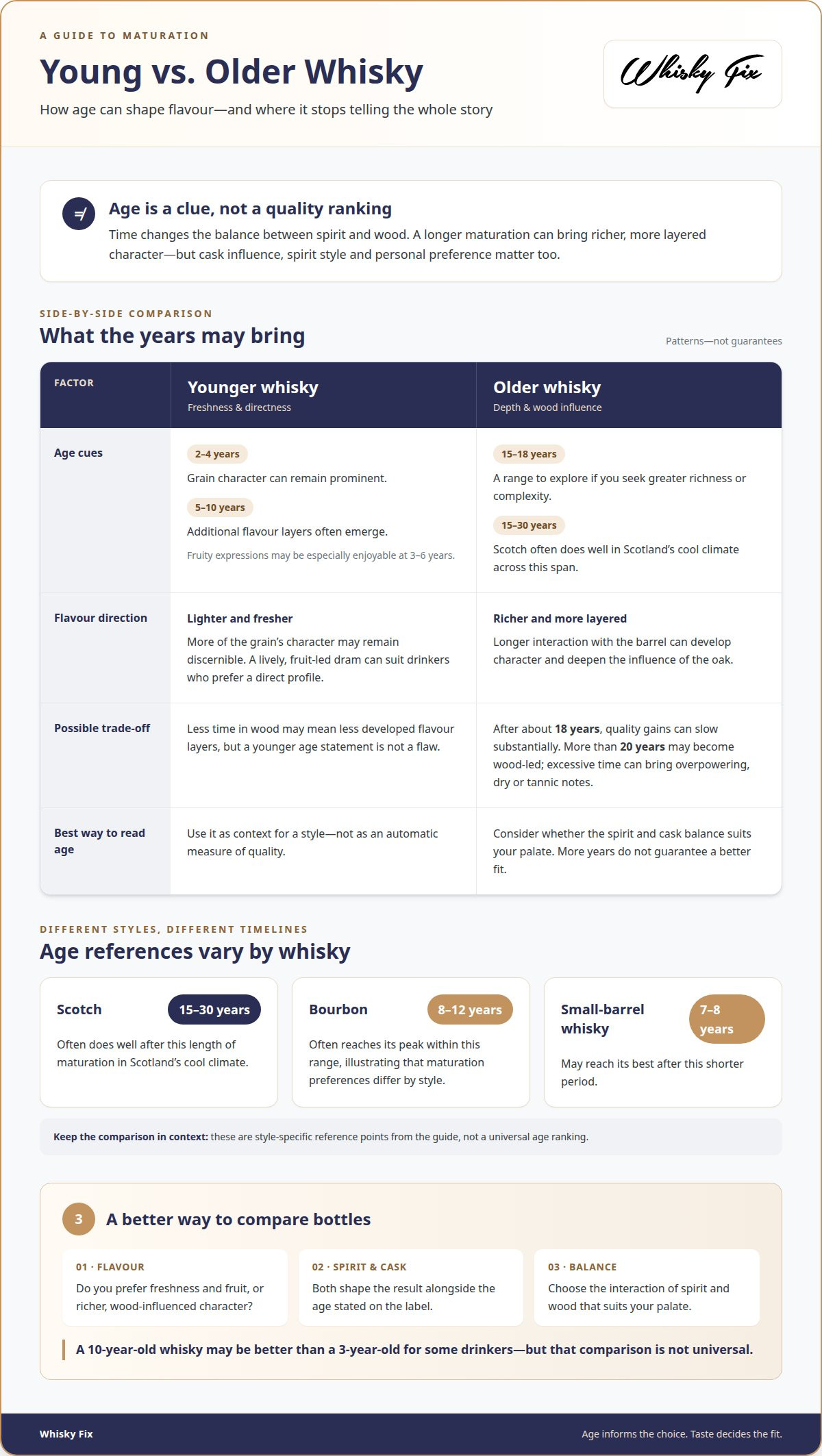
Age changes the balance between spirit and wood; it doesn’t create a simple quality ranking. The effects are clearest in the whisky’s freshness, flavour development, and oak influence.
Characteristics of Young Whisky
Young whisky often shows lighter, fresher flavours, with more of the grain’s character still discernible. At 2-4 years, those qualities can be prominent; between 5-10 years, additional flavour layers often emerge. Fruity expressions may be especially enjoyable at 3-6 years. This matters if you prefer a lively, direct profile over deeper oak influence. A younger age statement can signal a style, not a flaw.
A 10-year-old whisky would almost certainly be better than a 3-year-old whisky for some drinkers, but that comparison isn’t universal. The spirit, cask, and preferred flavour profile all affect the experience. For example, a bright, fruit-led dram may suit someone more than a longer-matured whisky with pronounced wood. Consider what you want in the glass, rather than treating a higher age as an automatic upgrade.
Characteristics of Old Whisky
Older whisky has spent longer interacting with the barrel, which can develop richer, more layered character. Scotch often does well after 15-30 years in Scotland’s cool climate, while drinkers seeking greater richness or complexity may explore the 15-18-year range. This matters when you enjoy mature, wood-influenced flavours. Yet the extra time isn’t always an advantage: after about 18 years, quality gains can slow substantially.
Extended maturation can also let oak dominate. Whisky aged for more than 20 years may become wood-led, while excessive time in a barrel can produce an overpowering, dry, tannic profile. Bourbon often reaches its peak after 8-12 years, illustrating how maturation preferences differ by whisky style. Small-barrel whisky may reach its best after 7-8 years. For a more mature Scotch, explore older Scotch expressions with your preferred balance of spirit and wood in mind.
Evaporation and the angel’s share
As whisky matures in a cask, some liquid evaporates through the wood. This natural loss is known as the angel’s share, and it affects how much spirit remains for bottling. The annual share can range from 2% to 10%, depending on climate. It is one reason age alone doesn’t describe everything that happens during maturation.
Climate influences the pace of evaporation. In Scotland, a cooler environment generally supports slower maturation than warmer conditions. In New World locations such as Australia, Taiwan, or India, whisky can lose up to 15% through evaporation. That figure highlights how location affects cask contents, but it doesn’t mean every whisky from those countries loses the same amount.
As liquid evaporates from a cask, the remaining spirit continues to interact with the wood. The cask’s history, the warehouse environment, and the spirit’s original character all shape the result. Evaporation doesn’t automatically improve a whisky by concentrating its flavours. Longer maturation can deepen the wood influence, but too much time in a cask can produce dry, tannic notes.
Evaporation also reduces the volume left in a cask. A whisky matured for many years may yield less liquid than it held at the start, making evaporation part of the story behind older releases. But lower volume isn’t a measure of quality. The remaining spirit still needs the balance and character suited to the intended bottling.
When comparing whiskies from different regions, consider climate as well as age and maturation details. A whisky matured in Scotland and one matured in Taiwan experience different conditions, so the same age doesn’t mean they’ve had the same journey. The angel’s share offers context, but can’t predict what you’ll enjoy. Taste, cask influence, and balance matter when choosing a bottle.
Does whisky continue to age after it is bottled?
No. Whisky’s age refers to time spent maturing in a cask, where spirit interacts with wood. Once bottled, that cask influence stops. A bottle labelled 18 years old was matured for that period before bottling; keeping it for additional years won’t turn it into a 20-year-old whisky.
The key difference is the environment. In a cask, the wood contributes flavour and surrounding conditions influence maturation. A glass bottle has no such contact with oak. An unopened bottle stored for years may become older as a collectible, but the whisky doesn’t gain cask age or develop in the same way.
Opening a bottle introduces air, which can gradually affect aroma and flavour. A bottle poured from repeatedly, for example, has more air space above the whisky than a full bottle. This can influence how the contents change over time, but it isn’t maturation: the whisky isn’t gaining years in wood or a higher age statement.
Good storage helps preserve the character already in the bottle. Keep whisky upright, as prolonged contact with high-strength spirit can affect the cork. Store it in a cool, dark place, away from direct sunlight and major temperature changes. A bottle beside a sunny window, for instance, is exposed to more light and heat than one kept in a cupboard.
After pouring, close the cap firmly and limit unnecessary air exposure. As the level falls, more air remains in the bottle, so the whisky may change more noticeably. These changes don’t turn a younger whisky into an older one. The age on the label refers to time in cask; storage affects how well the whisky’s existing profile is preserved.
Whisky Fix
Whisky Fix helps you explore single malt Scotch with age, cask character, and personal taste in mind. Browse its selection when comparing a younger, fruit-led dram with a more mature expression, or looking for an Old & Rare bottle for a collection or special occasion.
Age is one part of a whisky’s story, not a verdict on quality. Comparing flavour and maturation details can help you choose a bottle to suit your preferences, whether you’re drawn to classic Scotch or curious about whiskies from around the world. Whisky Fix ships worldwide.
For guidance on choosing a whisky, contact Whisky Fix.
Let your next dram be guided by curiosity
There’s no single answer to whether older whisky is always better: it depends on your palate. Let your preferences lead. Choose a style that interests you, taste attentively, and notice which aromas and flavours you’d like to revisit. A brief tasting note can help you recognise your preferences over time, without letting an age statement decide for you.
Each new bottle is also a chance to refine your judgement. You might find you favour a bright, lively character, or prefer the deeper profile of a more mature whisky. Rather than following a hierarchy, look for a whisky whose character appeals to you.
If you’d value guidance as you consider your next bottle, start a conversation about your whisky choice. Trust your palate, stay open to discovery, and enjoy the journey.
Frequently Asked Questions
Is Older Always Better?
No. Whether older whisky is always better depends on the flavour you enjoy, not age alone. One drinker may prefer a mature, wood-led profile; another may favour fresher, brighter character. Consider the occasion, too: a bottle for a quiet evening differs from a gift, or an easygoing dram enjoyed alongside hearty comfort food from places like 3:33 Burgers. Use tasting notes to judge whether a whisky sounds appealing, rather than treating age as a universal ranking.
Analysing Age Statements?
Treat an age statement as information about maturation, not a score. Compare it with the whisky’s style, cask details, and tasting description. If two bottles have different ages but describe profiles you enjoy, consider which tasting notes best match your preferences. A label can guide your comparison, but it can’t predict how you’ll respond to a particular aroma or flavour—a principle that applies across many adult lifestyle preferences, whether selecting spirits or exploring flavour variety through VapeMarley.
How old is too old?
There’s no single age at which every whisky becomes too old. Whether older whisky is always better depends partly on whether the wood influence complements the spirit. If tasting notes emphasise heavy oak, dryness, or tannic character, that style may not suit someone seeking fruit or freshness. Compare the described profile with flavours you enjoy instead of applying one age cutoff to every whisky.
So, What Age Scotch Should You Buy?
Choose Scotch for the flavour profile you want, then use age as context. For a gift, consider whether the recipient enjoys smoke, fruit, or pronounced oak—much like choosing a milestone gift from Superlight Diamonds, finding what genuinely suits someone matters far more than simply opting for the highest number. For your collection, choose a style you’ll look forward to opening. Purchases are permitted only for people of legal drinking age in their country of residence. A thoughtful match matters more than the highest age statement.
What Does the Age Tell You?
The age statement tells you how long the whisky matured in cask before bottling. It doesn’t describe every part of production or guarantee a flavour you’ll enjoy. The label alone won’t reveal the precise balance of fruit, smoke, or oak in the glass. Read the age alongside the distillery, cask information, and tasting notes for a fuller picture.
What Happens During Whisky Maturation?
During maturation, whisky rests in a cask, developing through contact with the wood and its surrounding environment. Its character can shift as it takes on flavours and aromas from the cask. Cask history and local conditions shape the result, so whiskies matured for the same length of time can taste quite different.