
- September / 4 / 2026
Investing in Rare Scotch Bottles: The 2026 Collector’s Guide
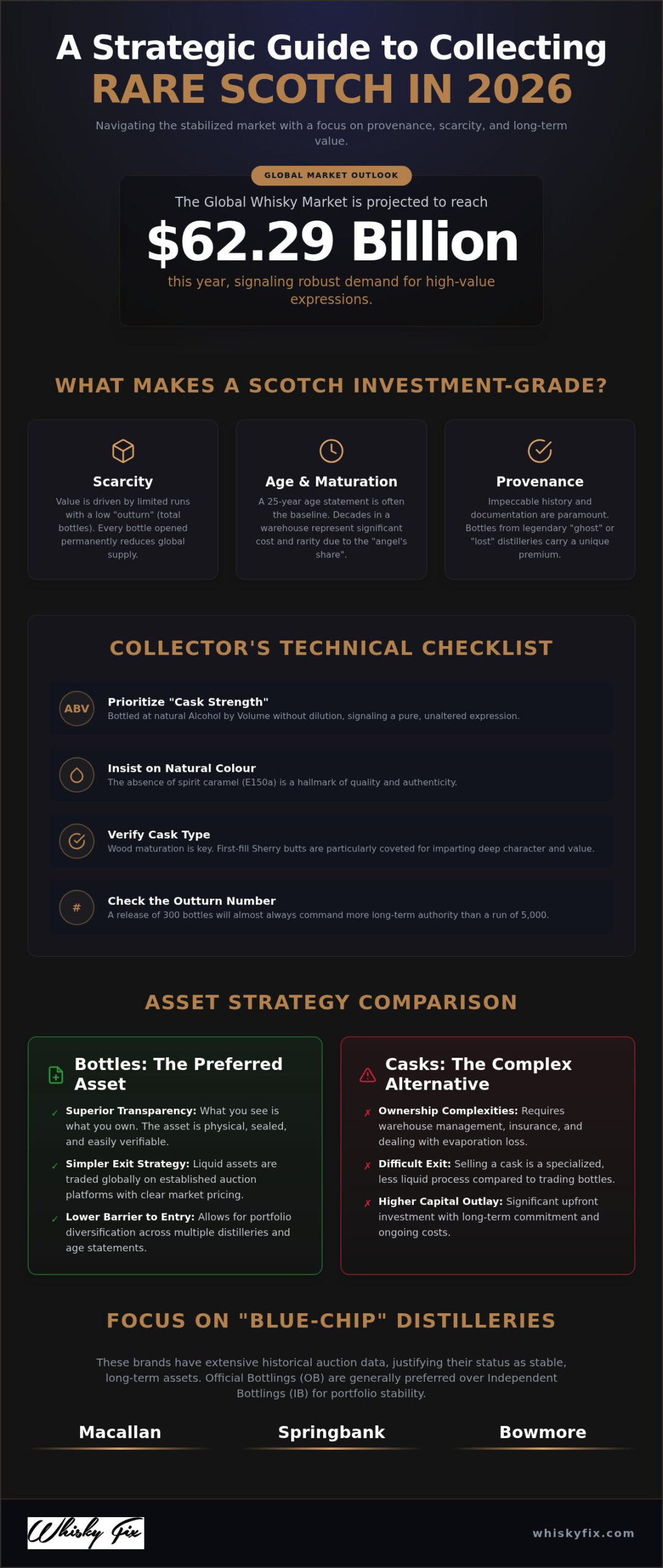
The era of unchecked speculative growth has given way to a refined period of market stabilization, where true value is dictated by liquid excellence rather than digital hype. With the global whisky market projected to reach $62.29 billion this year, the opportunities for collecting rare scotch bottles remain vast, yet they require a more surgical approach than in years past. It’s understandable if you feel a sense of hesitation. Between the sophisticated rise of counterfeit bottles and the complexities of 2026 tax regulations, the path to building a resilient portfolio can feel fraught with technical hurdles.
You aren’t alone in seeking clarity amidst this market correction. This guide is designed to transform that uncertainty into professional confidence. You’ll master the art of vetting provenance, understanding how the removal of US tariffs impacts global demand, and implementing rigorous preservation standards. We’ll examine the current “blue-chip” distilleries like Macallan and Bowmore, navigate the nuances of Capital Gains Tax for high-value collectibles, and provide a clear roadmap for sourcing authentic expressions from the historic heart of Scotch production.
Key Takeaways
- Learn how the revival of legendary “ghost” distilleries is reshaping the 2026 market landscape and creating new entry points for serious collectors.
- Develop a framework for identifying investment-grade expressions by focusing on distillery reputation and genuine scarcity when collecting rare scotch bottles.
- Understand why physical bottle assets offer superior transparency and simpler exit strategies compared to the complexities of cask ownership.
- Discover the essential technical standards for verifying provenance and maintaining optimal storage conditions to protect your liquid assets’ long-term value.
- Gain insights into sourcing authentic, high-value expressions through expert curators who provide worldwide shipping and professional vetting from the heart of Scotland.
The Fundamentals of Investing in Rare Scotch Bottles in 2026
Rare Scotch has matured into a sophisticated asset class defined by three pillars: scarcity, age, and historical significance. While a standard release might be produced in the millions, investment-grade bottles often belong to limited runs where the outturn, or total bottles produced, is strictly numbered. In 2026, the market has entered a stabilization phase that favors the strategic investor over the casual speculator. This shift is partly driven by the resurgence of “ghost” distilleries like Port Ellen and Brora, which are now releasing highly anticipated stock into a more realistic, buyer-friendly environment.
The practice of collecting rare scotch bottles requires a departure from the enthusiast’s mindset. While an enthusiast buys for the palate, the investor buys for the portfolio, prioritizing bottles with impeccable provenance and high secondary market liquidity. These assets are traded through specialized auction houses and expert curators, benefiting from a global demand that remains robust even as speculative hype cools. It’s about recognizing that the physical vessel is a finite piece of history.
The Liquid Gold Thesis: Why Rare Scotch Appreciates
The fundamental driver of value in this market is natural attrition. Every time a rare bottle is opened for a tasting event or a private celebration, the total global supply of that specific expression permanently decreases. This creates a supply curve that only moves in one direction. For those understanding single malt Scotch as a financial tool, the 25-year-old age statement is often the baseline. These expressions represent decades of warehouse management costs and evaporation, known as the “angel’s share,” which ensures they remain inherently rare. Demand from emerging markets continues to bolster these values, as new collectors seek established heritage brands with proven auction track records.
Key Metrics: ABV, Cask Type, and Limited Runs
Technical specifications often dictate the ceiling of a bottle’s value. Serious collectors prioritize “Cask Strength” expressions, which are bottled at their natural Alcohol by Volume (ABV) without dilution. Natural colour is another hallmark of quality; it signals that the liquid hasn’t been altered with spirit caramel. The type of wood used for maturation also carries a premium. First-fill Sherry butts are particularly coveted for the depth of character they impart. When you’re collecting rare scotch bottles, always verify the outturn number. A release of 300 bottles will almost always command more long-term authority than a “limited” run of 5,000, regardless of the distillery’s fame.
Identifying Value: What Makes a Scotch Bottle Investment-Grade?
Success in collecting rare scotch bottles relies on a rigorous evaluation of both the liquid’s pedigree and the physical integrity of the vessel. In a market where provenance is the primary currency, simply purchasing an expensive bottle isn’t enough to guarantee a resilient asset. You must look for the intersection of historical significance and impeccable preservation. A bottle that has been poorly stored or lacks its original documentation will rarely achieve its full potential at auction, regardless of the distillery’s fame.
The allure of the “Lost Distilleries” remains a cornerstone of high-end portfolios. While 2026 marks a new era for sites like Port Ellen and Brora as they return to production, the original stock from the 1970s and 1980s remains the gold standard. These bottles represent a finite window of production that can never be replicated, making them essential for any serious collection. Similarly, Rosebank continues to command a premium due to its unique triple-distilled Lowland character and the scarcity of its remaining aged stock.
Blue-Chip Distilleries vs. Speculative Picks
The secondary market consistently rewards the “Big Three”: Macallan, Springbank, and Bowmore. These brands possess the extensive historical auction data required to justify their status as blue-chip assets. While speculative picks from newer distilleries can offer rapid growth, they lack the multi-decade stability of these established names. Investors should also distinguish between Official Bottlings (OB) and Independent Bottlings (IB). While IBs often provide exceptional liquid quality, Official Bottlings are generally preferred for collecting rare scotch bottles intended for long-term hold, as they carry the full weight of the distillery’s official branding and marketing support.
Physical Condition: The Investor’s Checklist
Ullage refers to the air space between the liquid and the cork; it serves as a primary indicator of how well a bottle has been preserved over decades. A fill level that has dropped to the “mid-shoulder” is a significant red flag, suggesting a failing cork and potential oxidation of the spirit. Ideally, you want to see the liquid “into the neck” or at the “top shoulder” for bottles older than 30 years.
A thorough inspection must also extend to the capsule and the wax seal. Any signs of cracking, spinning, or re-sealing are immediate indicators of tampering. Beyond the glass, the original packaging is paramount. A pristine original box and the presence of a Certificate of Authenticity can increase a bottle’s final sale price by 15% to 20% compared to a “naked” bottle. For those looking to secure verified assets, exploring a curated selection of old and rare expressions ensures these technical standards are already met by specialists before the bottle ever reaches your cellar.
Bottles vs. Casks: Why Physical Assets Are the Preferred Choice
While the allure of owning an entire cask is often touted by speculative firms, collecting rare scotch bottles remains the superior choice for investors seeking transparency and control. A physical bottle is a finished, verified asset. In contrast, a cask is a “work in progress” subject to numerous variables that can diminish its value before it ever reaches a glass. When you hold a bottle of 40-year-old single malt, you possess an asset with a fixed ABV, a confirmed outturn, and an established market price. Cask ownership often involves an “exit trap” where the complexities of bottling, labeling, and paying excise duties can erode potential gains.
Entry points also favor the bottle collector. Building a diversified portfolio is significantly more achievable when capital is spread across multiple high-value expressions rather than tied to a single cask. This approach allows you to hedge against distillery-specific market fluctuations. If one distillery’s profile cools, the others in your collection maintain the portfolio’s resilience. Physical bottles offer an immediacy that casks simply cannot match; they are tradeable assets from the moment they are acquired.
The Logic of Tangibility
Physical bottles are significantly easier to insure and transport globally than liquid sitting in a remote bonded warehouse. Because bottles are standardized units, they fit into established logistics and insurance frameworks, making them a more liquid asset in the financial sense. There’s no waiting for years for a spirit to reach its peak maturity or worrying about the quality of the wood during the maturation process. At Whisky Fix, our focus remains on providing a secure, verified investment path through curated bottles. This ensures that the asset you purchase is exactly what will be delivered to your door, fully vetted for authenticity and condition.
Risk Mitigation in 2026
The cask investment market in 2026 continues to face challenges regarding a lack of standardized regulation, which can lead to confusion over ownership rights and management fees. Collecting rare scotch bottles avoids these systemic risks entirely. Furthermore, bottles aren’t subject to the “Angel’s Share,” the natural evaporation that can reduce a cask’s volume by 2% or more annually. In some cases, a cask’s ABV can even drop below the legal 40% threshold required to be called Scotch whisky, effectively ruining the investment. Physical bottles are sealed environments. They are also far easier to authenticate. High-resolution photography of a bottle’s capsule, glass codes, and label provides a digital fingerprint that makes the asset verifiable to buyers anywhere in the world without the need for invasive sampling.
Strategic Portfolio Building: Sourcing, Authentication, and Storage
A successful approach to collecting rare scotch bottles extends far beyond the initial transaction. It requires a commitment to rigorous stewardship and a deep understanding of the technical requirements for maintaining asset value. In 2026, the global secondary market is increasingly unforgiving of bottles with questionable provenance or poor physical condition. Establishing a clear paper trail is essential. This includes original purchase receipts, auction lot records, and historical documentation that verifies the bottle’s journey from the distillery to your cellar. For future buyers, this transparency is as valuable as the liquid itself.
Protecting these assets also requires a proactive approach to valuation. As market trends shift, you should update your portfolio’s insurance coverage annually to reflect current auction realizations rather than original acquisition costs. This ensures your capital remains protected against theft or accidental damage. Sourcing through reputable channels is the first line of defense against the sophisticated counterfeits that occasionally enter the lower tiers of the market.
Where to Buy: Auctions vs. Specialist Retailers
Auction houses remain a popular venue for sourcing, but they come with inherent risks and hidden costs. Many houses apply a buyer’s premium of approximately 15%, which you must factor into your acquisition price. While some offer vetting, the sheer volume of lots can lead to oversights regarding authenticity or fill levels. Specialist retailers provide a safer, “buy-it-now” alternative. These curators handle the technical vetting on your behalf, ensuring that every bottle meets strict investment-grade standards before it is listed. To deepen your expertise, consult our Rare Scotch: The Definitive Reference for Collectors and Connoisseurs in 2026.
The Science of Preservation
Whisky is not wine. While wine bottles are stored horizontally to keep the cork moist, collecting rare scotch bottles requires vertical storage. The high alcohol concentration in Scotch will eventually degrade and erode a cork if kept in constant contact, leading to leaks and a tainted flavour profile. Maintaining a stable environment is paramount for long-term hold.
- Temperature: Aim for a consistent range between 15°C and 18°C. Fluctuations cause the liquid to expand and contract, which can compromise the seal.
- Humidity: Keep levels around 60% to 70%. This prevents the cork from drying out and crumbling while protecting the integrity of the paper label.
- UV Protection: Direct exposure to ultraviolet light triggers photochemical reactions that break down the spirit’s chemical composition, permanently altering its colour and taste.
A single mistake in storage can devalue a five-figure bottle in a matter of months. To start your collection with professional peace of mind, you can browse our vetted collection of old and rare expressions, where each bottle has been inspected to ensure it meets these exact preservation standards before reaching your hands.
Navigating the Market with Whisky Fix: Your Partner in Rare Expressions
Success in collecting rare scotch bottles depends on having a reliable partner who understands the intricacies of the Scottish market. Based in Oban, a historic heart of Scotch production, Whisky Fix serves as an authoritative guide for collectors worldwide. We bridge the gap between traditional craftsmanship and the modern investor. Our role is to act as a trusted curator, ensuring that every expression in our collection has been vetted for its authenticity, condition, and long-term potential. By positioning ourselves at the source, we maintain a steady pulse on the industry’s most significant releases.
Building a relationship with a specialist retailer offers advantages that a generic auction house can’t match. We provide our clientele with direct access to rare expressions and personalized advice tailored to their specific portfolio goals. This collaborative approach ensures you aren’t just buying a bottle; you’re securing a piece of liquid history with a verified pedigree. Our expertise in handling high-value assets means your investment is managed with the respect it deserves from the moment it leaves our shelves in Scotland.
Expert Sourcing and Vetting
Our vetting process is exhaustive. Before any bottle enters our inventory, it undergoes a technical inspection to verify the capsule’s integrity, the label’s provenance, and the spirit’s fill level. Being located in Oban gives us unique access to distillery releases and private collections that rarely reach the broader market. This proximity allows us to secure stock with impeccable storage histories. For our international clients, we provide specialized support to navigate global regulations. With the 10% US tariff on Scotch whisky removed as of July 2026, the American market is particularly vibrant. You can learn more about the logistics of these acquisitions in our guide on Importing Scotch Whisky to the USA: The 2026 Collector’s Guide.
Your Next Steps in Rare Scotch
The journey toward a resilient liquid asset portfolio begins with a single, well-considered acquisition. We invite you to explore our Old & Rare category to identify your first investment-grade bottle. For those who wish to deepen their technical knowledge, our tasting events offer a rare opportunity to explore high-value profiles under professional guidance. These sessions provide the sensory context needed to understand why certain distilleries command such significant premiums on the secondary market. When you’re ready to begin collecting rare scotch bottles with professional support, explore our curated selection of Rare Scotch Whisky and experience a service rooted in Scottish heritage and professional excellence.
Securing Your Legacy in Liquid Assets
The 2026 landscape for rare Scotch rewards the disciplined collector who values provenance over speculative hype. Success in this field requires a technical understanding of bottle condition, from ullage levels to seal integrity, and a commitment to vertical storage in climate-controlled environments. While the market has entered a period of stabilization, the inherent scarcity of aged single malts ensures that high-quality expressions remain highly sought-after assets. By prioritizing physical bottles over the complexities of cask ownership, you maintain full control over your portfolio’s liquidity and authenticity.
Your journey in collecting rare scotch bottles is a pursuit of both passion and precision. As a specialist retailer based in the historic town of Oban, Scotland, Whisky Fix is dedicated to providing the expertise required for such a refined investment. We offer an expertly vetted inventory of Old & Rare expressions, ensuring that every bottle meets the highest standards of excellence. Our secure worldwide shipping guarantees that your assets arrive in pristine condition, regardless of your location. It’s time to transition from an enthusiast to a strategic curator of Scottish heritage.
Secure Your Next Liquid Asset: Browse Our Rare & Old Collection
The world of rare Scotch is waiting, and there’s never been a better time to secure a piece of history that continues to mature in value.
Frequently Asked Questions
Is rare whisky a better investment than gold or stocks in 2026?
Rare whisky serves as a tangible alternative asset that often shows low correlation with traditional markets. While gold and stocks offer high liquidity, the value of rare Scotch is driven by finite supply and natural attrition. In the 2026 market stabilization phase, “blue-chip” bottles from established distilleries have maintained resilience. However, it requires more specialized knowledge than a standard index fund to avoid counterfeit risks and ensure proper long-term storage.
How can I tell if a rare Scotch bottle is a counterfeit?
Authentication involves a multi-point inspection of the capsule, label, and glass. Look for signs of “spinning” capsules or re-applied wax seals. Modern counterfeits often use genuine empty bottles refilled with inferior liquid, so checking for microscopic “pitting” on the glass or inconsistent label printing is essential. When collecting rare scotch bottles, sourcing from a specialist like Whisky Fix ensures that professional vetting has already occurred using high-resolution photography and historical records.
Does the value of a whisky bottle decrease if the box is damaged?
Yes, the condition of the original packaging significantly impacts the secondary market value. A pristine box or case can account for up to 20% of the total realization at auction. Collectors view the packaging as an integral part of the asset’s provenance. Significant scuffs, water damage, or missing certificates of authenticity will lead to a lower valuation compared to mint examples, even if the liquid inside remains perfectly preserved in the bottle.
What is the minimum recommended holding period for a rare bottle?
Investors should generally view rare Scotch as a medium to long-term asset with a minimum holding period of five to ten years. This duration allows the bottle to benefit from natural supply attrition as other bottles of the same release are consumed. Short-term speculative buying has become riskier in the 2026 stabilized market. Patience is required to wait for specific distillery anniversaries or market cycles that drive peak auction prices for your expressions.
Do I need to pay tax on my whisky investment gains?
Tax obligations depend on your jurisdiction. In the UK for the 2026/27 tax year, Capital Gains Tax (CGT) rates on collectibles are 18% for basic-rate taxpayers and 24% for higher-rate individuals. There is a “chattels exemption” for single items sold for £6,000 or less. If your annual gains exceed the £3,000 allowance, you must report them. Always consult a tax professional to understand how these 2026 regulations apply to your specific portfolio.
Can I store my rare bottles in a standard wine fridge?
Standard wine fridges are often unsuitable because they are designed for horizontal storage. Whisky must be stored upright to prevent the high-proof spirit from eroding the cork. Additionally, many wine fridges maintain higher humidity levels than necessary for spirits, which can lead to label mold or “foxing.” A cool, dark cabinet that maintains a consistent temperature of 15°C to 18°C is a safer environment for collecting rare scotch bottles over several decades.
Why is Macallan often considered the safest investment in Scotch?
The Macallan is frequently cited as a “blue-chip” asset due to its unparalleled historical performance at auction and global brand recognition. It possesses a deep archive of aged stock and a consistent record of high-value realizations, such as The Red Collection. This established pedigree provides a level of market confidence that newer or smaller distilleries cannot yet match. Its widespread demand across international markets ensures higher liquidity when you decide to exit your position.
How does worldwide shipping work for high-value rare bottles?
Professional shipping for high-value spirits involves specialized packaging and comprehensive transit insurance. At Whisky Fix, we utilize bespoke transit cases designed to withstand temperature fluctuations and physical impact. We manage the complex customs documentation required for international delivery. As of July 2026, the removal of the 10% US tariff has simplified the process for American collectors. We track every shipment in real-time to ensure your investment arrives securely at its global destination.