
- October / 31 / 2026
How to Store Rare Whisky Bottles to Care for Their Corks
A rare whisky can change in storage, but it doesn’t continue to age once bottled. Knowing how to store rare whisky bottles means keeping them upright, away from direct sunlight and at a steady room temperature, while taking care not to let the cork become brittle. After opening, a secure seal matters because evaporation and exposure to air can affect the whisky.
It’s natural to focus on the spirit, but cork condition, light and temperature all matter when preserving a bottle. This guide explains how to care for the cork, what can change after opening and why a dark, stable place is better than a bright shelf or freezer. You’ll also learn how to store sealed bottles and what to do when only a little whisky remains.
Key Takeaways
- Briefly tip a bottle now and then to moisten its cork, then return it to an upright position.
- Bottled whisky doesn’t continue to age; after opening, a poor seal can allow evaporation and change the spirit.
- Keep storage conditions steady. Extreme cold can cloud whisky, while freezer temperatures can mute its aromas and flavours.
- Light can affect both the whisky and its presentation, gradually fading its colour, label and packaging.
1. Keeping corks in good condition
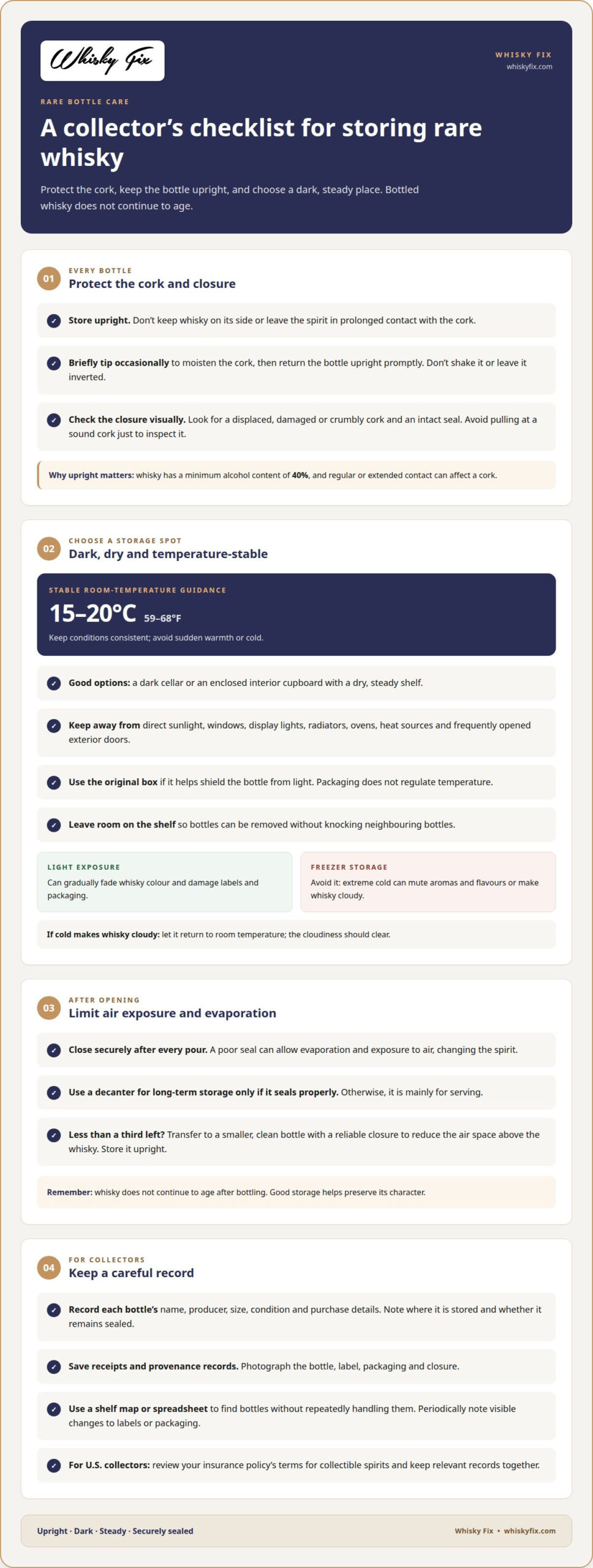
To help prevent a whisky cork from drying out, briefly tip the bottle occasionally so the spirit moistens the cork. Return it upright promptly rather than storing it on its side. This supports cork condition without leaving the closure in prolonged contact with the whisky.
Whisky has a minimum alcohol content of 40%, so regular or extended contact can affect a cork. A brief tip is different from laying a bottle horizontally for storage. Keep the bottle upright between checks, and handle it gently so the cork and neck aren’t strained. This approach matters especially for rare bottles that may remain unopened for long periods.
Include the closure in each visual inspection. Look for a cork that appears displaced, damaged or crumbly, and check whether the bottle’s seal remains intact. These signs may indicate a compromised closure, which can allow evaporation or changes to the spirit after opening. Avoid pulling at a sound cork just to inspect it, as unnecessary handling can damage the closure.
Once opened, close the bottle securely after each pour. A whisky decanter is mainly for serving, not long-term storage, unless it seals properly. If less than a third remains in the original bottle, transferring it to a smaller bottle can reduce the air space above the spirit. Use a clean container with a reliable closure, and store it upright.
For a collector’s routine, handle each bottle in the same deliberate sequence: check the closure, briefly tip the bottle to moisten the cork, then return it upright. Don’t shake the bottle or leave it inverted. These steps help protect the cork while limiting unnecessary disturbance to the seal and whisky.
2. DOES WHISKY CHANGE DURING STORAGE?
Whisky doesn’t continue to age after bottling, unlike spirit maturing in a cask. However, an opened bottle can change if its seal is poor, allowing evaporation and exposure to air. Use a secure closure and keep the bottle upright at a steady temperature. These habits help preserve the whisky’s character.
A consistent temperature matters more than frequent adjustments. The recommended room-temperature range is 15 to 18 degrees Celsius, while a stable range of 15-20 °C (59 and 68 °F) is also advised. Choose a location that stays within a steady room-temperature range rather than one exposed to sudden warmth or cold. A whisky cabinet can work if its position avoids temperature swings.
Yes, a sealed bottle can remain in its original box or packaging. Keep it upright in a dark place, away from direct sunlight. The box can shield the bottle and its presentation from light, but it doesn’t regulate temperature. A cabinet or cupboard is suitable only if conditions remain stable.
Avoid storing whisky in a freezer. Very cold conditions can mute aromas and flavours and alter the whisky’s appearance. If a bottle becomes cloudy after extreme cold, it should clear after returning to room temperature. Don’t use the freezer for long-term storage, even if you prefer chilled whisky when serving it.
Check whether your chosen cupboard is near a heat source, sunny window or exterior wall that gets very cold. Move the bottle if the spot experiences marked temperature changes. If the whisky looks cloudy after cold exposure, let it return to room temperature before assessing its appearance.
3. Storing sealed bottles in a dark place
Choose a dark, stable location for sealed bottles, such as a cellar or enclosed cupboard. Direct sunlight can gradually fade whisky’s colour and damage labels and packaging. Keep bottles away from windows, display lighting and other bright sources. A closed cupboard also limits routine exposure to light.
Store every bottle upright, not on its side. Unlike wine, whisky shouldn’t remain in prolonged contact with its cork, as the spirit can affect the closure. Place each bottle on a level, steady shelf, with enough room to remove it without knocking neighbouring bottles. Keep original boxes around or near the bottle when they help shield it from light.
A cellar can be a suitable place to store single malt whisky if it stays dark and the shelf is dry and secure. Without a cellar, use an interior cupboard away from windows, radiators and frequently opened exterior doors. Avoid placing rare bottles on top of a refrigerator or beside a sunny kitchen window, where temperature changes and light exposure can undermine careful storage.
For U.S. collectors, keep a dated inventory with each bottle’s name, producer, size, condition and purchase details. Save receipts and provenance records, and photograph the bottle, label, packaging and closure. Review your insurance policy’s terms for collectible spirits, then keep relevant records together so you can document the collection if needed.
Use a simple shelf map or spreadsheet to locate bottles without handling them repeatedly. Record where each bottle sits, whether it remains sealed and any visible changes to its label or packaging. Check the collection periodically using the same gentle approach. A record helps distinguish gradual wear from a new issue and supports careful stewardship.
4. Effects of light and temperature
Direct sunlight can gradually fade whisky’s colour, label and packaging. For rare bottles, these changes affect the item’s condition and presentation, not just the spirit inside. Store bottles away from windows and bright display lights, and use a closed cupboard or cellar to reduce exposure.
Temperature matters too. Keep bottles in a consistent room-temperature setting, ideally within 15-20 °C (59 and 68 °F). Avoid locations beside radiators, ovens or other heat sources, where warmth can fluctuate. A whisky cabinet is useful only if its position stays stable and out of direct light.
A freezer is unsuitable for whisky storage. Cold can mute aromas and flavours or alter the whisky’s appearance. If extreme cold makes a bottle cloudy, it should clear after returning to room temperature. Don’t use cloudiness alone as a reason to discard the whisky; first let the bottle warm naturally.
Labels, seals and packaging also need protection from unnecessary handling. Repeatedly moving a bottle between a sunny shelf and a cupboard exposes it to light and increases the risk of scuffs or knocks. Choose a final storage place, leave room around each bottle, and handle it by the body rather than the label or closure.
For a U.S. collection, keep a dated inventory, purchase records, provenance documents and clear photographs of each bottle’s label, seal and packaging. Review your insurance policy’s terms for collectible spirits, and keep relevant records together. These documents help you describe a bottle’s condition and history if you need to discuss your collection with your insurer.
Make a simple condition check part of your storage routine. Compare photographs over time, noting any fading, damaged packaging or changes to the seal. If a bottle is exposed to sunlight, move it to a darker location with steadier conditions. This protects its appearance and helps preserve details collectors value.
Whisky Fix: Single Malt Scotch Whisky
Whisky Fix offers Single Malt Scotch Whisky and Old & Rare expressions for collectors looking to add bottles to a carefully kept collection. Once you’ve considered your storage conditions, choosing a bottle that suits your interests is a natural next step.
The selection brings together classic single malts and rare, older whiskies for enthusiasts browsing distinctive expressions. Whether you’re building a collection or choosing a bottle to enjoy, explore the range with your preferences and plans in mind. For those who regularly sample fine spirits and wish to maintain their enamel and oral hygiene, dentalscotland.com provides private and NHS dental care across Scotland.
Visit whiskyfix.com to explore Single Malt Scotch Whisky and Old & Rare.
Build your collection with intention
Good stewardship begins before a bottle joins your collection. Decide what you value most, whether that’s a distillery’s character, a particular Scotch style or the story behind a release. A clear focus makes each choice more considered and helps your collection develop with purpose.
Let that intention guide how you store rare whisky bottles over time. Treat care as part of collecting, not an afterthought, and make decisions that respect each bottle’s history and your plans for it. The result is a collection that reflects your interests as clearly as its individual expressions.
For help exploring bottles for your collection, contact Whisky Fix. Take the next step at your own pace, and enjoy building a collection that feels distinctly yours.
Frequently Asked Questions
DOES WHISKY CHANGE DURING STORAGE?
Sealed whisky doesn’t continue to mature in the bottle, though an imperfect seal can allow evaporation or changes after opening. For example, a loose cork may expose the spirit to air. During routine inspections, note the closure and liquid level, particularly after moving a bottle. Cloudiness caused by extreme cold should clear after the bottle returns to room temperature.
How should rare whisky bottles be stored to preserve quality?
A practical answer to how to store rare whisky bottles is to choose a dark, stable location and keep each bottle upright. Leave enough room to remove it safely rather than squeezing it between other bottles. For a collection, record each bottle’s name and location in an inventory. This helps you find a specific expression without handling neighbouring bottles unnecessarily.
What temperature and humidity are best for storing whisky?
A consistent room temperature between 15 and 20 °C is a suitable target. Avoid spots that heat up during the day and cool sharply overnight, such as an uninsulated loft. Keep bottles and packaging away from damp conditions, since moisture can affect labels and boxes even when the whisky remains sealed. A stable cupboard is preferable to a variable location.
Should whisky bottles be stored upright or on their sides?
Store whisky bottles upright, rather than horizontally like wine. This limits prolonged contact between the spirit and the cork. If a bottle has travelled on its side, stand it upright again for storage. Place it on a level, steady shelf, with room to lift it without striking nearby bottles or scraping their labels.
How should whisky be protected from light, heat, and temperature fluctuations?
When deciding how to store rare whisky bottles, consider how light and warmth change across the room during the day. A sunny window may expose a bottle to direct light for hours, while a nearby radiator can create local heat. Choose an enclosed cupboard away from both, and keep its door closed to limit light exposure and frequent changes in conditions.
How should opened whisky bottles be stored, and how long do they last?
After each pour, close the bottle securely and store it upright in a dark place. There’s no single storage period for every opened bottle; changes depend on the seal, the amount of whisky remaining and exposure to air. As the bottle empties, more air remains above the spirit. If less than a third remains, transferring it to a smaller, clean bottle can reduce that air space.