
- October / 28 / 2026
How to open an old whisky bottle and handle its cork
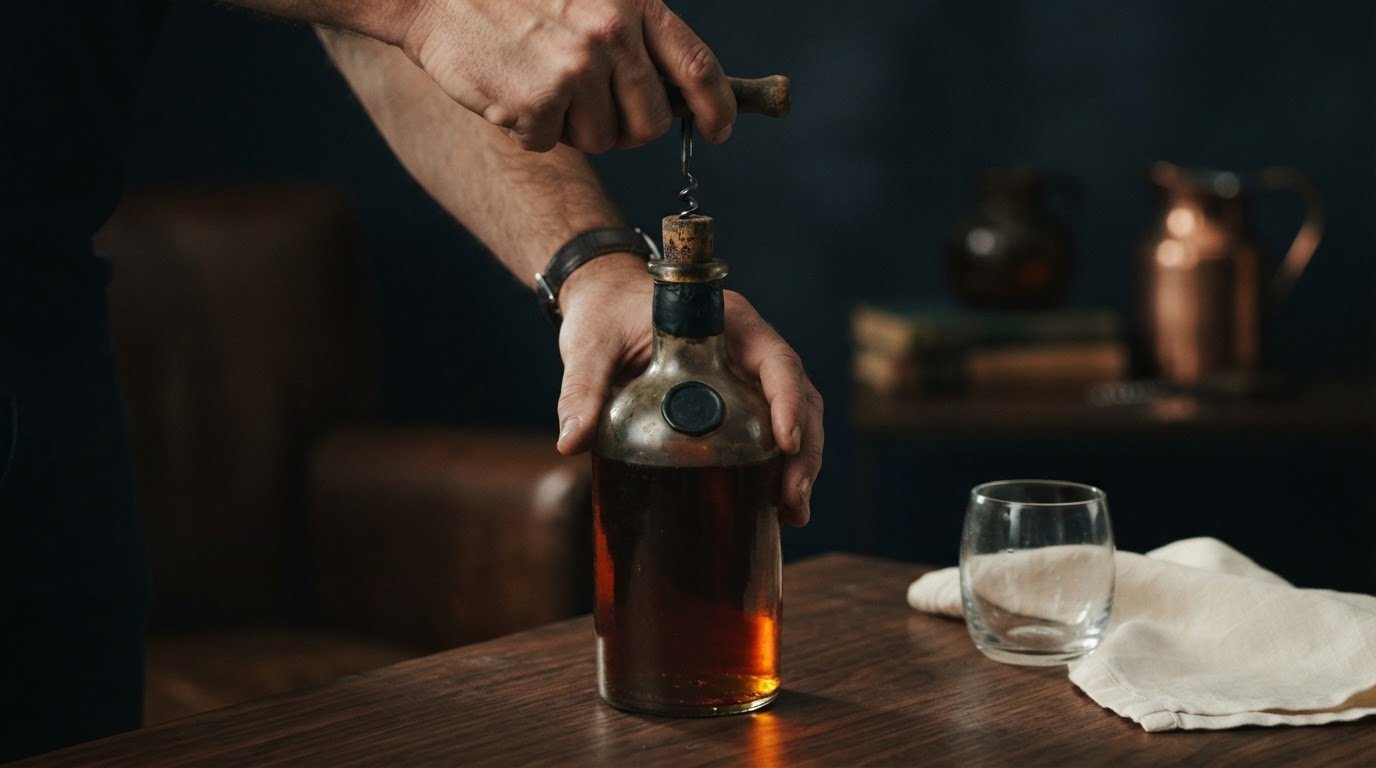
Don’t force an old whisky cork. To properly open an old bottle of whisky, inspect the bottle and closure, then ease the cork out with steady, controlled pressure. If it begins to crumble, stop and keep loose pieces out of the liquid. Strain the whisky if any cork debris falls in.
It’s understandable to be cautious: a fragile closure can make a special bottle difficult to open. A measured approach helps you handle the cork carefully and assess the whisky before drinking, without rushing or applying unnecessary force.
This guide covers what to look for before opening, how to respond to a stubborn or crumbling cork, and how to filter debris from the whisky. You’ll also learn a simple way to soften a dry cork before removal, so you can proceed with greater care and enjoy what’s in the bottle.
Key Takeaways
- Inspect the bottle and closure before opening, and use what you see and smell to guide your next step.
- If the cork crumbles or falls inside, a clean plastic bag may help retrieve larger pieces without rushing.
- Strain the whisky through a suitable clean filter if cork fragments remain in the liquid.
- Tilting the bottle can moisten a dry cork and may make it easier to ease out carefully.
1. Assessing an old bottle before drinking
Before opening an old bottle, examine its closure, neck, fill level, and liquid. Look for leakage, damaged seals, unusual cloudiness, or cork fragments. A cork can become fragile after prolonged storage; some reports note corks in wine or liquor bottles may disintegrate after 5-10 years. Whisky does not continue aging in the bottle, so a bottle kept unopened for 20 years has not gained 20 years of barrel maturation. Check the cork’s condition and note any unusual smell before tasting.
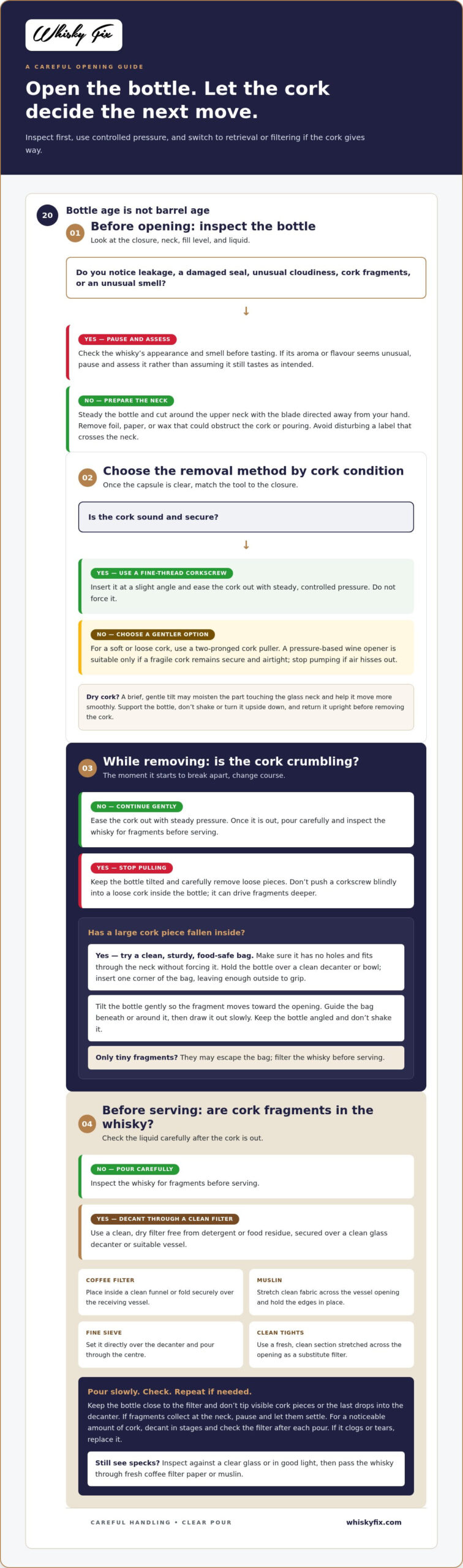
To safely remove a whisky bottle capsule, steady the bottle and cut around the upper neck, directing the blade away from your hand. Remove foil, paper, or wax that could obstruct the cork or interfere with pouring. Take care not to disturb a paper label that crosses the cork and neck; pour between its edges if needed. Once the capsule is clear, inspect the closure and choose a removal method suited to its condition.
To preserve whisky after opening an old bottle, replace its cap or cork firmly and store it upright in a cool, dark place away from direct sunlight. Oxygen and evaporation can gradually alter the flavour, particularly when little whisky remains. If the bottle is less than a third full, transfer the whisky to a smaller, clean glass bottle with a tight-fitting closure to reduce the air space. Avoid storing a cork-sealed bottle on its side, because prolonged contact with the spirit can damage the cork.
Does whisky go bad after a bottle is opened? It can remain drinkable for years when properly sealed, but its aroma and flavour may change through evaporation and oxygen exposure. Flavour changes often become more noticeable after 2-3 years, especially in a bottle less than half full. Before pouring, check the whisky’s appearance and smell, then taste a small amount. If the aroma or flavour seems unusual, pause and assess it rather than assuming the bottle still tastes as intended.
2. Extracting a cork with a plastic bag
A clean plastic bag can help retrieve a large cork piece that has fallen inside the bottle. Use a sturdy, food-safe bag without holes, and make sure it fits through the neck without forcing it. Knowing how to properly open an old bottle of whisky also means knowing when to stop pulling and use a gentler method.
First, hold the bottle over a clean decanter or bowl. Insert one corner of the bag through the neck, leaving enough material outside to grip. Tilt the bottle gently so the cork fragment moves towards the opening. Guide the bag beneath or around the fragment, then draw it out slowly. Keep the bottle angled and avoid shaking it, which can break the cork into smaller pieces.
If the cork starts crumbling during removal, stop and carefully remove loose pieces while keeping the bottle tilted. A plastic bag works best for a larger piece; tiny fragments may escape it and need filtering later. Don’t push a corkscrew blindly into a loose cork inside the bottle, since that can drive pieces deeper. For anyone wondering how to properly open an old bottle of whisky when its cork has fallen in, gentle retrieval is preferable to forcing it.
Choose a tool based on the closure’s condition: use a fine-thread corkscrew at a slight angle for a sound cork, and a two-pronged cork puller for a soft or loose one. A pressure-based wine opener is suitable only if a fragile cork remains secure and airtight. Stop pumping if air hisses out.
For a wax-sealed bottle, carefully remove the wax around the neck and lip so it won’t obstruct opening or pouring. Work gradually, keep any cutting edge directed away from your hand, and avoid forcing a tool through a thick layer of wax.
Once the cork is out, pour carefully and inspect the whisky for fragments before serving. If you’d like another bottle for your collection, explore Single Malt Scotch Whisky.
3. Filtering cork debris from whisky
If cork fragments have entered the whisky, decant it through a clean filter before serving. Suitable options include a coffee filter, muslin, a fine sieve, or clean tights. Choose something clean, dry, and free from detergent or food residue. Set it over a clean glass decanter or another suitable vessel, then make sure it sits securely before pouring.
Pour slowly, keeping the bottle close to the filter so the stream stays controlled. Don’t tip the last drops or visible cork pieces into the decanter. If fragments collect near the bottle’s neck, pause and let them settle before continuing. A steady pour reduces splashing and helps keep debris from slipping around the filter’s edge.
- Coffee filter: Place it inside a clean funnel, or fold it securely over the receiving vessel.
- Muslin: Stretch a clean piece across the vessel opening and hold its edges in place.
- Fine sieve: Set it directly over the decanter and pour through the centre.
- Clean tights: Use a fresh, clean section stretched across the opening as a substitute filter.
If there’s a noticeable amount of cork, decant in stages rather than rushing the whole bottle through at once. Check the filter after each pour. If it becomes clogged or torn, replace it with a fresh, clean filter before continuing. Keep the receiving vessel stable on a flat surface, and avoid touching its inner rim or the filter’s whisky-facing surface.
After filtering, inspect the decanted whisky against a clear glass or in good light for remaining specks. If you still see cork, pass the liquid through fresh coffee filter paper or muslin. A sieve can catch larger pieces, while a finer filter helps with smaller debris. Check the final pour before serving; cork fragments affect texture, so take time to confirm the whisky looks clear.
4. Moistening a cork before removal
A brief, controlled tilt can moisten the part of a cork that meets the bottle’s glass neck. This contact may reduce friction and help the cork move more smoothly. Keep one hand around the bottle’s body and the other near its neck, supporting it throughout. Tilt it gently rather than shaking or turning it upside down. The aim is to bring whisky into contact with the cork, not to soak the closure.
Return the bottle upright before attempting to remove the cork. Check that the closure remains centred and secure, then use a suitable corkscrew or cork puller according to its condition. Apply steady pressure and watch the cork as it moves. If it begins to split or crumble, stop rather than continuing to twist. A brief tilt can ease friction, but it cannot restore a weak or damaged cork.
Clear foil, paper, or wax from the bottle’s neck before tilting. These materials can obstruct the cork or catch a tool during removal. If the capsule covers the neck, remove it carefully first, then tilt the bottle while holding it firmly over a stable surface. Don’t leave the bottle resting on its side for an extended period. This is a short preparation step, not a storage position.
Use the bottle’s condition to decide whether moistening is appropriate. A firm cork that feels tight may benefit from brief contact with whisky. A cork that already feels soft or loose needs gentle handling, since extra movement could cause it to break apart. In that case, use a cork puller cautiously, or pause if the closure starts deteriorating. Once the cork is removed, check the opening for fragments before pouring.
For a bottle you can open and savour with the same care, explore Single Malt Scotch Whisky for your next tasting.
Whisky Fix: Single Malt Scotch Whisky
Whisky Fix offers Single Malt Scotch Whisky for readers ready to explore another bottle after learning how to handle an older one. Its selection includes Old & Rare expressions for collectors and enthusiasts looking for whisky with character and heritage.
Turn to Whisky Fix when choosing a bottle for your collection, planning a tasting, or looking for a considered gift. The range also includes Scottish Gin and whiskies from around the world, offering options beyond Scotch single malt. Whisky Fix ships worldwide, making its selection accessible to customers beyond Scotland.
Good handling preserves the experience of an old whisky, while thoughtful selection helps shape the next one. Explore the range at Whisky Fix, or contact the team to discuss your interests.
Make Your Next Whisky Moment Count
Knowing how to properly open an old bottle of whisky gives you more confidence when a cherished bottle finally leaves the cabinet. It also makes choosing what to explore next a natural step, whether you prefer a familiar style or want to try a new expression.
Whisky Fix offers Single Malt Scotch Whisky, including Old & Rare selections, alongside Scottish Gin. As you browse, consider the character and occasion you have in mind, whether you’re adding to a collection or choosing something for a future tasting. A considered choice can make the next bottle as memorable as the one you’ve carefully opened.
For help exploring the range, contact Whisky Fix. Take your time, choose with curiosity, and enjoy the next dram.
Frequently Asked Questions
How to open a vintage whisky bottle without breaking the cork?
Knowing how to properly open an old bottle of whisky starts with keeping the bottle steady and applying gentle, even pressure. Remove the seal carefully, then insert a two-pronged cork puller between the cork and the glass. Work the prongs down gradually and rotate while lifting, rather than pulling sharply. If the cork shifts or starts to split, pause and reposition the tool before continuing.
How to remove a crumbling cork from an old whisky bottle?
Use a two-pronged cork puller if the cork is already breaking apart. Ease its prongs down along the inside of the bottle neck, then twist and lift slowly so the remaining cork comes out in one piece if possible. Keep the bottle upright and avoid forcing a conventional corkscrew through fragile cork, as this can push fragments into the whisky. Stop if the neck appears damaged.
How to open a bottle with a stuck or seized whisky cork?
Try a two-pronged cork puller before applying extra force to a stuck cork. Slide the prongs carefully between the cork and glass, then turn the tool while drawing it upward in small movements. Don’t grip the bottle neck with pliers or use a flame or hot water to loosen the seal, as pressure or sudden temperature changes can damage the bottle. If the cork won’t move, pause rather than forcing it.
How to clean cork fragments out of whisky?
Pour the whisky slowly through a clean, fine-mesh strainer into a clean glass decanter or jug to catch cork pieces. For very small particles, use an unflavoured paper coffee filter secured over the receiving vessel, pouring gently so it doesn’t overflow. Keep the bottle’s label and closure separate, and transfer the strained whisky back only into a clean bottle or decanter with a secure stopper.