

- October / 15 / 2026
How Is Scottish Rum Different from Caribbean Rum?
Could a rum distilled in Scotland share more with one Caribbean bottle than with another Scottish rum? To answer “how is Scottish rum different from Caribbean rum?”, start with where it is made, then look at how it is produced and matured. Scotland’s cooler climate and reliance on imported sugarcane products, often molasses, shape producers’ choices. Across the Caribbean, rum reflects many local ingredients, traditions and stills, not one uniform regional style.
Scottish rum isn’t a protected geographical style with a single prescribed flavour profile. The name points to where the spirit is fermented and distilled; each producer’s choices shape what reaches the glass. Climate also affects maturation and the spirit’s interaction with oak over time, so age alone doesn’t tell the whole story.
This guide explains how origin, ingredients, fermentation, distillation and cask maturation influence Scottish and Caribbean rum. You’ll learn how to compare bottles using label details and your own tasting notes, without relying on regional stereotypes. Whether you’re choosing a bottle or tasting two side by side, you’ll have a practical framework for understanding each rum’s character and the decisions behind it.
Key Takeaways
- To understand how Scottish rum differs from Caribbean rum, compare production choices and maturation alongside where each rum is made.
- Look beyond the region on the label: raw material, fermentation and still type can all influence a rum’s character.
- Use age as context, not a flavour guarantee. Climate affects maturation, but it can’t tell you exactly what a bottle will taste like.
- Taste methodically: read the label, nose and taste the rum, add water if you wish, then compare your notes.
- Focus on what’s in the glass rather than relying on broad regional stereotypes when choosing a bottle.
Scottish Rum and Caribbean Rum: What Does Origin Really Tell You?
Scottish rum is fermented and distilled in Scotland; Caribbean rum encompasses the many island and mainland traditions of the wider region. Origin gives useful provenance, but it doesn’t tell you by itself what went into the spirit, how it was distilled or matured, or how it will taste. To answer “how is Scottish rum different from Caribbean rum?”, treat origin as context, then look for the production details that make each bottle distinctive.
What does Scottish rum mean?
In the UK, rum is defined by its sugarcane-based raw materials and distillation requirements, but “Scottish rum” isn’t a protected geographical indication with a prescribed regional style. The term describes where the rum is fermented and distilled. Sugarcane doesn’t need to grow in Scotland: producers can use imported molasses or other sugarcane products.
Pay attention to the exact wording on a label. “Distilled in Scotland” identifies where the spirit was distilled; “matured” or “aged in Scotland” refers to where it spent time in cask. “Blended” and “bottled” describe separate steps. The location of either step doesn’t establish where the rum was distilled or matured. Provenance is clearest when these details are stated separately, rather than inferred from a Scottish name or address.
Why Caribbean rum cannot be reduced to one style
The Caribbean isn’t a single production area with one shared recipe. Jamaica, Barbados and Guyana each have distinct histories and producer traditions, while individual distilleries make their own choices about raw materials, fermentation, stills and casks. These place names are useful clues to provenance, not guarantees of a particular flavour. Two rums from the same country may differ, while a Scottish rum may share production choices or tasting characteristics with a Caribbean expression.
Molasses is widely used in rum production, but some producers work with fresh sugarcane juice. Distillation and maturation choices also vary, so a regional label can’t substitute for details about how a rum was made. For broader context on the history and production of rum, consider how varied the category is across its origins and styles.
That variety is useful when comparing bottles. Rather than asking which region produces the better rum, ask what each producer has chosen to do and what the label tells you. A country of origin can guide further exploration, but it shouldn’t predetermine your expectations of sweetness, weight or aroma. For more on provenance and distinctive bottlings, explore this guide to premium rum online.
Scotland’s connection to rum is a point of origin, not a promise of a wholly separate character. Caribbean rum, in turn, is best understood as a family of regional and producer traditions. In both cases, the most useful comparison starts with production details, then moves to the glass.
How Ingredients, Fermentation and Distillation Shape Scottish and Caribbean Rum
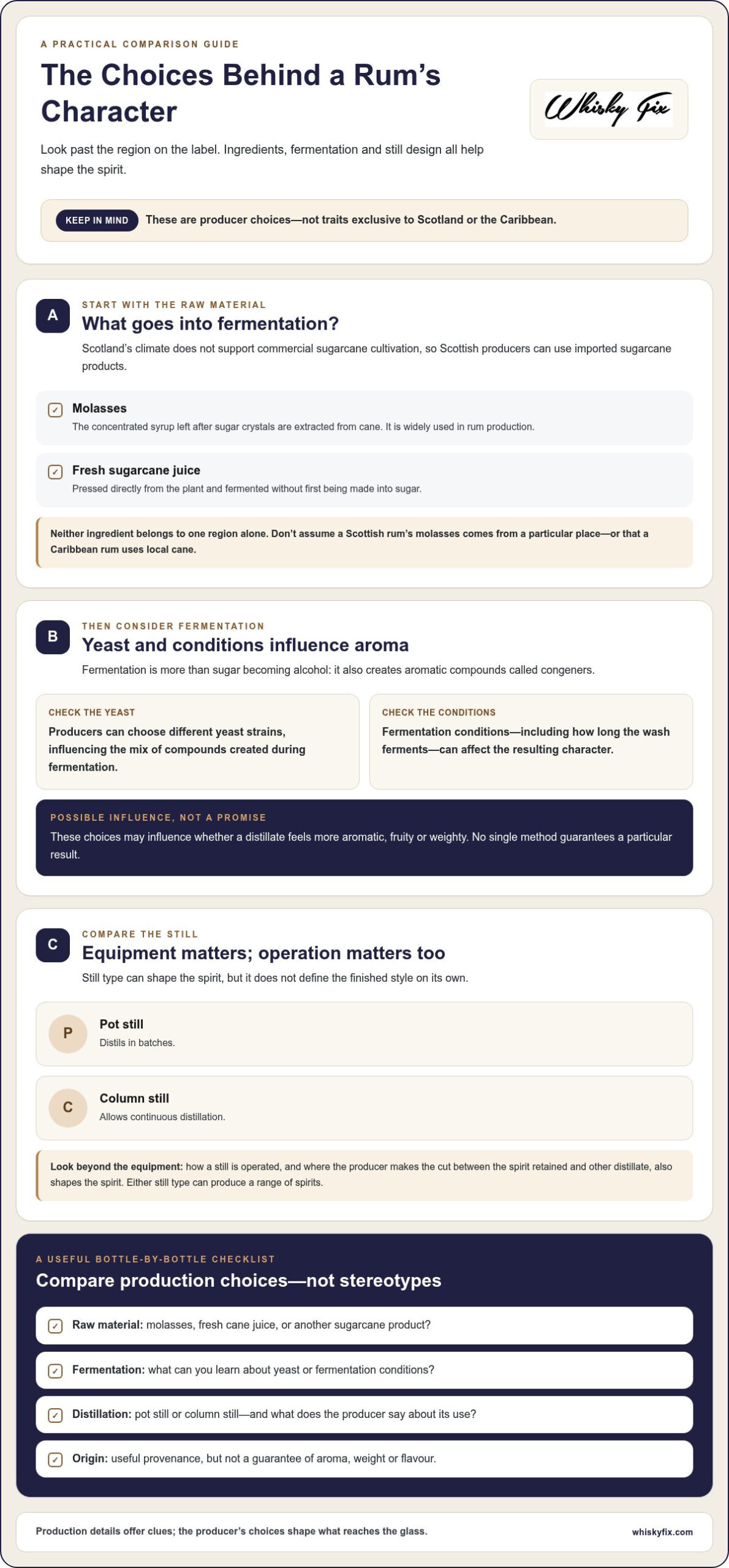
Once you’ve established origin, compare how the spirit is made. The raw material, yeast, fermentation conditions and still design each influence the compounds carried into the distillate. None belongs exclusively to Scotland or the Caribbean. Producers in both regions make individual choices, so a regional label can’t reliably predict a rum’s aroma, weight or flavour.
Does Scottish rum use different ingredients?
Scotland’s climate doesn’t support commercial sugarcane cultivation, but Scottish rum can be made from sugarcane products brought in from elsewhere. Molasses is the concentrated syrup left after sugar crystals are extracted from cane. Fresh cane juice is pressed directly from the plant and fermented without first being made into sugar. Both are used in rum production, but neither ingredient is exclusive to one region.
Ingredient sourcing varies by producer, so don’t assume a Scottish rum uses molasses from a particular place or that a Caribbean rum is made from local cane. Bottle information can offer clues, but the production story is often more specific than the country name.
How fermentation and stills influence character
Yeast converts sugars into alcohol during fermentation and also creates aromatic compounds known as congeners. Producers can choose different yeast strains and fermentation conditions, including how long the wash ferments. These decisions may influence whether the distillate feels more aromatic, fruity or weighty, but no single method guarantees a particular result.
Still type matters too. Pot stills distil in batches, while column stills allow continuous distillation. Either can produce a range of spirits, depending on how the equipment is operated and where the producer makes the cut between the spirit retained and other distillate. These are production methods, not regional labels.
- Raw material: Molasses and fresh cane juice bring different starting characteristics to fermentation.
- Fermentation: Yeast and fermentation time influence the mix of aromas and congeners that can carry through distillation.
- Still design: Pot or column distillation shapes the spirit, but the equipment alone doesn’t define its final style.
Some Scottish rum producers draw on experience with whisky-making equipment and techniques, but that doesn’t mean every Scottish distillery follows one recipe. Scotland’s wider Scotch whisky distilling tradition offers context for the skills and equipment used in the country, not a rulebook for its rum. Caribbean producers also work across varied traditions and methods.
Production choices, not a region name alone, shape a rum’s profile. To answer “how is Scottish rum different from Caribbean rum?”, compare what’s known about each bottle’s ingredients, fermentation and distillation rather than assigning a style by geography. Browse the rum selection at Whisky Fix and use those details to guide your comparison.
Scottish vs Caribbean Rum: Compare Maturation, Flavour and Style
Maturation adds another layer to the comparison, but it doesn’t create a simple regional flavour rule. Scotland’s cooler conditions may slow the interaction between spirit and oak compared with a tropical climate, where heat can intensify that exchange. The result still depends on the cask and the spirit inside it. To compare Scottish and Caribbean rum in the glass, consider the maturation conditions, then check each bottle’s production details and tasting notes.
Origin: Scottish rum is produced in Scotland; Caribbean rum represents varied island and mainland origins.
Production choices: Ingredients, fermentation and still use vary by producer in both regions.
Maturation context: Scotland’s cooler climate may mean a different pace of maturation than a tropical climate, but it doesn’t establish a fixed age or outcome.
Tasting cues: Aroma, palate, texture and finish are specific to the bottle. Use the producer’s verified notes as a guide, not a regional promise.
What Scotland’s climate can, and cannot, tell you
Cooler conditions may slow maturation, while warmer conditions can encourage a more active exchange between spirit and oak. Climate alone can’t predict how a rum will develop. Cask type, previous contents, warehouse conditions, the spirit’s characteristics and time all play a part. A Scottish rum isn’t automatically older, smoother or more flavourful than a Caribbean one.
How to compare tasting notes without stereotypes
Use the same tasting order for both samples: assess aroma, then palate, texture and finish. Descriptors such as fruity, grassy, funky or spice-led can help you describe what you perceive, but they’re observations about that bottle, not rules for a region. Compare your impressions with the producer’s verified notes, and account for differences in strength and serving conditions.
For a fair side-by-side tasting, pour modest measures and let each sample settle briefly before nosing. Look for specific impressions rather than trying to confirm a regional expectation. Does one seem more aromatic? Does another leave a longer finish? Record what you notice, then check the label for details about age, cask and bottling strength that may help explain those impressions.
Region sets the context; the bottle’s production and maturation shape its individual character. That distinction keeps the comparison balanced: climate can frame expectations, while the glass and the producer’s documented details give you evidence to consider. Neither Scottish nor Caribbean origin, by itself, guarantees a particular style or quality.
How to Choose and Taste Scottish or Caribbean Rum
Choose a rum for qualities you enjoy, then use the label and tasting notes to understand what may have shaped them. To compare Scottish rum with Caribbean rum in practical terms, focus on bottle-specific details rather than expecting every rum from either region to share one style. A clear tasting routine helps separate what you read on the label from what you actually smell and taste.
What to look for on a rum label
Start with the stated country of origin, then check whether the label distinguishes where the rum was distilled, matured, blended or bottled. Look for disclosed raw material, still type, age and cask details. Terms such as “aged,” “spiced” and “single rum” can have specific meanings in context, so read them alongside the producer’s information rather than assuming they describe one uniform method or flavour.
A simple side-by-side tasting method
Use clean glasses and modest pours, with both rums served at a similar temperature. Taste each neat first to establish its character. After that, add a little water if you wish, or try it in a cocktail if that suits the bottle and your preference. Keep notes separate for each sample before comparing them.
- Check the label. Note origin, strength, age or maturation information, cask details and any disclosed production methods. Mark missing details as unknown rather than filling gaps with regional assumptions.
- Nose the rum. Give it a moment in the glass, then note the first aromas and what emerges with further nosing. Describe what you detect in your own words, such as fruit, herbs, spice or sweetness.
- Taste it neat. Take a small sip and record the sweetness impression, texture and flavours as they develop. Notice whether the finish is short or lingering, and what remains after swallowing.
- Add water only if desired. A small amount may change how aromas and flavours present. Taste again and note what shifts; there’s no need to add water if you prefer the rum as it is.
- Compare the samples. Set your notes side by side and look for differences in aroma, palate, texture and finish. Then consider whether disclosed production or maturation details help explain your impressions.
There’s no single correct way to serve rum. Neat tasting can make it easier to focus on the spirit, while a cocktail may suit a bottle you enjoy mixed or a particular drink you want to make. Either way, your preference matters more than a rule about how rum from a region should be served.
Use this framework to explore different styles with greater confidence. Explore Whisky Fix’s rum selection and compare bottles by their provenance, production details and tasting character.
Explore Scottish and Caribbean Rum with a Specialist Perspective
Origin gives a rum its geographical context; production and maturation help explain the character in the glass. That’s the clearest way to approach the question, “how is Scottish rum different from Caribbean rum?” Neither origin guarantees a particular quality or flavour. Start with what the producer shares about ingredients, fermentation, distillation and cask history, then consider how those choices appear in the aroma, palate and finish.
Choose by production details and personal preference
Use disclosed details to guide your next tasting, not to dictate what you should enjoy. If you’re drawn to a particular aroma or texture, look for bottles whose producer notes and production information offer relevant clues. A stated cask type, for example, gives useful context for maturation, while distillation details can help you understand how the spirit was made. Treat these as points of comparison, not promises of a specific taste.
Stay curious about both Scottish and Caribbean expressions. A bottle from either origin may surprise you, and you don’t need to rank one region above another to make the comparison rewarding. If a label leaves details unanswered, base your judgement on the information available and your own tasting notes rather than filling gaps with assumptions.
Where to continue exploring
Whisky Fix is an independent specialist spirits retailer based in Oban, Scotland, with rum among its curated selection. Its Scottish base offers a specialist perspective on the comparison, but doesn’t establish where any individual rum was distilled, matured or bottled. Those details belong to each producer and bottle, so use the label and producer information to assess provenance.
Whisky Fix also hosts tasting events and ships worldwide, giving you further ways to explore its spirits offering. Tasting helps you develop your own reference points: note what you enjoy, compare those impressions with producer descriptions, and let personal preference shape your next choice. The same approach works whether you’re tasting rum from Scotland, Jamaica, Barbados, Guyana or elsewhere.
The most confident choice isn’t necessarily the bottle with the most familiar origin or the fullest set of technical details. It’s the one that suits your palate, with provenance and production information helping you understand its character. Explore Scottish and Caribbean rum with an open mind, and let the producer’s story and your own experience inform the comparison.
Let Your Next Tasting Set the Direction
Let curiosity guide your next bottle. Rather than deciding in advance what a region should taste like, choose an expression that interests you and note what makes it distinctive to your palate. Over time, those impressions become a personal reference point, helping you recognise the production details and styles you enjoy most.
That’s a more useful answer to “how is Scottish rum different from Caribbean rum?” than a fixed list of regional flavours. Provenance can start the conversation, but the most rewarding discoveries come from tasting thoughtfully and staying open to unexpected similarities and contrasts. There’s no need to choose a side. Each bottle offers another perspective on rum’s craft and character.
Whisky Fix brings a Scotland-based specialist perspective to its rum selection, with tasting events and worldwide shipping among the ways to explore its spirits. When you’re ready to continue your comparisons, explore rum at Whisky Fix. Trust your curiosity, keep your tasting notes close, and enjoy discovering what you like.
Frequently Asked Questions
Is Scottish rum a protected geographical category?
No, don’t assume “Scottish rum” has the same protected status as Scotch whisky. The Scotch Whisky Regulations 2009 set specific protections for Scotch whisky, while the UK’s spirit drinks rules govern rum as a separate category. These sources aren’t legal guidance for an individual bottle label. Use its stated origin and production details as clues, and consult current official rules for legal interpretation.
Can Scottish rum be made with Caribbean sugarcane or molasses?
Yes. Rum made in Scotland can use sugarcane products sourced from elsewhere; where the crop grew and where the spirit was produced are different facts. The raw material depends on the producer, so don’t assume every Scottish rum uses Caribbean molasses or the same base ingredient. Look for disclosed information on the label or in the producer’s materials, and distinguish ingredient origin from distillation location.
Does Scottish rum have to be aged in Scotland?
Not necessarily. A Scottish brand name alone doesn’t establish where a rum matured. A producer could distil the spirit in one place and mature, blend or bottle it elsewhere, subject to applicable rules. For example, a Scottish bottling location doesn’t prove the cask was stored in Scotland. Look for an explicit maturation statement in the producer’s materials; if none is given, treat the location as undisclosed rather than inferring it.
Is Scottish rum always pot-distilled?
No. Some Scottish rum is made using pot stills, but pot distillation isn’t a rule for every producer. Rum can be made using pot stills, column stills or a combination of equipment. If still type matters to your choice, look for a producer’s description of the specific bottle or distillation run. Don’t rely on the country name or an example from a different distillery.
Can Scottish rum replace Caribbean rum in a Daiquiri?
Yes, if the bottle’s character suits the drink you want. A Daiquiri brings rum together with lime and sugar, so a different expression can shift the balance, aroma or finish. Start with a measured recipe, taste before serving, then adjust the sweetness or citrus to your preference. How Scottish rum differs from Caribbean rum in this cocktail depends on the individual rum, not its origin alone.
How should I store an opened bottle of rum?
Keep the cap or cork firmly in place and store the bottle upright, away from direct sunlight, heat and large temperature changes. As the bottle empties, less liquid means more air in the space above it, so avoid leaving it open unnecessarily. Most rum doesn’t need refrigeration. These are general storage practices, not a promise that an opened bottle’s aroma and flavour will stay unchanged indefinitely.
Should I taste Scottish rum neat or in a cocktail first?
Either can help, depending on what you want to discover. A small neat pour lets you focus on the rum’s aroma and texture without mixers; a cocktail shows how it works with other ingredients. If you’re comparing two bottles, taste each the same way first so the comparison is fair. Then add water or make a cocktail to explore how your preferences change with the serve.