

- October / 22 / 2026
Common whisky collecting mistakes: choose bottles for flavour
Common whisky collecting mistakes to avoid include choosing by price or age alone, following recommendations that don’t suit your palate, and mistaking popularity for value. A higher price or older age statement doesn’t guarantee a more enjoyable dram. Start with flavour.
It’s easy to be drawn to a celebrated label, an impressive bottle or the promise of rarity. But a collection becomes more rewarding when each choice reflects what you genuinely enjoy, whether that’s a particular flavour profile, a distillery style or an expression that offers something different.
This guide explains how to assess flavour before price, weigh advice against your preferences, look beyond reputation when judging value and read age statements carefully. You’ll also find practical ways to taste thoughtfully and make informed decisions, so your collection grows with purpose rather than simply gathering impressive-looking bottles.
Key Takeaways
- Start with flavour and style, then weigh price against what you actually enjoy.
- Use recommendations as a guide, not a rule; compare them with your own preferences before choosing a bottle.
- Look beyond price and brand recognition by considering production choices and barrel influence.
- Use specialist advice to explore expressions that fit your tastes, including single malt Scotch and Old & Rare whiskies.
- Read age statements as one part of a bottle’s story, not a standalone measure of quality.
1. Choosing whisky by flavour rather than price
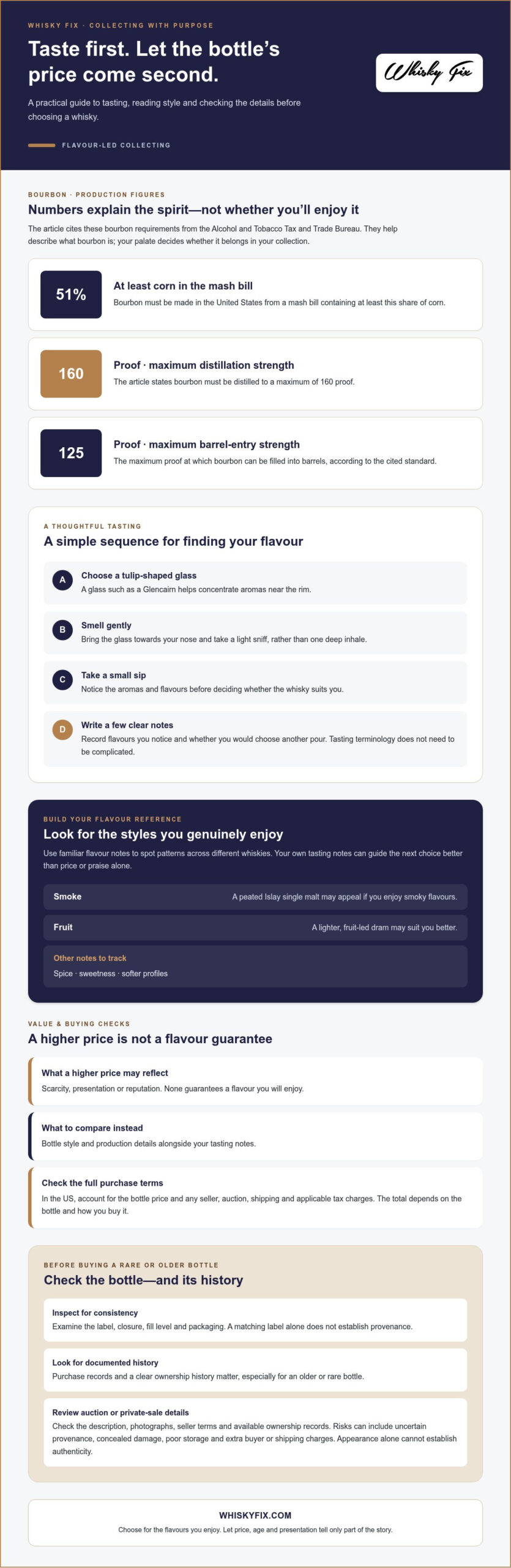
Start with what you enjoy, not the bottle’s price or presentation. During a tasting, use a tulip-shaped glass, such as a Glencairn, to concentrate aromas near the rim. Bring the glass gently towards your nose and take a light sniff rather than one deep inhale. Then take a small sip and note the aromas and flavours before deciding whether the whisky suits you.
Build a flavour reference as you try different styles. Note whether you prefer smoke, fruit, spice, sweetness or a softer profile. A peated Islay single malt may appeal if you enjoy smoky flavours, while you might prefer a lighter, fruit-led dram. You don’t need to master tasting terminology; a few clear notes can help you spot patterns and make choices that suit you.
Price alone can’t tell you whether a bottle will taste right to you. A higher figure may reflect scarcity, presentation or reputation, but those qualities don’t guarantee a flavour you’ll enjoy. Compare the bottle’s style and production details with your tasting notes. For bourbon, for instance, the Alcohol and Tobacco Tax and Trade Bureau says it must be made in the United States from a mash bill containing at least 51% corn. The same organization states bourbon must be distilled to a maximum of 160 proof and filled into barrels at a maximum of 125 proof. Those details help explain what the spirit is, but your palate decides whether it belongs in your collection.
In the US, account for the bottle price and any seller, auction, shipping and applicable tax charges. The total depends on the bottle and how you buy it, so compare the full purchase terms rather than focusing on a headline price.
To assess authenticity and provenance, examine the label, closure, fill level and packaging for consistency. Look for purchase records and a clear ownership history, especially for an older or rare bottle. A matching label alone doesn’t establish provenance; the bottle’s documented history matters too.
Store bottles upright in a cool, dark place with stable conditions. Direct sunlight and repeated temperature swings can harm the packaging and may affect the whisky over time. Keep bottles away from strong odours, and store the original box or paperwork with them if condition and collectability matter to you.
Auction and private purchases can involve risks such as uncertain provenance, concealed damage, poor storage or extra buyer and shipping charges. Before buying, review the bottle description, photographs, seller terms and any available ownership records. These checks can reduce the risk of acquiring a counterfeit or damaged bottle, although appearance alone cannot establish authenticity.
Keeping a bottle sealed generally preserves its original condition and appeal to collectors. Once opened, whisky can change as air enters the bottle, and its resale appeal may differ. Personal enjoyment and collectability are separate reasons to keep or open it.
2. Evaluating recommendations against personal taste
A recommendation is a starting point, not a verdict on what you should enjoy. A bottle praised for intense peat may disappoint if you prefer gentle fruit, while a softer whisky may suit you better. Before buying, identify what the recommender values: smoke, cask influence, texture, balance or complexity. Then compare those qualities with flavours you already enjoy in whisky, food or coffee.
Keep a simple record of your preferences after trying a whisky. Note its dominant aromas, first impression, mouthfeel and finish, then record whether you’d choose another pour. Use familiar descriptions such as citrus, dried fruit, vanilla, pepper or smoke. After several tastings, look for recurring patterns. If you repeatedly enjoy honeyed, rounded drams but dislike sharp smoke, those notes can guide your next shortlist more reliably than a critic’s overall score. A similar emphasis on finding specific flavour notes applies to other adult sensory interests as well; for instance, enthusiasts exploring alternative taste profiles can browse options from Andy’s Vape Shop, which supplies a wide selection of e-liquids and kits.
Consider the recommender’s palate and purpose. A collector seeking unusual cask character may praise a powerful whisky that a casual drinker finds challenging. A friend who enjoys heavily peated Scotch can be a useful source of smoky suggestions, but less helpful if you’re looking for a mild introduction. Ask what stood out to them, then decide whether that feature appeals to you. Research the bottle’s style before treating praise as a reason to buy.
Personal preference also includes how you drink whisky. Neat, with water or over ice are all valid choices, and each changes the experience. Try a recommended dram neat first, then add a little water or ice if you prefer. Choose the way that lets you enjoy the aromas and flavours. Don’t assume a reviewer’s preferred serving method has to be yours.
For a gift, match the whisky type to what the recipient usually drinks. Someone who enjoys single malt Scotch may appreciate another expression in that broad category, while a peated bottle could miss the mark if they prefer gentler flavours. If you don’t know their usual choice, favour a broadly approachable style rather than relying on an impressive label or age statement. Choose for the recipient’s habits, not your own collecting ambitions.
New drinkers can start with milder options before exploring heavily peated whisky. This gives them room to notice sweetness, fruit and texture before smoke becomes the dominant impression. A younger whisky may also suit someone’s taste better than an older one. Assess each recommendation against your own notes and preferences; this is a more dependable way to build a collection you’ll want to revisit.
Research a recommendation against the flavours and style you’re likely to enjoy, rather than letting praise settle the choice. If you’re buying a gift, check whether the whisky type matches what the recipient usually drinks. A familiar category, such as single malt Scotch, offers a more personal starting point than an impressive description. These checks keep the decision centred on the drinker, whether you’re choosing for yourself or someone else.
Neat, watered or iced whisky are all valid choices, depending on personal preference. Try it neat before deciding whether to add water or ice, then choose the serving style that suits you. People new to whisky can begin with milder options rather than going straight to peated whisky, making smoke a later exploration rather than an assumed preference.
3. Assessing value beyond price and brand popularity
A famous label can attract attention, but recognition alone doesn’t make a whisky valuable to your collection. Separate drinking value from collectability: a bottle can be a pleasure to enjoy while having little resale appeal, or sought after by collectors without matching your palate. Decide which purpose matters before comparing bottles. That way, a celebrated name won’t make the decision for you.
Look beyond the label to the whisky itself. Research its cask influence, ageing process and production methods, then consider how they shape its character. A spirit matured in a strongly active cask may show pronounced wood and spice, while another maturation approach may preserve more fruit. These are useful distinctions, not automatic rankings. Compare the details with the styles you enjoy and the role the bottle would play in your collection.
Compare like with like before judging value. Match the distillery, expression, bottling strength, release type and bottle condition as closely as possible. A standard release and a limited bottling from the same distillery aren’t equivalent comparisons. Nor is an intact presentation directly comparable to a bottle without its original packaging. These details help explain why bottles from the same brand can have different appeal.
Popularity can signal recognition, but it doesn’t prove quality or guarantee lasting demand. Ask what draws attention to a bottle: its flavour, production story, scarcity, presentation or reputation. Then consider whether that quality matters to you. A beautifully designed bottle may catch your eye, but the whisky inside remains the main consideration if you’re collecting to enjoy the spirit.
To avoid overpaying, compare the same expression across available offers and account for condition, provenance and seller terms. Set your own limit before browsing, and don’t let urgency or a brand name replace careful comparison. For a collectible bottle, check that its edition and packaging match the description. The best value is the bottle whose qualities justify your interest, not simply the one attracting the most attention.
Resale value depends on buyer demand, release details, provenance and condition, as well as presentation. Assess these features together rather than treating a well-known name or high asking price as proof of investment potential. A whisky collection isn’t a guaranteed investment: tastes and demand shift, and selling requires finding a buyer. Collect for the drinking experience first unless you’re prepared to assess those market factors separately.
Before adding a bottle, use a short decision test: identify what makes it distinctive, compare it with a close equivalent, and decide whether you want it for your palate or its collectible character. This gives brand popularity its proper place while keeping flavour, production and provenance central to your judgement.
4. Getting advice from specialist retailers
A specialist can help turn your tasting preferences into a focused shortlist. Bring examples: perhaps you enjoy honeyed Speyside single malts but find heavily peated Islay whisky too smoky. Asking for the “best” bottle without explaining what you enjoy is one of the common whisky collecting mistakes to avoid. Describe what appeals to you and what doesn’t, so the conversation has a practical starting point.
Explain whether you’re buying to drink, mark an occasion or add a particular style to your collection. Those goals can point to different choices. If you’re after a gentle evening dram, you may want balance and approachability; if you’re exploring cask influence, you may prefer more pronounced barrel character. Clear priorities help narrow the field without treating rarity or reputation as a substitute for fit.
Ask what makes a suggested bottle distinctive. Useful details include its region, distillery character, maturation cask and bottling style. For example, ask whether a whisky’s sweetness comes from its spirit profile or cask influence, and how that compares with a familiar bottle you enjoy. A specific comparison connects production choices to expected flavour more clearly than a string of technical terms.
Share your experience level honestly. If you’re new to Scotch, say so before considering a strongly peated dram or powerful cask-strength expression. If you know you enjoy maritime smoke, mention that preference and name a whisky you’ve liked. This context helps a specialist distinguish between a bottle that offers an interesting challenge and one that matches your established taste.
For a gift, describe the recipient’s usual choices instead of relying on packaging alone. Someone who regularly drinks blended Scotch may want a different recommendation from someone who seeks single malts with pronounced peat. If you know a bottle they enjoy, use its flavour and style as a reference. That gives advice a clearer basis than guessing from age statements or label design.
Good advice should explain trade-offs, too. A limited release might offer unusual cask character, while a familiar expression may provide a style you already know you like. Ask how the suggested whisky differs from a close alternative, and which kind of drinker might prefer each. This turns a recommendation into a comparison, helping you decide whether novelty or familiarity better suits your collection.
Keep your own judgement central. Specialist knowledge can clarify origin, production and flavour, but your palate determines whether a bottle earns a place at home. Treating a retailer’s recommendation as an instruction is another common whisky collecting mistake to avoid. Use advice to ask sharper questions, not to buy automatically. After tasting a recommendation, record what you liked and what you’d change. Those notes can make your next conversation more precise.
5. Interpreting age statements cautiously
An age statement describes time spent maturing in cask, not a guarantee of quality. A whisky aged for 15 years may be less enjoyable than an expertly made 10-year-old expression. Craftsmanship, cask choice and the spirit’s character all shape the final profile. Treat the number as one useful detail, then consider whether the flavour and style suit your collection.
Compare age with character rather than assuming older means better. Longer cask ageing can soften a spirit, but it can also cause whisky to lose some vibrancy. A whisky aged for five years can be better than one aged for 15 years if its balance and flavour appeal more to you. An eight-year-old expression isn’t automatically inferior to one aged for more than 10 years.
Use the age statement to form questions, not conclusions. Consider whether the whisky’s profile suggests lively fruit, rounded oak, spice or a more mature character. Then look at the maturation details and production choices that may have shaped it. An age figure alone can’t tell you how prominent the barrel influence will be or whether the alcohol feels integrated with the flavour.
Compare bottles thoughtfully. If two expressions have different ages, also compare their distillery character, cask influence and bottling details. A 15-year-old whisky from one producer may have a very different style from a 10-year-old whisky elsewhere. Taste them side by side if possible, and note which one offers the balance you prefer. Your own response matters more than the larger number on the label.
Does whisky improve or age after bottling? No. It doesn’t continue to mature as it would in a cask. A sealed bottle retains the age it had when bottled, though storage can affect its condition. After opening, exposure to air can gradually change its character.
When collecting, distinguish age from rarity and drinking quality. An older expression may be scarce or historically interesting, but those traits don’t prove it will taste better. A younger release can offer a vivid, enjoyable profile. Decide whether you’re choosing for flavour, provenance or collectability, then judge the age statement in that context.
Read the age as part of the bottle’s story, alongside its maturation and character. Comparing a five-year whisky with a 15-year bottle can reveal how each balances spirit and cask, but the number alone cannot settle which belongs in your collection. Choose the expression whose qualities you value, rather than treating age as a shortcut to quality.
Treat an age statement as a guide, not a verdict. The label can help frame expectations, but it can’t replace attention to how the whisky was made and how maturation shaped the result. Craftsmanship is one part of the picture, alongside the other factors involved in ageing. Consider those points together: the age statement can guide a comparison without deciding the outcome in advance. In the end, judge the bottle by the qualities you value, not by one figure alone.
Whisky Fix: Single Malt Scotch Whisky
Whisky Fix offers a selection of single malt Scotch whisky for collectors choosing bottles by flavour, character and provenance. If you’re comparing distillery styles or seeking an expression that suits your palate, explore the range with your preferences in mind rather than selecting by age or reputation alone. Its wider offerings include whiskies from around the world, Scottish gin, whisky-inspired gifts and worldwide shipping. A thoughtful choice begins with knowing what you want to discover, whether that’s a familiar flavour profile or a style new to your collection. Take a look at the available whiskies, and visit Whisky Fix to explore the selection.
Build a collection with purpose
Knowing the common whisky collecting mistakes to avoid is only the beginning. Let your next choice answer a question you’re curious about: which distillery style appeals to you, what cask character would you like to explore, or what makes an expression distinctive? A collection shaped by curiosity can become more personal and rewarding than one built around labels alone.
Whisky Fix offers Single Malt Scotch Whisky and Old & Rare expressions for collectors exploring established styles or seeking something distinctive. Its range also includes Scottish Gin, an option for those interested in spirits beyond whisky. If you’d like guidance as you consider your next bottle, contact Whisky Fix for collecting advice. Keep exploring at your own pace, and let your palate lead the way.
Frequently Asked Questions
What whisky collecting mistakes do beginners commonly make?
Beginners often buy bottles without a clear collection focus or a record of what they already own. That can lead to duplicate purchases and a shelf that doesn’t reflect their interests. Keep a simple catalogue with each bottle’s name, distillery, style, purchase date and reason for choosing it. Before adding another, compare it with your existing bottles and decide what new character or perspective it brings to the collection.