
- September / 23 / 2026
Blanton’s Single Barrel Bourbon: The Definitive Connoisseur’s Guide
A bottle of Blanton’s single barrel bourbon was never designed to taste identical to the one sitting beside it on the shelf. If you’ve spent months hunting down an allocated bottle only to face inflated retail markups, confusing international releases, or noticeable profile shifts between barrels, your frustration is completely justified. Whiskey culture often expects uniform consistency from luxury spirits, but true single barrel whiskey is an artisanal snapshot of aging wood, climate, and the metal-clad walls of Buffalo Trace’s storied Warehouse H.
In this guide, you’ll discover the production techniques behind Elmer T. Lee’s landmark 1984 creation, learn how benchmark expressions like Gold Edition and Straight From The Barrel truly compare, and gain clear strategies for sourcing allocated bottles through trusted global merchants. Here is your definitive connoisseur’s roadmap to understanding, evaluating, and appreciating one of Kentucky’s most celebrated spirits.
Key Takeaways
- Understand the historical significance of Warehouse H and how Elmer T. Lee pioneered modern whiskey collecting with Blanton’s single barrel bourbon.
- Discover the science behind Mash Bill #2, learning how higher rye content and virgin charred oak create its signature balance of vanilla and baking spice.
- Compare core portfolio expressions to understand the precise proof, profile, and character differences between Original, Gold Edition, and Straight From The Barrel.
- Identify key authentication checkpoints and sourcing strategies to navigate limited allocations while avoiding secondary market risks.
- Learn how to build a well-rounded spirit collection by contrasting rich American single barrels with traditional single malt Scotch whiskies.
What Is Blanton’s Single Barrel Bourbon? Origin, Legacy, and Warehouse H
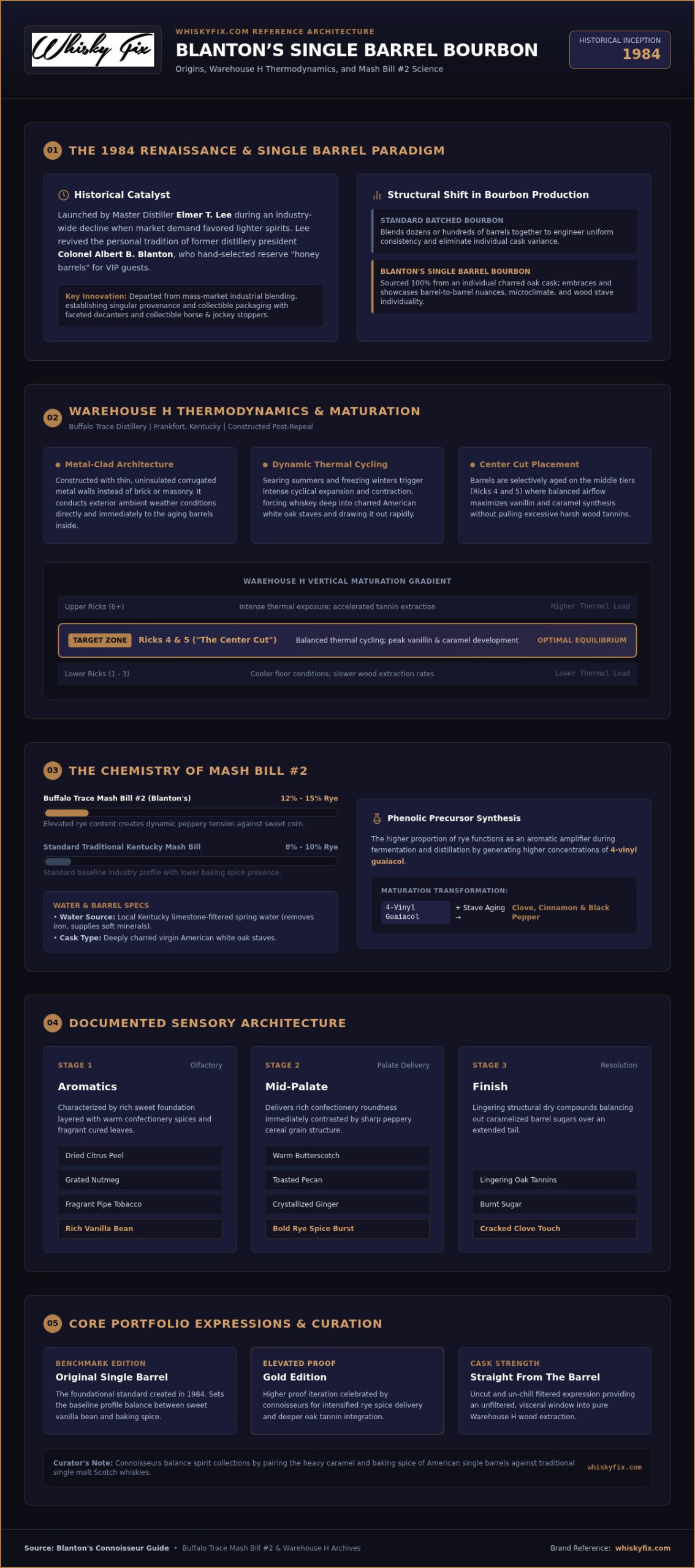
When Master Distiller Elmer T. Lee launched blanton’s single barrel bourbon in 1984, the American whiskey industry was in steep decline. Consumer palates had shifted toward lighter spirits, leaving Kentucky distilleries with surplus stocks. Lee looked back to his early career under distillery president Colonel Albert B. Blanton. Whenever Blanton entertained dignitaries, he handpicked exceptional “honey barrels” from the center of his favorite aging warehouse, bottling the spirit one cask at a time. Lee institutionalized this artisanal approach, fundamentally transforming how collectors view premium American whiskey.
Unlike standard batched bourbons that blend dozens or hundreds of barrels to achieve flavor uniformity, a single barrel release contains spirit pulled exclusively from an individual oak cask. Each bottle offers an unblended snapshot of a single wood stave structure and aging microclimate, celebrating subtle barrel-to-barrel variation rather than masking it. Detailed archives in Blanton’s Bourbon History document how this departure from mass-market blending helped ignite the modern bourbon renaissance.
The 1984 Renaissance of American Whiskey
Lee’s innovation went against prevailing market wisdom. Large-scale producers relied heavily on industrial consistency, but Blanton’s introduced the concept of singular provenance to the domestic whiskey market. By packaging unblended liquid in a faceted decanter topped with a collectible horse and jockey stopper, the brand elevated straight bourbon into the luxury realm. This bold gamble demonstrated that connoisseurs would pay a premium for transparency, age, and individual barrel character, sparking a global interest in Kentucky distilling that continues to expand today.
The Architecture and Thermodynamics of Warehouse H
Every single drop of Blanton’s single barrel bourbon matures inside Warehouse H at Buffalo Trace Distillery in Frankfort, Kentucky. Built shortly after the repeal of Prohibition, Warehouse H possesses structural quirks that make it unique among the distillery’s aging facilities:
- Metal-Clad Construction: Unlike traditional brick or heavy timber rickhouses, Warehouse H features thin, uninsulated corrugated metal walls that conduct ambient weather immediately to the interior.
- Dynamic Thermal Cycles: Kentucky’s searing summers and freezing winters cause dramatic, rapid temperature swings inside the structure. This forces whiskey deep into the charred American white oak staves and draws it back out at an accelerated pace.
- The Center Cut Ricks: Maturation specialists focus almost exclusively on barrels stored along the fourth and fifth ricks. On these middle levels, temperature shifts and airflow maintain a precise balance, preventing excessive wood tannin extraction while maximizing vanillin and caramel production.
The Flavor Architecture: Mash Bill #2 and Maturation Science
Behind the distinct profile of blanton’s single barrel bourbon lies Buffalo Trace’s Mash Bill #2, a recipe engineered to provide greater structural grip than standard Kentucky mash bills. While traditional Kentucky bourbons lean heavily on yellow corn with rye percentages hovering around 8% to 10%, Mash Bill #2 incorporates approximately 12% to 15% rye alongside malted barley. This calculated ratio creates a dynamic tension between dense, caramelized corn sweetness and sharp, peppery cereal grain.
During the distillation and proofing stages, local limestone-filtered spring water strips away harsh iron compounds while contributing trace minerals that soften the whiskey’s viscosity. When this refined distillate enters deeply charred virgin American white oak staves, thermal extraction draws out rich wood compounds. The final sensory profile delivers a layered sequence of aromas and flavors:
- Aromatics: Dried citrus peel, grated nutmeg, and fragrant pipe tobacco layered over rich vanilla bean.
- Mid-Palate: Warm butterscotch, toasted pecan, and crystallized ginger balanced by a bold burst of rye spice.
- Finish: Lingering oak tannins, burnt sugar, and a lingering touch of cracked clove.
Deconstructing Buffalo Trace Mash Bill #2
The elevated rye proportion functions as an aromatic amplifier during fermentation and distillation. Rye grain generates distinct 4-vinyl guaiacol and related phenolic precursors, which age into classic clove, cinnamon, and pepper notes. Combined with proprietary yeast strains, the recipe ensures the distillate carries sufficient structural backbone to endure extended cask maturation without becoming overwhelmed by heavy wood tannins.
Single Barrel Variance: The Beauty of Natural Inconsistency
Mass-market whiskey achieves consistent uniformity through blending hundreds of barrels, but blanton’s single barrel bourbon preserves the distinct micro-environment of each cask. Factors such as stave density, slight variations in char depth, and warehouse airflow create notable sensory divergences between individual casks.
One barrel might emphasize rich caramel and toasted walnut, while another yields bright orange marmalade and sharper cracked pepper. Enthusiasts who appreciate the single cask variations found across fine single malt scotch whisky understand that variance is an asset, not a defect. If you’re building a refined spirit cabinet, consulting an independent specialist at Whisky Fix can help you explore singular cask profiles from both Kentucky and renowned global distilleries.
Comparing the Core Blanton’s Expressions: From Original to Gold and Beyond
While many enthusiasts know the brand through its domestic flagship, the full portfolio of blanton’s single barrel bourbon spans four distinct expressions. Each tier adjusts proof, filtration, and texture to showcase different facets of the underlying whiskey. Because several expressions were historically bottled as export exclusives for European and Asian markets, understanding their technical differences is essential for serious collectors.
The Global Portfolio Hierarchy
Evaluating the core line reveals how proof alters the expression of Buffalo Trace’s high-rye mash bill:
- Original Single Barrel (93 Proof / 46.5% ABV): The brand’s foundational standard. Diluted with local limestone-filtered water to 93 proof, this bottling strikes a delicate balance between bright citrus, caramel, and gentle rye warmth, serving as the benchmark profile.
- Blanton’s Gold Edition (103 Proof / 51.5% ABV): Long reserved primarily for European and Asian distribution, Gold Edition provides a richer mouthfeel. The higher proof reduces dilution, preserving essential congeners and wood oils that emphasize dark stone fruit and bitter chocolate.
- Straight From The Barrel (Cask Strength): Uncut and un-chillfiltered, this expression represents the purest distillation of individual barrel character. Bottled at barrel proof, which fluctuates by individual cask, it delivers immense viscosity, intense charred oak, and deep baking spice.
- Special Reserve (80 Proof / 40% ABV): Identifiable by its green wax and label, this lighter entry point softens rye spice in favor of delicate honey, floral accents, and crisp green apple.
The Iconic Equine Bottle Tops: Letters and Lore
Beyond the whiskey itself, the faceted decanter is renowned for its collectible horse and jockey stoppers. Introduced in 1999, the series consists of eight unique pewter stoppers that spell out “B-L-A-N-T-O-N-S” when assembled. The second “S” is distinguished by a colon to mark the final position.
Each figurine captures a different phase of a thoroughbred horse race. The sequence begins with the horse standing alert at the starting gate on letter B, transitions through full trot and gallop, and culminates in a victorious finish on the final S with the jockey’s arm raised. Completing the set has become a global pursuit, with collectors regularly displaying all eight atop repurposed barrel staves in fine spirit rooms worldwide.
Sourcing Allocated Bourbon: Authentication, Scarcity, and Collector Ethics
Acquiring a genuine bottle of blanton’s single barrel bourbon has become an exercise in patience. Global allocation networks limit retail shipments because customer demand heavily outpaces aged cask inventory. Distilleries cannot simply turn a valve to increase output; every barrel requires years of unhurried maturation inside the rickhouse. This structural scarcity has driven secondary market speculation, which introduces severe risks ranging from improperly stored bottles to sophisticated counterfeits.
The Mechanics of Modern Bourbon Allocation
Distributors assign limited quotas to territories and select retailers based on sales history and regional demand. Much like the vintage discipline required for collecting rare scotch, bourbon production cannot be rushed without destroying the liquid’s integrity. When inventory cannot expand overnight, allocation models ration supply across domestic and international markets, creating the regional bottlenecks collectors encounter today.
Authentication and Verification Protocols
Due to elevated aftermarket trading, counterfeiters often target empty Blanton’s decanters, refilling them with inferior whiskey and resealing the top. Connoisseurs must exercise rigorous due diligence before purchasing:
- Capsule and Wax Integrity: Inspect the neck seal closely. Authentic bottles feature a clean, pliable wax seal with a precise tear-strip tab, free from uneven glue residue or bubbling.
- Laser Etchings: Authentic Buffalo Trace glass features a light laser code etched near the base or neck. This production code must correspond chronologically to the handwritten details on the label.
- Label Data: Every genuine label includes hand-inscribed records: the dump date, barrel number, warehouse rick number, and exact alcohol percentage. Inconsistencies in ink or sloppy handwriting alignment warrant caution.
- Fill Level (Ullage): Factory-sealed bottles maintain a uniform fill level reaching into the lower neck. Substantial evaporation or low fill lines suggest improper heat exposure or seal tampering.
When purchasing rare foreign expressions like Gold or Straight From The Barrel from abroad, reputable provenance is paramount. Understanding customs compliance and carrier handling, much like the steps covered when importing scotch whisky to the USA, ensures your spirits clear borders legally and arrive intact. For guaranteed bottle authenticity and reliable worldwide delivery, source your allocated bottles through Whisky Fix.
Curating a World-Class Spirit Cabinet: Pairing American Bourbon with Global Whiskies
A truly sophisticated spirits collection doesn’t stop at geographic boundaries. While blanton’s single barrel bourbon anchors the American whiskey shelf with robust corn sweetness and charred wood spice, its full depth emerges when tasted alongside spirits shaped by completely different aging traditions. Discerning collectors understand that bridging Kentucky single casks with Scottish single malts and world whiskies offers the ultimate masterclass in how wood, climate, and grain interact.
Contrasting Cask Profiles: Virgin Oak Versus Seasoned European Wood
The stark sensory contrast between American straight bourbon and aged single malt stems directly from cooperage. Federal law mandates that bourbon mature in new, charred oak containers. This virgin American white oak releases bold waves of vanillin, lactones, and caramelized wood sugars within just a few seasons.
Scotch whisky, by contrast, relies on seasoned casks that previously held bourbon, port, or fortified European wines. Structuring a comparative flight alongside expressions from historic scotch whisky distilleries illustrates these differences immediately:
- Virgin American Oak: Imparts pronounced notes of toffee, toasted coconut, sweet corn, and heavy baking spices through quick thermal extraction.
- Seasoned European Oak: Delivers oxidative layers of dried fig, dark leather, dates, and subtle walnut tannins extracted over decades of patient warehouse resting.
Selecting Bottles with Provenance at Whisky Fix
Building an internationally balanced cellar requires reliable access to genuine allocations without the hazards of unregulated secondary groups. Independent spirits merchants evaluate premium American whiskey with the exact same rigor applied to rare single malts, ensuring flawless provenance before any bottle enters a private collection.
Spirits traveling across international borders demand professional logistics. Temperature-controlled transit and reinforced packaging protect natural cork integrity, preserve fill levels, and eliminate seal fatigue over long distances. Through an expertly chosen catalog spanning rare regional bottlings and old single malts, Whisky Fix connects enthusiasts with verified bottles and secure worldwide shipping to ensure every acquisition arrives in pristine collector condition.
Mastering the Pursuit of Exceptional Single Casks
Appreciating blanton’s single barrel bourbon means embracing the unblended character that emerges from Warehouse H. From the balanced baking spices of Mash Bill #2 to the uncut intensity of Straight From The Barrel, each release captures a distinct moment in Kentucky distilling history. Navigating allocations successfully requires looking past secondary speculation and focusing on verified provenance and proper bottle preservation.
Whether you’re completing an equine stopper display or cellaring rare bottles alongside historic single malts, acquiring exceptional spirits shouldn’t be left to chance. Based in Oban, Scotland, Whisky Fix operates as an independent specialist spirits merchant providing carefully vetted provenance on rare and international spirits. Backed by a secure worldwide shipping network and professional bottle packing, we ensure your spirits arrive in flawless condition. Explore curated rare whiskeys at Whisky Fix and discover singular bottles ready to elevate your spirits cabinet.
Frequently Asked Questions
Is Blanton’s Single Barrel Bourbon hard to find internationally?
Yes, global allocations remain tightly restricted, though certain overseas editions appear more frequently outside the United States. Specific releases like Gold Edition and Special Reserve were originally developed for European and Asian distribution. While domestic retailers face intense regional bottlenecks, international collectors can secure authentic bottles of blanton’s single barrel bourbon by working directly with reputable independent spirits merchants that offer verified provenance and specialized global transit.
Can you tell how old a bottle of Blanton’s is from the label?
You can’t determine the exact age from the label because Blanton’s carries no formal age statement, though casks typically mature for six to eight years. The label does, however, provide precise bottling provenance. Every bottle features a hand-written “dump date,” alongside the specific barrel number, rickhouse number, and warehouse storage rick. This date records the exact day workers unsealed the barrel and bottled the whiskey.
How do the different Blanton’s horse stopper letters work?
Each stopper features an individual letter stamped near the horse’s back left hoof, spelling out “B-L-A-N-T-O-N-S” across eight distinct designs. Introduced in 1999, the sequence illustrates a thoroughbred racehorse progressing from standing motionless at the starting gate on letter B to galloping at full stretch. The series culminates on the final S with the horse crossing the line and the jockey raising an arm in victory.
What is the difference between Blanton’s Original and Blanton’s Gold Edition?
The primary distinctions are proof level, palate texture, and regional availability. Original Single Barrel is proofed down to 93 proof (46.5% ABV), creating a balanced, approachable profile dominated by sweet citrus, vanilla, and gentle baking spice. Gold Edition is bottled at 103 proof (51.5% ABV). The reduced water dilution preserves heavier grain oils, delivering a noticeably thicker mouthfeel alongside richer layers of dark stone fruit and bitter oak.
Is Blanton’s bourbon chill-filtered before bottling?
Most expressions in the portfolio undergo chill filtration, with the notable exception of Straight From The Barrel. Original Single Barrel, Gold Edition, and Special Reserve pass through chill filtration to eliminate cloudiness caused by fatty acid esters when the spirit drops in temperature. Straight From The Barrel skips this filtration step entirely, delivering uncut cask strength whiskey with maximum viscosity, rich fatty acids, and authentic barrel character.
What mash bill is used to distill Blanton’s Single Barrel?
Buffalo Trace distills blanton’s single barrel bourbon using its proprietary Mash Bill #2. While the exact grain percentages remain an industry secret, this recipe is classified as a higher-rye bourbon mash, containing roughly 12% to 15% rye alongside yellow corn and malted barley. This increased rye volume provides the peppery spice, nutmeg, and aromatic herbal lift that balances the sweet corn base during extended warehouse aging.
How should an opened bottle of Blanton’s Single Barrel be stored?
Store your opened decanter upright in a cool, dark cabinet shielded from direct sunlight and temperature spikes. Bourbon doesn’t spoil like wine, but prolonged UV exposure breaks down delicate aromatic compounds, and heat causes spirit expansion that damages the natural cork. If the liquid drops below the bottom third of the faceted bottle, consider transferring the remaining whiskey into a smaller glass container to reduce oxidation.