

- October / 14 / 2026
Best Scottish Craft Gins: 2026 Picks for Every Palate
The best Scottish craft gins aren’t necessarily the bottles with the boldest story. With a crowded market and tasting notes that can mean different things to different people, choosing the best scottish craft gins takes more than a striking label or the word “craft”. Provenance, botanicals and how you plan to serve the gin offer more useful clues.
If it’s difficult to tell one bottle from another, start by separating where a gin is made from how it tastes. Scottish gins can range from crisp and juniper-led to citrusy, floral or warmly spiced. Knowing what the producer says about its production and botanicals can help you choose for a classic gin and tonic, a cocktail or a gift.
This guide compares Scottish craft gins by flavour and occasion, with practical pointers for reading tasting descriptions and narrowing your shortlist. Whisky Fix is an independent spirits specialist based in Oban, with Scottish gin among its curated range. Browse with these flavour and provenance clues in mind, then choose a bottle that suits your palate.
Key Takeaways
- Use juniper and supporting botanicals as clues to flavour, and consider production location separately.
- Compare the best scottish craft gins by flavour profile, provenance and intended serve.
- Try a familiar gin and tonic to notice differences between bottles without specialist tasting experience.
- Look for clear details about the producer, production location and tasting notes to make “craft” more meaningful when choosing.
- Explore Scottish gin through producers and specialist retailers, including Whisky Fix, an independent spirits retailer based in Oban.
Why the Best Scottish Craft Gins Stand Out
Scottish craft gin isn’t one fixed recipe or flavour profile. The phrase points to gin associated with production in Scotland, while “craft” is a broad descriptor rather than a guarantee of a particular method or standard. Producers make different choices about botanicals, distillation and production arrangements, so bottles can taste markedly different.
Scottish provenance is best understood through clear details about where and how a gin was produced, not just a Scottish name or landscape-inspired label. That helps separate a bottle’s place of origin from its flavour. A Scottish-made gin might be juniper-led, citrus-forward, floral or savoury. Geography alone won’t tell you what you’ll taste.
For a useful shortlist of the best scottish craft gins, look beyond evocative packaging and check what the producer says about production and ingredients. Those details give you a firmer basis for choosing than the word “craft” on its own.
What makes a gin Scottish?
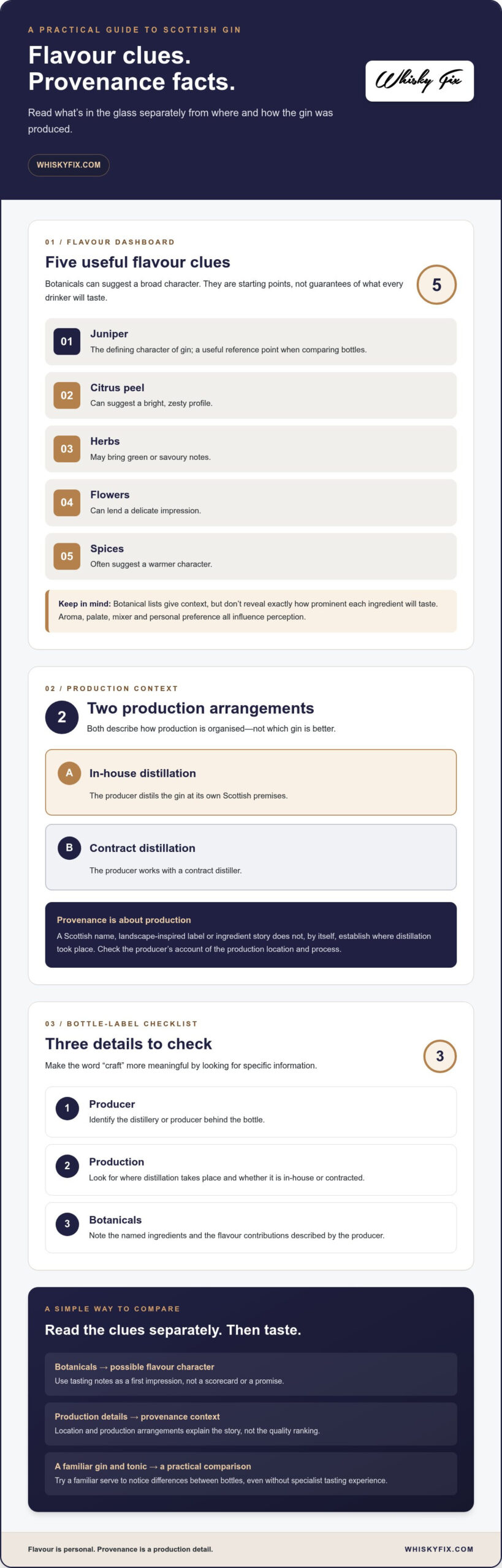
Provenance depends on production, not just inspiration. A producer may distil gin at its own Scottish premises, or production may involve a contract distiller. The Scottish Gin Society’s directory distinguishes in-house and contract distillation as useful categories for understanding those arrangements. They describe how production is organised, not which gin is better.
Separate the place where a gin is made from the origin of its botanicals. A Scottish setting or ingredient story may contribute to a bottle’s identity, but neither automatically establishes where distillation took place. Edinburgh Gin, for example, has a history and production overview in the Edinburgh Gin Wikipedia entry, illustrating why production details add context beyond a brand name.
What does craft mean when choosing gin?
“Craft” can suggest care and character, but without context it doesn’t tell you how a gin was made or whether its flavour will suit you. Don’t assume that every small producer uses the same equipment, methods or ingredients. Read the producer’s account for useful clues, then compare those details with the style you enjoy.
- Producer: Identify the distillery or producer behind the bottle.
- Production: Look for where distillation takes place and whether it is in-house or contracted.
- Botanicals: Note the named ingredients and the flavour contributions described by the producer.
These checks make “craft” more specific without treating it as a quality score. They also give you a practical starting point for comparing flavour and serving suggestions.
How Botanicals, Provenance and Distillation Shape Scottish Gin
Once a gin’s Scottish provenance is clear, its botanicals offer the next useful clue: what might you enjoy in the glass? Juniper gives gin its defining character, while supporting botanicals shape the balance. Citrus peel can suggest a bright, zesty profile; herbs may bring green or savoury notes; flowers can lend a delicate impression, while spices often suggest warmth. These are broad guides, not fixed rules.
A disclosed botanical list can suggest a gin’s broad flavour character, but tasting notes are an invitation to explore rather than a promise that every drinker will experience the same flavours. Aroma, palate, mixer and personal preference all influence perception. A citrus-led gin, for example, may feel crisp to one drinker and more rounded to another. Treat descriptions as a starting point, then consider how you plan to serve the bottle.
How to read a gin’s botanical and tasting description
Read the named ingredients alongside the tasting terms. “Herbal” may suggest green, leafy or savoury impressions; “floral” points to softer aromatic notes; “spice-forward” suggests a warmer character. A botanical list adds context, but doesn’t show precisely how prominent each ingredient will taste. Use tasting notes to form a first impression, not as a scorecard.
Give more weight to the producer’s own description than to an old review or repeated product copy, especially if an expression or recipe has changed. If a bottle names several botanicals but says little about their role, don’t assume each one will be equally noticeable.
Why production provenance deserves a place in the comparison
Botanical choices describe what goes into a gin; provenance describes where and how it is produced. A distillery may make gin at its own Scottish site, or a producer may work with a contract distiller. Those arrangements explain the production story, but they don’t determine whether the gin is well made or how it will taste. Production location is context, not a quality ranking.
Scotland’s distilling geography is often discussed through whisky, but gin has its own producers and production arrangements. A guide to Scotch whisky distilleries can help orient readers to the country’s broader distilling regions, but it shouldn’t be used to infer where a gin is made. For each bottle, use the producer’s account of its distillation location and process.
To compare the best scottish craft gins for your taste, read botanical and production information as two separate clues: one helps you anticipate flavour, the other clarifies provenance. Whisky Fix, an independent specialist retailer based in Oban, offers Scottish gin as part of its spirits range. Browse the Scottish gin selection with those clues in mind.
Best Scottish Craft Gins to Try: A Shortlist by Flavour
A useful shortlist helps you choose by taste rather than pretending one bottle is universally best. The 2026 Scottish Gin and Rum Awards offer a starting point: Fidra Gin received the London Dry Gin of the Year award, while South Loch Gin was recognised in citrus and pink gin categories. These distinctions identify styles and award recognition, not a guarantee that every drinker will prefer them.
The examples below are grouped by flavour clues supported by their names or award categories. Award recognition gives them a place in this Scottish gin shortlist, while the precise distillation site is a separate provenance detail. Serve ideas are suggestions for exploring each style, not claims about official producer recommendations.
| Profile and example | Provenance | Recommended drinker | Suggested serve |
|---|---|---|---|
| Classic dry: Fidra Gin, awarded London Dry Gin of the Year | Scottish Gin and Rum Awards recognition; see producer information for the distillation site | Drinkers who favour a traditional dry gin style | Try in a simple gin and tonic to explore its character |
| Citrus: South Loch Pink Grapefruit Citrus Gin, awarded Citrus Gin of the Year | South Loch Gin award recognition; production location is a distinct provenance detail | Those drawn to grapefruit and citrus cues | Serve with tonic and a slice of grapefruit |
| Berry-led: South Loch Gin Black Raspberry Old Tom, awarded Pink Gin of the Year | South Loch Gin award recognition; see producer details for the distillation site | Drinkers curious about a fruit-led gin profile | Try with tonic, or use as a starting point for a gin cocktail |
Which Scottish gin suits a juniper-forward palate?
Fidra Gin is a sensible place to begin if you enjoy a classic dry style. Its London Dry award gives a clear style cue, though it doesn’t establish exact tasting notes. Try it in a familiar gin and tonic, keeping the garnish simple so it doesn’t dominate. Treat this as a comparison, since your impression depends on the serve and your palate.
Which bottles suit citrus, floral or coastal preferences?
South Loch Pink Grapefruit Citrus Gin offers a named citrus cue, while South Loch Gin Black Raspberry Old Tom points towards a berry-led option. The award categories support these broad groupings. A coastal reference can describe a place, a botanical or a tasting impression, so look to the producer’s description before treating it as a flavour note.
Choose a dry gin for a classic profile, citrus for a brighter direction, and berry-led gin for a fruitier alternative. Whisky Fix is an independent specialist retailer based in Oban, with Scottish gin in its curated spirits range. Explore its Scottish gin selection to compare styles.
How to Choose a Scottish Craft Gin for Your Taste or Occasion
Start with your preferences, not a reputation or label. Use the steps below to narrow your options, then consider where and how you’ll enjoy the bottle. This works whether you’re choosing a familiar gin and tonic or selecting a gift.
- Start with flavour. Decide whether you tend to enjoy juniper-led, citrus, floral, herbal or spice-forward notes. If you’re unsure, begin with a style you already like in other drinks, such as bright citrus or warming spice.
- Read the tasting description. Look for the producer’s own notes and named botanicals. South Loch’s award-winning citrus style, for example, is identified with pink grapefruit, while its Black Raspberry Old Tom points towards berry-led character. Treat these cues as guidance, not guarantees.
- Check provenance. Find out where the gin is distilled and whether production is in-house or contracted. This helps you understand the bottle’s story, but doesn’t predict its quality or flavour.
- Choose the intended serve. A gin for a simple G&T may work differently from one you plan to use in cocktails. Consider how tonic and garnish will complement the gin’s profile.
Match flavour preferences to a bottle
If juniper is what you value most, look for a classic dry style and try it in a familiar gin and tonic. Citrus fans might explore a gin described with grapefruit or peel; floral, herbal and spice-led choices need producer notes to support those descriptions. Start with a modest amount of tonic and a restrained garnish, then adjust to taste. You don’t need specialist vocabulary: simply notice whether the gin seems crisp, aromatic, earthy or warming to you.
Keep the comparison consistent. Use the same tonic, glass and garnish for each gin, and note what you enjoy. A familiar serve gives you a useful reference point. Changing one element at a time helps you tell whether a difference comes from the gin or the mixer.
Choose for a gin and tonic, cocktails or a gift
For a G&T, choose a tonic and garnish that complement rather than overwhelm the gin. A citrus garnish can echo citrus notes; a simpler serve leaves more room to notice the spirit. For cocktails, choose a profile that sounds appealing and follow the recipe’s balance, since sweetness, acidity and other ingredients can change how the gin comes through.
For a gift, match the bottle’s flavour description to something the recipient already enjoys. A fan of classic dry drinks may prefer a traditional profile, while someone drawn to fruit or citrus could appreciate those notes. If gin isn’t the right fit, a single malt Scotch whisky guide can help you compare another spirits category.
Use these steps to narrow your shortlist of the best scottish craft gins to bottles suited to a real preference or occasion. Whisky Fix is an independent specialist retailer based in Oban, with Scottish gin among its curated range. Browse Scottish gin at Whisky Fix to explore the selection.
Where to Explore Scottish Craft Gin, Including Whisky Fix
Once you know which flavours you enjoy, choose the right source for the information you need. Gin producers explain their bottles and production; directories help you discover distilleries and compare production arrangements; retailers provide a place to browse spirits for purchase. Knowing which source you’re reading makes your search more focused.
Why explore Scottish gin through a specialist retailer?
Whisky Fix is an independent specialist spirits retailer based in Oban, Scotland. Its online offering includes Scottish gin and worldwide shipping. Its Scottish base brings a Scotland-based spirits perspective to the category, but doesn’t mean every gin in the range is made in Oban or nearby. For a particular bottle’s ingredients and production, use the producer’s information.
A producer’s website is often the most direct source for current descriptions of a gin’s recipe, tasting notes and distillation arrangements. An independent directory can help you identify producers and understand whether production is in-house or contracted. A specialist retailer offers a route to browse Scottish gin as part of a wider spirits selection, using product details to guide your comparison.
Keep those roles distinct. A directory listing isn’t a tasting endorsement, and a retailer isn’t necessarily the producer. To find the best scottish craft gins for your preferences, use producer details to understand provenance and flavour, then browse a retailer’s Scottish gin category to compare options.
A considered next step for finding your bottle
Before choosing, run through three checks:
- Taste profile: Does the producer’s description align with flavours you already enjoy, such as juniper, citrus, floral, herbal or spice-led notes?
- Production provenance: Does the information explain where the gin is distilled and who produces it?
- Intended serve: Are you choosing it for a familiar gin and tonic, cocktails, sipping or a gift?
These checks turn a broad search into a personal shortlist. If you’re buying for someone else, use their known preferences rather than relying on a striking label or a general “craft” claim. A clear citrus description, for example, may be more useful than a vague promise of Scottish character.
Explore the Scottish gin selection at Whisky Fix. Use your flavour preference, provenance questions and intended serve as you compare bottles.
Choose a Bottle That Makes You Curious
Your next gin doesn’t need to be the definitive choice for every occasion. Use it to explore a profile you already enjoy or try something just beyond your usual preference. The best scottish craft gins are the ones that suit your palate and the way you like to drink, whether that means a familiar gin and tonic or a new cocktail.
Make your first pour a small experiment. Keep the serve simple, notice what stands out, and use that impression to guide your next choice. You don’t need to master tasting terminology or settle on one favourite straight away. Curiosity is a good place to begin, and a bottle chosen for a particular person or moment can make the experience more rewarding.
Whisky Fix’s online Scottish gin offering includes worldwide shipping. Explore Whisky Fix’s Scottish gin selection and find a bottle for your next pour, celebration or thoughtful gift.
Frequently Asked Questions
What is the best Scottish craft gin?
There’s no single best bottle for every palate, so the best scottish craft gins depend on the drinker and occasion. Distinguish award recognition from personal fit: an award can point you towards a style, but it can’t predict what you’ll enjoy. If possible, taste a small pour before choosing a full bottle, and notice whether you prefer the gin neat, with tonic or in a mixed drink.
What makes a gin a Scottish gin?
A Scottish gin is identified by its production provenance, rather than by a flavour unique to Scotland. Look for information that names the producer and explains where distillation takes place. A Scottish brand name, landscape image or locally inspired botanical story can add context, but none alone tells you where the spirit was made. Clear production details help distinguish a Scottish-made gin from one that draws on Scottish themes.
Are all Scottish craft gins made in Scotland?
No. A producer may be Scottish while arranging for a contract distiller to make its gin elsewhere, so the brand’s home and the spirit’s production location aren’t always the same. Directories such as the Scottish Gin Society distinguish production arrangements to help readers understand this difference. If origin matters to you, check the details for the individual expression rather than relying only on the producer’s address or the bottle’s Scottish imagery.
Which Scottish gin is best for a gin and tonic?
A dry style is a useful starting point for a classic gin and tonic. Fidra Gin received the London Dry Gin of the Year award at the 2026 Scottish Gin and Rum Awards, making it one example to consider, not a guaranteed favourite. Begin with a familiar tonic and a restrained garnish, then adjust the balance to taste. A strong garnish can dominate a delicate gin, so keep the first serve simple.
How can I choose a Scottish gin as a gift?
Choose by the recipient’s established tastes, not by guessing what a distinctive label might mean. If they order classic dry drinks, look for a dry-style description; if they enjoy citrus flavours, seek producer notes that specifically mention citrus. Also consider whether they usually mix drinks or prefer a simpler serve. A clear description of the gin’s character makes your gift easier to match to their preferences.
Is Scottish gin always juniper-forward?
Gin must retain juniper as its defining taste, but supporting botanicals can create different impressions, including citrus, floral, herbal or spice notes. Scottish gin can therefore vary from bottle to bottle, and juniper needn’t be the only note you notice. If you prefer juniper less prominent, read the producer’s tasting description and try a small serve before settling on a bottle.
Can I buy Scottish craft gin online from Whisky Fix?
Yes. Whisky Fix is an independent specialist retailer based in Oban, Scotland, and its online spirits offering includes Scottish gin. Worldwide shipping is offered. Browse the online selection to explore Scottish gin and compare the options presented there. For details about a particular gin’s production and flavour, refer to the producer’s information.