

- September / 26 / 2026
Best Campbeltown Single Malts: A 2026 Buying Guide
The most famous Campbeltown bottle may not be the right one for your palate. With three active distilleries and distinct expressions to explore, choosing among the best campbeltown single malts can feel less straightforward than it first appears. You might be weighing Springbank’s varied styles against Kilkerran’s generally lightly peated character or Glen Scotia’s peated and unpeated bottlings. Tasting notes can also mean different things to different drinkers.
The best choice isn’t a fixed ranking. It’s the bottle whose producer style, flavour profile and release details suit your preferences. This guide compares Campbeltown’s main producers, outlines the broad character of their whiskies and explains what to check when choosing a bottle, whether you’re looking for smoke, maritime notes or a particular cask influence.
Age, maturation and flavour can vary between bottlings, and availability changes over time. Use the comparisons as a starting point, then check current listings with a specialist retailer such as Whisky Fix before deciding.
Key Takeaways
- Regional character offers useful clues, but check the individual bottling rather than assuming every whisky tastes alike.
- Compare Springbank, Glen Scotia and Kilkerran by their broad styles, then use your own preferences to narrow down the best campbeltown single malts for you.
- Look beyond age and tasting notes. Review the exact label, bottling strength, volume and release details before ordering.
- Use preferences such as peat, maritime character or richer cask influence as a starting point, not as a guarantee of what you’ll taste.
- Check a specialist retailer’s current listing, stock and destination-specific shipping terms before making your choice.
What Makes Campbeltown Single Malts Distinctive?
Campbeltown single malt is whisky distilled and matured as single malt in the Campbeltown region of Scotland, on the Kintyre peninsula. The coastal setting and the region’s long whisky-making heritage inform a regional identity often associated with maritime, briny, oily and sometimes smoky notes. These descriptors are a useful starting point when comparing the best campbeltown single malts, but they aren’t a flavour checklist that every bottle must match.
Regional identity is a guide, not a guarantee. An individual bottling’s character depends on its producer, production choices, maturation and release. Age and cask history can influence what you taste, so assess the specific expression rather than relying on the region alone. For background on the area’s history and distilleries, see this overview of Campbeltown single malt whiskies.
Where Is Campbeltown and Why Does Its Whisky Have a Distinct Identity?
Campbeltown sits on Scotland’s Kintyre peninsula, with the sea close at hand. That maritime setting is part of the region’s identity and helps explain why coastal impressions often appear in tasting descriptions. Campbeltown also has a notable place in Scotch whisky heritage, giving its malts a strong sense of origin for drinkers seeking regional distinction.
Location doesn’t prescribe a single recipe or flavour, though. Production methods and maturation choices vary by distillery and release. Use regional notes to decide what to explore, then check the bottling’s own details and tasting description before buying.
Which Distilleries Make Campbeltown Single Malt?
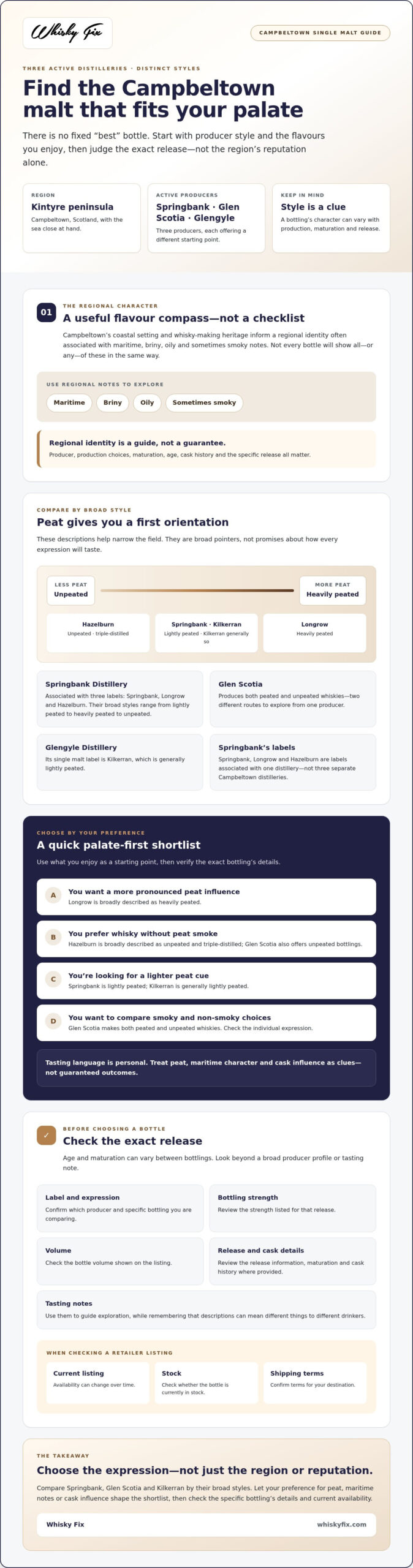
The three active producers covered here are Springbank Distillery, Glen Scotia Distillery and Glengyle Distillery. Springbank is also associated with three distinct labels: Springbank, Longrow and Hazelburn. Their broad production styles differ: Springbank is lightly peated, Longrow heavily peated, while Hazelburn is unpeated and triple-distilled. These are useful orientation points, not promises that every release will taste the same.
Glen Scotia produces both peated and unpeated whiskies, offering different routes into the region’s style. Glengyle’s single malt label is Kilkerran, which is generally lightly peated. For a first comparison, consider how much smoke you enjoy, then examine each expression’s label and release information. This helps make a regional shortlist more personal and identify which bottles you’d like to explore next.
How Springbank, Glen Scotia, and Kilkerran Single Malts Compare
Producer and label offer a useful first comparison, but neither predicts every detail in the glass. Peat level helps distinguish some Campbeltown styles, while maturation, cask choice, age, bottling strength and release decisions can shift an expression’s character. Treat the profiles below as broad pointers, then check the tasting notes and specifications for the exact bottle.
| Producer or label | Commonly described profile | May suit drinkers who prefer |
|---|---|---|
| Springbank | Lightly peated style | A measured smoky note alongside the distillery’s distinctive character |
| Longrow | Heavily peated style | A more pronounced peat influence |
| Hazelburn | Unpeated, triple-distilled style | Whisky without peat smoke |
| Glen Scotia | Both peated and unpeated expressions | A choice between smoky and non-smoky bottlings from one producer |
| Kilkerran | Generally lightly peated | A gentler peat presence, while comparing individual release details |
No single producer’s profile represents every Campbeltown malt, because each distillery and release brings its own choices to the glass. Judge the best campbeltown single malts by the specific expression and your preferences, rather than by regional reputation alone.
What Should Buyers Know About Springbank, Longrow, and Hazelburn?
Springbank, Longrow and Hazelburn are labels associated with Springbank Distillery, not three separate Campbeltown distilleries. Their broad distinctions, lightly peated, heavily peated and unpeated respectively, give buyers a practical way to start comparing them. They don’t establish a universal order of quality. Cask maturation and bottling decisions make each release its own proposition.
How Do Glen Scotia and Kilkerran Add Different Options?
Glen Scotia offers both peated and unpeated whiskies, while Kilkerran is Glengyle Distillery’s single malt label and is generally lightly peated. These descriptions indicate possible directions, not guaranteed tasting outcomes. Compare the individual bottling’s notes, maturation and strength before deciding. Even a familiar label can offer a different experience from one release to another.
Use this comparison to narrow your preferences, then assess the exact bottle rather than buying on name alone. A specialist retailer such as Whisky Fix’s single malt listings can be a place to check current Campbeltown selections. Confirm the listing’s details and stock before making a choice.
Which Campbeltown Single Malt Best Fits Your Taste?
There isn’t one objectively best Campbeltown single malt. The right bottle depends on the flavours you enjoy and the details of the release available to you. Peat, coastal impressions and cask influence can help narrow your options, but tasting notes are subjective clues, not promises that every drinker will experience the same flavours.
Start with whiskies you already like. Do you enjoy smoke, or would you rather avoid it? Do you look for coastal, briny notes, or flavours often associated with richer cask influence, such as dried fruit and spice? You don’t need specialist tasting vocabulary. A simple preference, such as “less smoky” or “more fruit-forward,” is enough to guide a shortlist.
Should You Choose a Peated, Unpeated, or More Maritime Style?
Peat is a fuel used in some whisky-making processes, and its smoke can contribute smoky or earthy impressions to a whisky. “Smoky” describes a possible flavour, while “peated” refers to the use of peat in production. Maritime terms such as briny or coastal describe different impressions and don’t necessarily indicate peat. Before choosing by style, check the production and tasting information for the exact expression. Labels can help you start: consider Longrow if you’re exploring a more heavily peated style, Hazelburn for an unpeated one, or Springbank and Kilkerran if you’re interested in lighter peat influence. Glen Scotia offers both peated and unpeated expressions.
Use this quick decision path to choose what to investigate, not to assume how a bottle will taste:
- Prefer pronounced smoke? Explore peated expressions, including Longrow, and check the individual bottling’s notes.
- Prefer little or no peat? Compare unpeated options such as Hazelburn with Glen Scotia’s unpeated expressions.
- Interested in a lighter peat influence? Investigate Springbank or Kilkerran, then verify the release details.
- Most drawn to coastal or richer cask notes? Search the tasting notes and maturation details for those specific descriptors across producers.
Does Age, Cask, or Bottling Strength Matter More?
Each tells you something different. An age statement indicates the whisky’s age, while maturation details describe its time in cask and may identify the cask type or finish. Bottling strength tells you the alcohol strength at bottling, which can affect how intense the whisky feels. None of these details alone establishes quality or guarantees that a bottle will suit you.
Compare the exact expression, not just the distillery name. Two releases from one producer may differ in age, cask influence, strength and tasting notes. To find the best campbeltown single malts for your palate, use those details alongside your flavour preferences, and treat age as context rather than a score.
How to Evaluate a Campbeltown Whisky Before Buying
A distillery name or tasting score can help you discover a whisky, but it doesn’t confirm that a listing matches the bottle you want. Before ordering, check the exact expression and compare its stated details with your preferences. This review process helps you assess the best campbeltown single malts for your needs without relying on rankings alone.
Which Bottle Details Should You Check on the Label?
Use this checklist to review the product page and, where available, the bottle label. If a key detail is missing or unclear, confirm it with the retailer before purchasing.
- Producer and label: Confirm the distillery or producer and the specific whisky label. Similar names can refer to distinct styles or releases.
- Age statement: Check whether an age is stated and whether it matches the expression you’re considering. Don’t use age alone as a measure of quality or fit.
- Bottling strength and volume: Verify the alcohol strength and bottle size so you know exactly what the listing describes.
- Release and maturation details: Look for release information, cask type, maturation or finish if the bottler provides it. These details can help explain differences between releases from the same producer.
- Listing consistency: Compare the product description with the bottle image and any available producer information. Ask for clarification if the details conflict or aren’t specific enough.
How Can Reviews and Awards Help You Decide?
Tasting notes and reviews can help you spot recurring impressions, but they can’t predict exactly what you’ll taste. Compare several descriptions and note where reviewers agree or differ. One may emphasize smoke while another focuses on fruit or coastal character. Treat that variation as perspective, and compare the notes with flavours you already enjoy.
Awards can provide additional context, but check the award’s category and year to understand what was recognized. The World Whiskies Awards can be one reference point, not a substitute for your palate or the details of the bottle being sold. Recognition doesn’t guarantee that a whisky will suit your preferences, and an award for one release shouldn’t automatically be applied to another.
Once you’ve identified a style and checked the key specifications, explore Whisky Fix’s current single malt listings. Confirm the exact expression and stock shown before ordering.
Where to Buy Campbeltown Single Malts and What to Do Next
Once you’ve settled on a flavour direction, move from broad style descriptions to the exact bottle listing. A familiar distillery name isn’t enough on its own: releases can differ, and retailer catalogues and stock change. Treat your preferred style as a search starting point, then compare the listing with the release details you’ve researched. This final check helps you choose the bottle you intended, rather than relying on a general description of the producer.
What Should You Confirm in an Online Whisky Listing?
Before placing an order, compare the listing’s label and product description with the expression you have in mind. Check that the stated age, strength, bottle volume and release or cask information match, where those details are provided. Then verify current availability and whether shipping is offered to your destination, along with any applicable terms. If the image and written details don’t match, or something important is unclear, ask the retailer to confirm before proceeding.
- Match the expression: Check the producer and specific label, not just the Campbeltown region.
- Review the listing: Confirm the bottle details you care about and note any information that isn’t stated.
- Check before ordering: Verify stock, destination-specific shipping information and applicable terms.
- Resolve uncertainty: Contact the retailer if the listing leaves room for doubt.
How Can Whisky Fix Help You Continue Your Search?
Whisky Fix is an independent specialist whisky retailer based in Oban, Scotland. Its selection includes single malt Scotch, with rare and current releases, and it provides worldwide shipping. Oban is the retailer’s base, not the origin of Campbeltown whisky. Catalogue listings and availability can change, so check the current page for the exact expression rather than assuming a particular Campbeltown bottle is in stock.
The best campbeltown single malts for you are the ones that suit your taste and buying priorities. With your preferred style in mind, take the next step and explore Whisky Fix’s current whisky selection. Check the listing and shipping information for your destination before ordering.
Choose Your Campbeltown Bottle with Confidence
The best campbeltown single malts aren’t defined by a single ranking. Start with the flavours you enjoy, use each producer’s broad style as a guide, then check the exact bottle’s age statement, strength, volume and release details. Tasting notes and awards can help you compare, but your preferences remain the deciding measure.
When you’re ready to explore, Whisky Fix is an independent specialist whisky retailer based in Oban, Scotland, with a selection of single malt Scotch that includes rare, old and current releases. Check its current listings for specific expressions, and confirm availability and shipping terms for your destination.
Explore Whisky Fix’s current single malt selection, compare the details, and choose the bottle that speaks to your palate. A little curiosity is an excellent place to begin.
Frequently Asked Questions
Which Campbeltown single malt is best for beginners?
There’s no universally best beginner’s bottle, because flavour preference matters more than a ranking. Start with a clearly described current release from a Campbeltown producer, then compare its stated tasting notes with flavours you already enjoy, such as fruit, spice or smoke. “Approachable” is a personal description, not proof that a whisky is objectively better. Check the exact bottling details, since strength, maturation and release character can vary.
What are the main Campbeltown single malt distilleries?
Campbeltown’s three producers are Springbank Distillery, Glen Scotia Distillery and Glengyle Distillery. Keep distilleries distinct from labels: Springbank, Longrow and Hazelburn are labels associated with Springbank Distillery, while Kilkerran is Glengyle’s single malt label. These names help organize your search, but they don’t mean every expression under a label tastes alike. Check current producer information and the details of the individual release before buying.
Is Campbeltown whisky usually peated?
Campbeltown whisky doesn’t have one uniform peat level. Peat influence varies by producer, label and individual release, so a regional description alone can’t tell you how smoky a particular bottle will be. Tasting notes may describe smoke with different levels of intensity or character, and impressions vary between drinkers. Check the exact bottling’s production information and stated tasting notes to see whether it suits your preference for more, less or no peat.
How do Springbank, Longrow, and Hazelburn differ?
Springbank, Longrow and Hazelburn are distinct labels associated with Springbank Distillery and are commonly presented as different styles. Broadly, Springbank is lightly peated, Longrow heavily peated, and Hazelburn unpeated and triple-distilled. These distinctions are useful starting points, not a preference ranking or a guarantee of identical flavour across releases. Compare the specific bottle’s production notes, maturation and tasting profile before choosing. Release details can shape the experience.
Are Campbeltown single malts a good choice for whisky collectors?
They may interest collectors who value producer heritage, bottling detail, release variation and provenance, but suitability depends on what you collect and why. Treat each bottle as an individual purchase, not a promise of future value. Check authenticity, condition, exact release information and the retailer’s terms. Verify scarcity claims rather than assuming they are accurate. A collector’s decision is best grounded in the bottle’s documented details and your own interest in its character or history.
How should I choose between age-stated and no-age-statement Campbeltown whisky?
An age statement indicates the age of the youngest whisky in the bottle. It doesn’t determine quality or predict flavour on its own. A no-age-statement expression can still have useful production and maturation details. Compare the exact bottling’s stated information and tasting notes with the style you prefer. Consider age as one point of context, not a shortcut to deciding which whisky is better, more suitable or more collectible.
Where can I buy Campbeltown single malts online?
Compare specialist retailer listings, then check the exact label, release details, bottle size and current availability before ordering. Confirm that shipping is offered to your destination and review the applicable terms. Whisky Fix is an independent specialist retailer based in Oban, Scotland, with a single malt selection and worldwide shipping. Its catalogue changes, so verify current stock and destination-specific shipping information rather than assuming a particular Campbeltown expression is listed.