

- September / 10 / 2026
Ardbeg 10 Year Old: The Ultimate Guide to Islay’s Peated Masterpiece (2026 Edition)
How can a spirit containing over 50 parts per million of phenol remain one of the most delicate and floral whiskies on the market? This paradox is exactly why the Ardbeg 10 year old sits at the pinnacle of Islay’s legendary production. If you’ve ever felt hesitant about the “medicinal” reputation of peated malts or struggled to distinguish between simple smoke and true complexity, your caution is understandable. Choosing a bottle shouldn’t feel like a gamble against your own palate, especially when seeking a meaningful gift or a cornerstone for your personal collection.
We’ll bridge that gap by deconstructing why this expression remains the gold standard for peated single malts in 2026. You’ll gain a thorough understanding of its chemical profile and learn how to navigate current market pricing with absolute confidence. From expert serving rituals to precise food pairings, this guide ensures you approach this peated masterpiece with the authority of a seasoned collector. We’ll examine the non-chill filtered craftsmanship and the specific tasting notes that transform a simple dram into a curated sensory experience, proving that intense peat and elegant sweetness can indeed coexist in perfect harmony.
Key Takeaways
- Discover how the unique purifier at the distillery balances heavy smoke with citrus notes, creating the signature “Ardbeg Alchemy” that defines Islay’s south shore.
- Master the technical specifications of the Ardbeg 10 year old, including why its 46% ABV and non-chill filtered status are vital for maintaining its intricate flavor profile.
- Gain a clear comparison framework between the “Big Three” Islay malts to help you decide which peated expression best suits your palate or collection goals for 2026.
- Learn expert serving rituals that enhance the sensory experience, covering everything from professional glassware selection to the precise use of water.
- Understand why sourcing from a specialist based in the heart of the Highlands ensures the authenticity and provenance required for high-quality single malts.
The Peat Monster’s Pedigree: Why Ardbeg 10 Year Old Defines Islay
The Ardbeg 10 year old isn’t just a bottle on a shelf; it’s a testament to Islay’s rugged south shore. While many distilleries boast high age statements, Ardbeg’s flagship remains the undisputed benchmark for peated excellence. In 2026, even with a shifting climate affecting barley yields across Scotland, the distillery maintains a profile that’s as reliable as the Atlantic tides hitting the Kildalton coast. It stands as the quintessential representation of how raw power can be harnessed through meticulous distillation and heritage.
A Brief History of the Ardbeg Distillery
Established in 1815, the distillery represents two centuries of survival and uncompromising craftsmanship. It nearly vanished during the late 20th century, operating only sporadically until a pivotal acquisition in 1997. When The Glenmorangie Company stepped in, they didn’t just buy a facility; they rescued the ‘Ardbeg style’ from being lost to history. This revival birthed the Ardbeg Committee, a global community of enthusiasts that ensures the distillery’s heritage remains protected. Today, this cult following spans over 130 countries, valuing authenticity and provenance above all else.
What Makes Ardbeg ‘The Ultimate Islay Malt’?
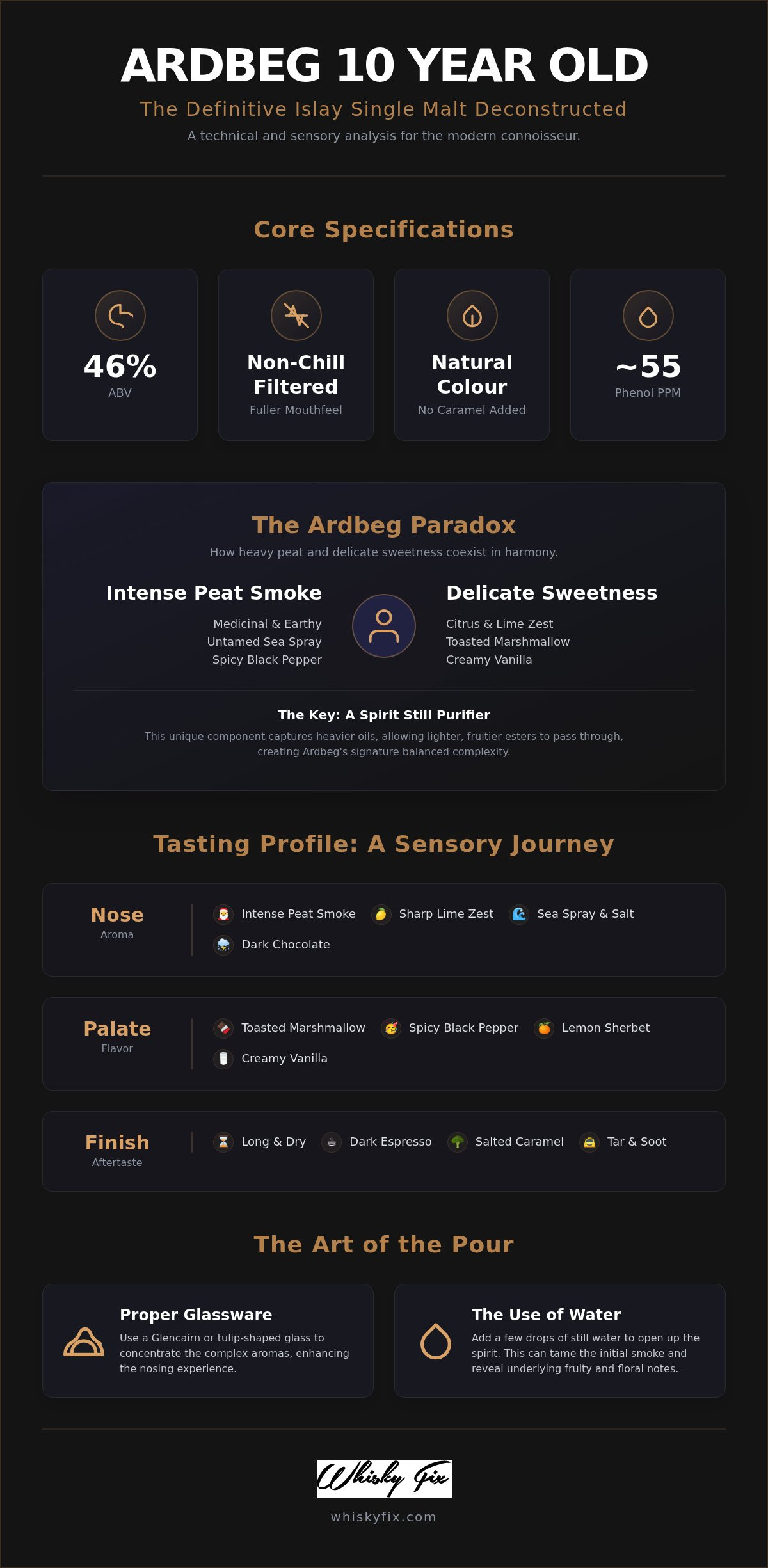
Within the broader single malt scotch whisky category, Islay malts are often categorized by their intensity. Ardbeg occupies a specific geography on the Kildalton coast, where the proximity to the sea and the unique water source from Loch Uigeadail contribute to its coastal profile. The Ardbeg 10 year old is the ‘Paradoxical Malt’ because it marries intense, earthy peat smoke with a surprising, delicate floral sweetness and sharp citrus zest. This balance is achieved through a specialized purifier on the spirit still, which allows heavier oils to fall back while lighter, fruitier vapors pass through.
Maintaining this delicate equilibrium in 2026 requires a steadfast commitment to traditional methods. While other producers might prioritize high-volume output, Ardbeg continues to use its signature purifier to ensure the spirit’s floral characteristics aren’t overwhelmed by the heavy peat. This dedication to consistency is why the 10-year-old remains the flagship. It serves as an essential introduction for newcomers while providing the depth and complexity that seasoned collectors demand. Whether you’re purchasing for a collection or as a gift, the provenance of this Islay staple remains unchallenged.
Deconstructing the Dram: Tasting Notes and Distillation Artistry
Understanding the Ardbeg 10 year old requires looking past the label and into the technical precision of its production. While many standard releases are diluted to 40% alcohol by volume, Ardbeg maintains a robust 46% ABV. This decision isn’t merely about strength; it allows the spirit to remain non-chill filtered. By avoiding this process, the distillery ensures that natural fatty acids and esters remain in the liquid. This provides a fuller mouthfeel and a more authentic representation of the cask’s influence. The Ardbeg 10 year old also boasts a pale straw hue that is entirely natural, reflecting a commitment to quality that excludes artificial caramel coloring.
The chemistry of the smoke is equally deliberate. Ardbeg utilizes malt peated to approximately 50 to 55 phenol parts per million (PPM), placing it among the most heavily peated whiskies in the world. However, the perceived smoke on the palate is often more nuanced than the numbers suggest. This is largely due to the influence of ex-bourbon cask aging. The use of first-fill and second-fill American oak barrels imparts essential notes of vanilla and cream. These act as a necessary counterpoint to the raw, medicinal intensity of the peat. This balance is essential.
The 2026 Tasting Profile: Nose, Palate, and Finish
Consistency remains the hallmark of this expression. On the nose, you’re immediately met with a burst of intense peat smoke and sharp sea spray, followed by the signature lime zest that defines the distillery’s character. The palate is a complex landscape of toasted marshmallows and spicy black pepper, underpinned by a deep peat that feels both untamed and sophisticated. The experience concludes with a long, dry finish. It leaves a remarkably clean sensation on the tongue, marked by lingering notes of dark espresso and salted caramel.
The Science of the Purifier
What truly separates Ardbeg from its Islay neighbors is the “Ardbeg Alchemy” provided by the purifier. This small, copper pot sits on the lyne arm of the spirit still and creates a high degree of reflux. By forcing heavier, oilier vapors to condense and fall back into the still for re-distillation, only the lightest and most floral molecules reach the final condenser. This process explains why a whisky with such high PPM can still exhibit delicate fruitiness. The purifier acts as a filter for heavier oils, ensuring the spirit retains its floral and citrus elegance despite the heavy peat.
Authenticity in every dram is the hallmark of a true specialist, and those seeking to expand their collection can browse our curated selection of Islay malts for their next discovery.
Ardbeg 10 vs. The World: A Comparison Framework
Deciding between the heavyweights of Islay requires a clear understanding of their stylistic differences. While the Ardbeg 10 year old is often grouped with its neighbors on the south shore, its profile is distinct. It serves as a sophisticated entry point for those looking to explore the complexities of peated spirits before venturing into the world of rare scotch. Understanding where it sits on the “Peat Map” helps collectors make informed decisions based on flavor preference rather than just brand recognition.
Ardbeg 10 vs. Laphroaig 10 vs. Lagavulin 16
The “Big Three” of Islay each offer a unique interpretation of peat. Laphroaig 10 is famous for its medicinal, iodine-heavy punch that many describe as “love it or hate it.” In contrast, Lagavulin 16 leans into a rich, dried-fruit profile influenced by sherry casks, offering a slower, more contemplative burn. The Ardbeg 10 year old finds the middle ground; it delivers a higher phenol count than Lagavulin but balances it with the clarity of ex-bourbon casks and a signature citrus brightness. This makes it feel cleaner and more vibrant on the palate than its peers.
- Ardbeg 10: ~55 PPM | 46% ABV | Ex-Bourbon Casks | Key Note: Lemon Zest and Soot
- Laphroaig 10: ~45 PPM | 40% ABV | Ex-Bourbon Casks | Key Note: Medicinal Iodine
- Lagavulin 16: ~35 PPM | 43% ABV | Sherry and Bourbon Casks | Key Note: Lapsang Souchong and Dates
Value and Investment in 2026
In a market increasingly dominated by No-Age-Statement (NAS) releases, the stability of a 10-year age statement is a significant mark of quality. Many scotch whisky distilleries in the Highlands have moved toward younger, non-aged blends to meet demand, but Ardbeg’s flagship remains a bastion of transparency. Its price-to-quality ratio remains one of the most competitive in the industry. For the connoisseur, it offers a level of technical sophistication normally reserved for much more expensive bottles.
Choosing this expression isn’t just about the immediate pour; it’s about building a foundation. The 10-year-old provides the baseline necessary to appreciate the nuances of older, limited-edition releases. It remains a “bargain” in 2026 because it doesn’t compromise on the fundamental pillars of Scotch production: high ABV, natural color, and non-chill filtration. Whether you’re comparing it to its Islay rivals or the floral malts of the mainland, its position as a gold standard is secure.
The Art of the Pour: How to Properly Enjoy Ardbeg 10
Experiencing the Ardbeg 10 year old requires more than a simple pour into a tumbler. To fully appreciate the labor and technical precision discussed in previous sections, you must use the correct tools and environment. Glassware selection is the first critical decision. While the robust Glencairn is the industry standard for daily enjoyment, a stemmed Copita glass offers a more technical nosing experience. Its narrower aperture concentrates the volatile aromatic compounds, allowing the citrus and soot notes to reach your senses with greater clarity. Temperature also plays a vital role; keep your bottle at room temperature, as chilling the spirit numbs the essential oils and masks the intricate peat profile.
The “To Drop or Not to Drop” debate remains a central topic among connoisseurs. Because the Ardbeg 10 year old is bottled at a higher 46% ABV and remains non-chill filtered, it’s particularly responsive to a small amount of water. Adding two or three drops of filtered, room-temperature water can break the surface tension and release trapped esters. This often reveals hidden layers of floral sweetness that the initial smoke might obscure. However, always taste the dram neat first to understand its intended strength and character before experimenting with dilution.
The Perfect Tasting Ritual
A structured approach ensures no detail is missed. Start with a visual inspection. Tilt the glass to observe the “legs” or tears as they move down the side; this indicates the spirit’s viscosity and the influence of the ex-bourbon casks. When moving to the nose, don’t dive in immediately. The high alcohol content can singe the olfactory receptors if you’re too aggressive. Instead, keep your mouth slightly open and take short, gentle sniffs from the edge of the glass. Finally, use the “chewing” technique on the palate. Move the liquid around your entire mouth to allow your saliva to interact with the oils, which fully unlocks the transition from medicinal peat to toasted marshmallow.
Culinary Pairings for the Peat-Heads
The intense profile of this Islay malt makes it a formidable companion for bold flavors. Salty, briny seafood like fresh oysters or smoked salmon provides a natural synergy with the sea-spray notes found in the spirit. For a more adventurous pairing, try a wedge of Roquefort or another pungent blue cheese. The “funk” of the cheese stands up to the heavy smoke, creating a complex balance of salt and earth. If you prefer a sweet conclusion, high-percentage dark chocolate complements the long, dry espresso finish of the dram beautifully.
For those who enjoy a curated drinking experience, you can explore our specialist range of single malts to find the perfect addition to your home bar.
Sourcing Excellence: Why Whisky Fix is the Connoisseur’s Choice
Selecting a bottle as prestigious as the Ardbeg 10 year old requires a retailer that understands the weight of its heritage. Based in Oban, the heart of the Highlands, Whisky Fix operates as more than a store; we’re a dedicated gateway to Scotland’s most revered distilleries. Our proximity to the source allows us to maintain a curated collection that emphasizes authenticity and provenance above all else. For the serious collector, knowing exactly where your spirit originated and how it was handled is as vital as the distillation process itself.
Expanding a collection often means looking across borders. We specialize in global logistics, providing a seamless experience for those importing scotch whisky to USA and other international destinations. Our team manages the complexities of customs and regulatory requirements, allowing you to focus on the enjoyment of your acquisition rather than the paperwork. This global reach, combined with our local roots, ensures that enthusiasts worldwide have access to the finest Islay malts without the traditional hurdles of international procurement.
Worldwide Shipping and Secure Packaging
We understand that every bottle is a delicate investment. Our shipping protocols involve specialized, high-impact packaging designed to withstand the rigors of international transit. From the moment your order leaves our Oban facility, you can track its progress with real-time updates through our secure logistics partners. This “Oban to Doorstep” journey is managed by specialists who share our commitment to excellence, ensuring your bottle arrives in pristine condition. We’ve refined these processes over years of service to collectors, navigating the nuances of global shipping with methodical precision.
Expert Support for Your Collection
As an independent specialist, we offer a level of curation that larger distributors simply can’t match. We aren’t bound by wholesale quotas, which gives us the freedom to source “Old & Rare” expressions and limited releases that define the pinnacle of the industry. Whether you’re seeking advice on starting a collection or need assistance sourcing a specific vintage, our team provides professional support tailored to your specific palate. We also host expert-led tasting events that foster a community of like-minded connoisseurs, sharing the deep-seated passion that drives our business every day.
Ready to experience the gold standard of Islay? Secure your bottle of Ardbeg 10 Year Old at Whisky Fix today.
Securing Your Islay Legacy for 2026 and Beyond
The Ardbeg 10 year old remains a masterclass in balance, proving that high phenol levels can coexist with delicate floral complexity. We’ve explored how the distillery’s unique purifier and the influence of ex-bourbon casks create a spirit that’s both untamed and sophisticated. As we navigate the evolving spirits market of 2026, this flagship expression stands as a reliable benchmark for quality and transparency. Whether you’re a seasoned collector or a newcomer to the Kildalton coast, understanding these technical nuances transforms every pour into a curated experience.
At Whisky Fix, we’re proud to be your trusted guide from our home in Oban, the heart of the Highlands. As specialists in Old & Rare expressions, we ensure every bottle in our collection meets the highest standards of provenance. Our global shipping expertise means you can build your collection with confidence, knowing your acquisition will arrive in pristine condition. It’s time to elevate your tasting ritual with a true Islay masterpiece. Every dram tells a story of heritage and survival, and yours is ready to be poured.
Shop Ardbeg 10 Year Old and Islay Malts at Whisky Fix and discover the unparalleled depth of Scotland’s most iconic peated malts. Your next great discovery is waiting.
Frequently Asked Questions
Is Ardbeg 10 year old good for beginners?
The Ardbeg 10 year old is an excellent choice for beginners who want to experience the “deep end” of Islay whisky. While the smoke is intense, the spirit’s unique citrus and floral notes prevent it from being one-dimensional. It serves as a definitive introduction to peated malts, though those completely new to Scotch might find its 46% ABV and 50 PPM profile challenging. It’s a bold starting point that rewards a curious palate.
What does Ardbeg 10 taste like?
The profile is a complex balance of earthy smoke and vibrant fruit. You’ll likely detect heavy peat, sea spray, and sharp lime zest on the nose. The palate transitions into toasted marshmallows, black pepper, and a hint of medicinal brine. The experience concludes with a long, dry finish characterized by lingering espresso and salted caramel notes. This “sweet and smoky” paradox is why it remains a global favorite for enthusiasts.
Is Ardbeg 10 chill-filtered?
No, this expression is non-chill filtered. This technical decision ensures that the natural fatty acids and esters developed during fermentation and maturation remain in the liquid. If the whisky were chill-filtered, these elements would be removed to prevent cloudiness when cold, but at the cost of mouthfeel and flavor depth. The result is a richer, more viscous spirit that represents the distillery’s traditional craftsmanship and commitment to quality.
How much peat is in Ardbeg 10?
The malt used for this expression is typically peated to a level of 50 to 55 phenol parts per million (PPM). This measurement places it among the most heavily peated standard releases in the industry. However, the final spirit often feels more balanced than the numbers suggest. This is due to the distillery’s specialized purifier, which introduces floral and fruity notes that provide a necessary counterpoint to the intense, earthy smoke.
Should I add water to my Ardbeg 10?
Adding a few drops of water is highly recommended for exploring the spirit’s hidden layers. While many enjoy it neat to appreciate the full 46% ABV, two or three drops of room-temperature water can break the surface tension. This release of esters often brings the floral and citrus characteristics to the forefront, softening the initial peat punch. Always taste it neat first to understand the distiller’s original intent before experimenting with dilution.
What is the difference between Ardbeg 10 and Ardbeg An Oa?
The primary difference lies in the maturation process and resulting texture. The Ardbeg 10 year old is the age-stated flagship matured primarily in ex-bourbon casks for clarity and sootiness. Ardbeg An Oa is a non-age-statement release matured in a combination of Pedro Ximénez, virgin oak, and ex-bourbon barrels. The result is a rounder, creamier, and slightly sweeter profile compared to the sharp, citrus-forward intensity and transparency of the 10-year-old expression.
How long can I store an opened bottle of Ardbeg 10?
An opened bottle will typically maintain its peak flavor for one to two years if stored correctly. Ensure the bottle remains upright in a cool, dark place away from direct sunlight. As the liquid level drops, more oxygen enters the bottle, which can eventually dull the vibrant peat and citrus notes. If you have less than a third of the bottle left, consider finishing it sooner to enjoy its full complexity before oxidation takes hold.
Why is Ardbeg 10 so light in color?
The pale straw hue is a result of natural maturation in high-quality ex-bourbon casks without artificial coloring. Many commercial whiskies add E150a caramel coloring to achieve a consistent dark gold appearance, but Ardbeg rejects this practice. The light color reflects the spirit’s true interaction with American oak. It’s a mark of authenticity that signals a lack of interference, allowing the raw, untamed character of the Islay malt to be the focus.